
What a 12 Seater Actually Solves
Twelve is the number that fits a family trip almost too neatly — parents, kids, one or two grandparents, and a couple of cousins who “might as well come.” It’s small enough that two cars still felt like an option right up until someone counted seats and bags together and realised it wasn’t.
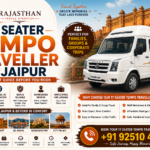
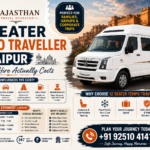
A 12 seater tempo traveller is the size built for exactly this group: big enough to hold a full extended family in one vehicle, small enough that you’re not paying coach-level money to move a dozen people. One driver, one route, no convoy, no separate WhatsApp group trying to figure out who’s stopping where for chai.
It’s also the size where people most often overpay or underbuy, because “12 seater” gets used loosely across very different vehicles in Jaipur. That’s the part worth getting right before you send an advance.
The Seat Math at Twelve
Twelve seats plus the driver, and this is where body length actually starts to matter more than the seat count on paper. Some fleets run their 12 seater on the same body as the 10 seater, just with two extra rows filled in — which means tighter legroom, not more room. Others use a genuinely longer body, closer to what a 16 seater uses, configured down to twelve seats with proper spacing. Same number, two very different rides.
Luggage follows the same logic as every other tempo traveller in this range: it’s a ladder-frame vehicle, so a roof carrier is standard, and that’s the whole reason this platform beats a monocoque van on multi-day trips. Twelve adults with twelve full bags for a week in Rajasthan is a completely normal booking, as long as the roof carrier is confirmed and fitted before pickup — not assumed.
Count like this: twelve adults with luggage, roof carrier fitted — comfortable. Thirteen or fourteen confirmed — don’t add extra people into the same twelve seats, move up to the tempo traveller 17 seater instead. And if the real number is closer to eight or nine, a 12 seater is more vehicle than you need — the 9 seater tempo traveller or the 10 seater tempo traveller will do the same trip for noticeably less.
Where the 12 Seater Sits in the Fleet
Right in the middle of the range — past the point where a smaller van starts to feel cramped for a full family, and well short of the vehicles built for large groups or events. It’s the size most families in Jaipur actually book, which is also why it has the widest spread of trim options.
A basic 12 seater comes with pushback seats and a dashboard blower, fine for a short local circuit but not built for a six-hour highway leg with elders on board. Move up and you get roof-mounted AC, better seat padding, curtains and a working music system — usually sold as a luxury tempo traveller, and worth the difference the moment the trip crosses two hours. Some operators also offer a Maharaja seat tempo traveller version at this seat count — wider individual chairs with armrests, fewer people per row, more space to actually sit back. As always, ask about seating and body separately; a plain body can carry Maharaja seats and a nicer-looking van can still have basic ones underneath.
If ride comfort matters more than the roof carrier — long highway stretches, a senior citizen who struggles with a high step-in — the 12 seater Urbania is the premium option in this exact bracket. It rides noticeably better on the highway than any standard body. It also can’t take a roof carrier at all, so every bag travels inside the cabin, which changes what “twelve adults with luggage” actually looks like in practice. That trade-off runs through the whole Urbania tempo traveller platform, and it doesn’t go away just because the group is a manageable size.
Who Should Book It — and Who Shouldn’t
Book it for a family of ten to twelve doing a proper multi-day Rajasthan circuit — Jaipur–Jodhpur–Udaipur, Jaipur–Jaisalmer, or a relaxed Golden Triangle run — where the bags are real and the days are long.
Book it for a temple or pilgrimage trip. Khatu Shyam Ji, Salasar, Nathdwara, Pushkar, Ajmer Sharif — a mixed-age group, early starts, frequent stops, everyone travelling together.
Book it for small corporate groups or event duty — airport pickups for a delegation, a site visit team, guest movement for a function — where reliability matters more than showing off the interior.
Think twice if the headcount is still soft. “About twelve, could be ten or could be fourteen” isn’t a booking spec, it’s three different vehicles depending on which way the number moves. Confirm the list first.
Think twice if it’s a short city circuit with no luggage — a half-day inside Jaipur for twelve people with nothing to carry is often cheaper and just as comfortable in two smaller cars.
Skip it if the real number is closer to sixteen or twenty — that’s a job for the 16 seater tempo traveller or the 20 seater tempo traveller, and squeezing a bigger group into a 12 seater is the single most common way this size ends up disappointing people.
The Routes Where It Earns Its Keep
Jaipur–Udaipur and Jaipur–Jodhpur. Six to seven hours of highway with a full family aboard — long enough that seat spacing and AC type stop being small details and start deciding how the trip actually feels by the halfway point.
The Golden Triangle. Jaipur–Agra–Delhi over three days, bags on and off at every hotel. The roof carrier earns its keep here more than anywhere else on the itinerary.
Ranthambore, Pushkar, Ajmer and Bharatpur weekends. Two to four hours each way, one overnight, a comfortable middle-distance range that suits this size almost exactly.
Mount Abu and the Aravalli stretch. Longer, hillier driving. Ask for a newer vehicle specifically for this route — gradient work is harder on an older engine than flat highway ever is.
Before You Book — Five Things in Writing
Ask which body the twelve seats sit in. A shorter, tighter body and a longer, properly spaced one both get called a “12 seater.” Ask for the model and get the answer in text.
Confirm the AC type and the RC year. Roof-mounted AC versus a dashboard blower is the biggest single comfort difference on a Rajasthan summer trip. Ask for the registration year as a plain number — a fast, direct answer tells you a lot about the operator.
Confirm the roof carrier, out loud. It’s standard on this body, but standard isn’t the same as fitted and roped for your specific dates. Say your bag count and get it confirmed before departure morning.
Get the kilometre cap and beyond-cap rate. Usually 250–300 km a day. Multi-city routes cross that regularly, so get the per-km overage figure in the same message as the quote.
Get one all-inclusive number. Tolls, permits, parking, driver food and stay, night charges — all folded into one figure on WhatsApp, so two quotes that look different on paper turn out to be the same total.
Frequently Asked Questions
How many people actually fit in a 12 seater tempo traveller? Twelve passengers plus the driver. On a properly spaced body with the roof carrier fitted, twelve adults with full multi-day luggage is a normal, comfortable booking.
Is a 12 seater the same body as a 10 seater with two extra seats? Sometimes, and that’s exactly the detail to check. Some fleets fit twelve seats into the same body used for the 10 seater, which tightens legroom. Others use a longer body. Ask for the model, not just the seat count — full comparisons are on the tempo traveller on rent page.
Does a 12 seater have a roof carrier? Yes — that’s its main practical advantage over the Urbania body at this seat count. Confirm it’s fitted for your specific booking anyway.
Tempo traveller or Urbania for twelve people? Tempo traveller if luggage and budget matter more, since the roof carrier changes what’s possible. The 12 seater Urbania if the priority is highway ride comfort and the group can manage with everything inside the cabin.
How early should I book a 12 seater in Jaipur? Four to five days in normal season is usually enough. Around wedding muhurats, Diwali, the Pushkar fair window and long weekends, book seven to ten days out — the well-maintained vehicles get committed first.
Final Word
The 12 seater is the size most Jaipur families reach for without quite planning to, and it works when the group and the bags actually match the number. It doesn’t win on plushness — the Urbania handles that — and it isn’t the right call for a group pushing sixteen or more. What it wins on is fit: a family or small team of ten to twelve, real luggage, a real multi-day route, one vehicle doing the whole job.
So count your people with their bags physically in front of you, ask which exact body the twelve seats are bolted into, confirm the AC and the roof carrier in writing, and get one all-inclusive figure before you commit. Do that, and there’s very little left to go wrong.