Why “Luxury” Is Worth Understanding Before You Pay For It
Every fleet listing in Jaipur uses the word “luxury” somewhere, and after a while it stops meaning much on its own. Ask five operators what makes their tempo traveller luxury, and you’ll get five slightly different answers — some genuinely describing a meaningfully upgraded vehicle, others attaching the word to a basic van with a fresh coat of paint. This guide exists to separate the two, so that by the time you’re comparing quotes, you know exactly what should be included in that word before you pay a premium for it.
What Luxury Trim Actually Means on a Tempo Traveller
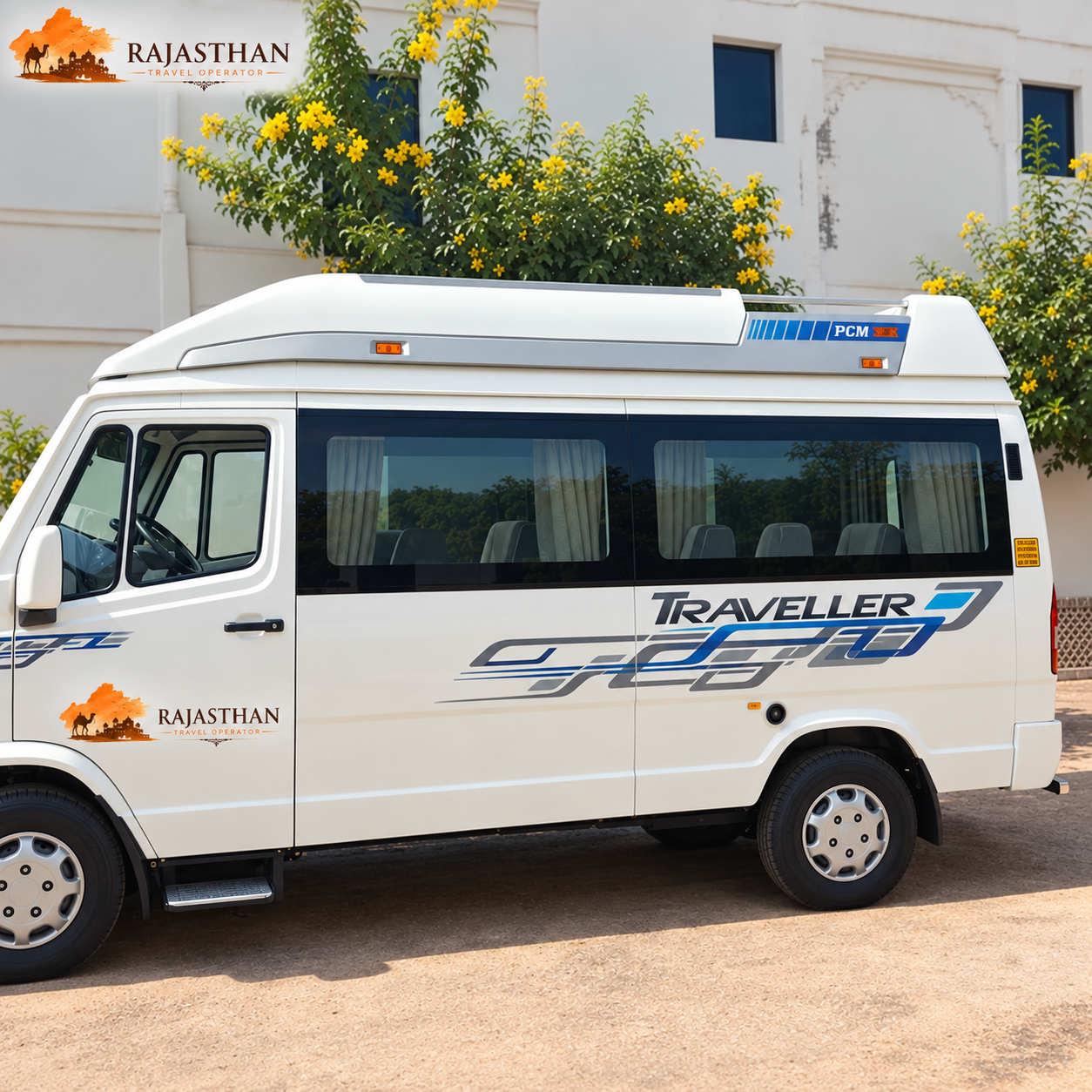
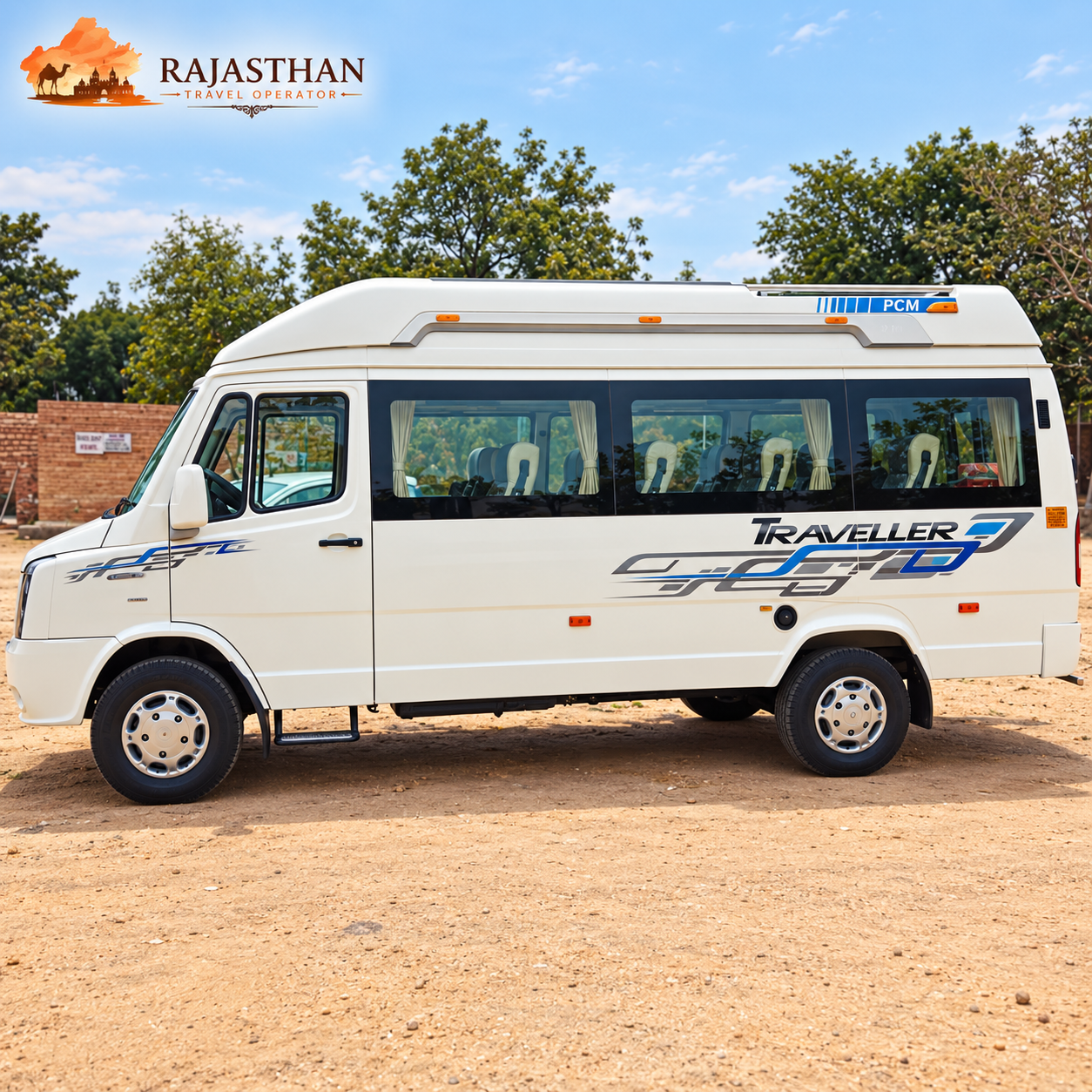
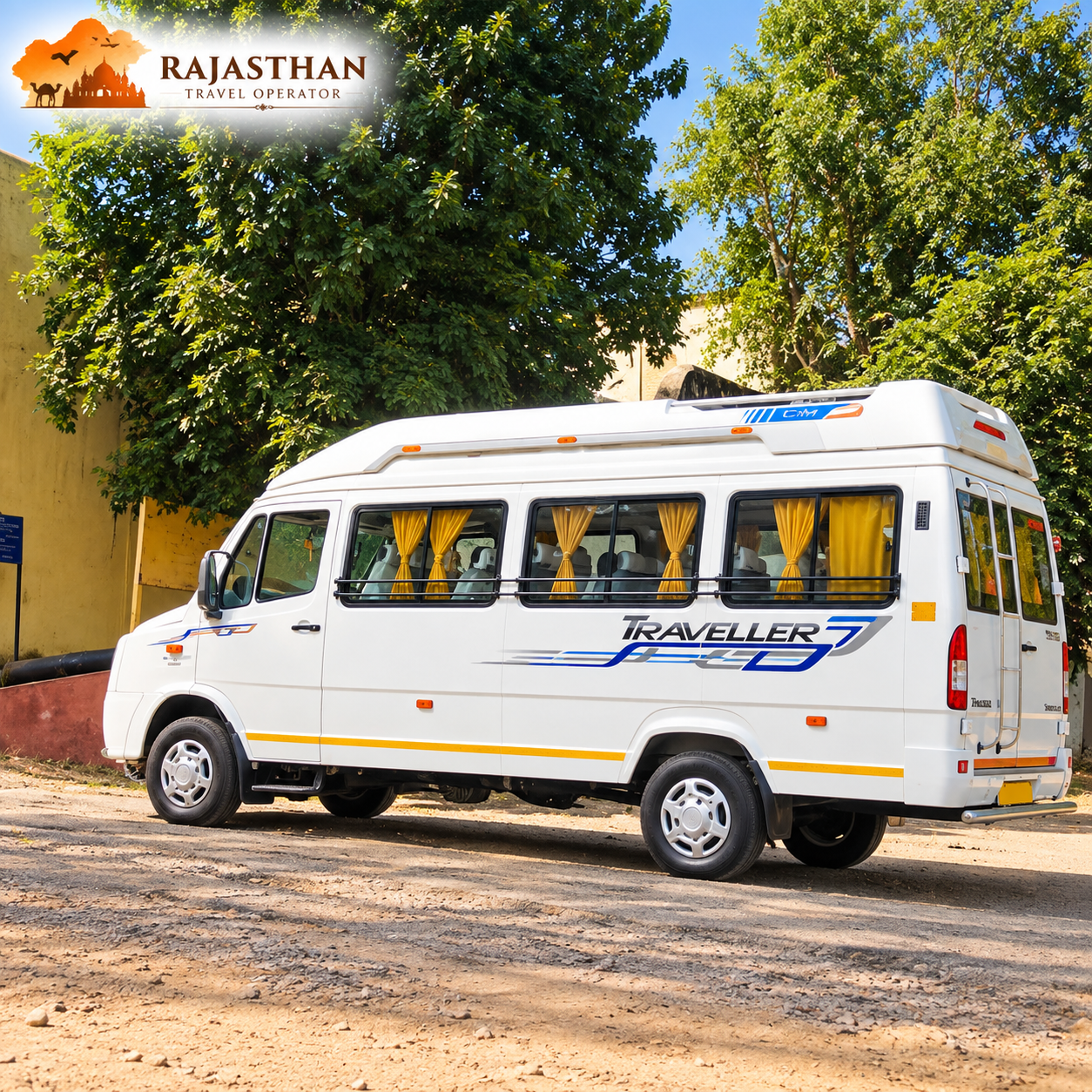
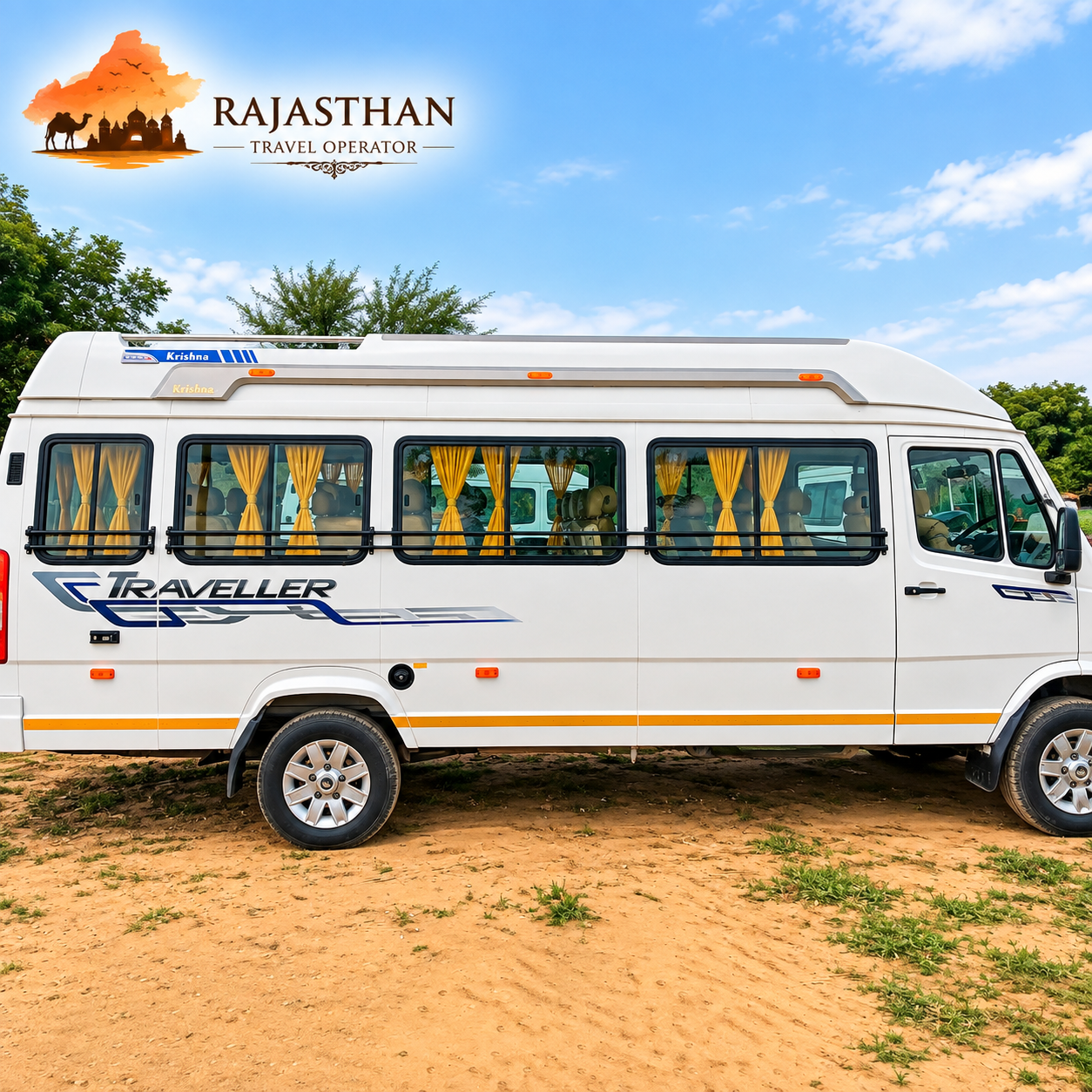
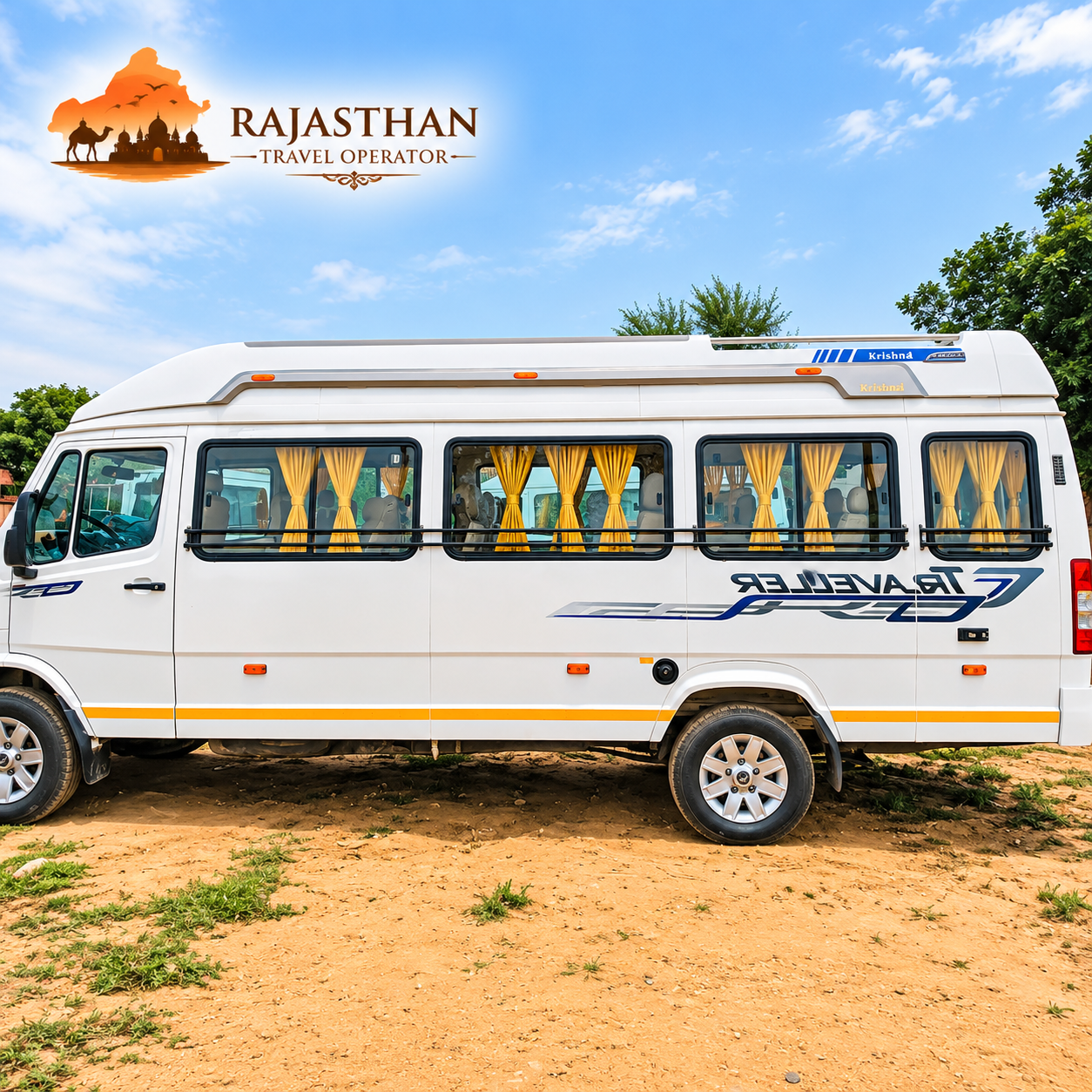
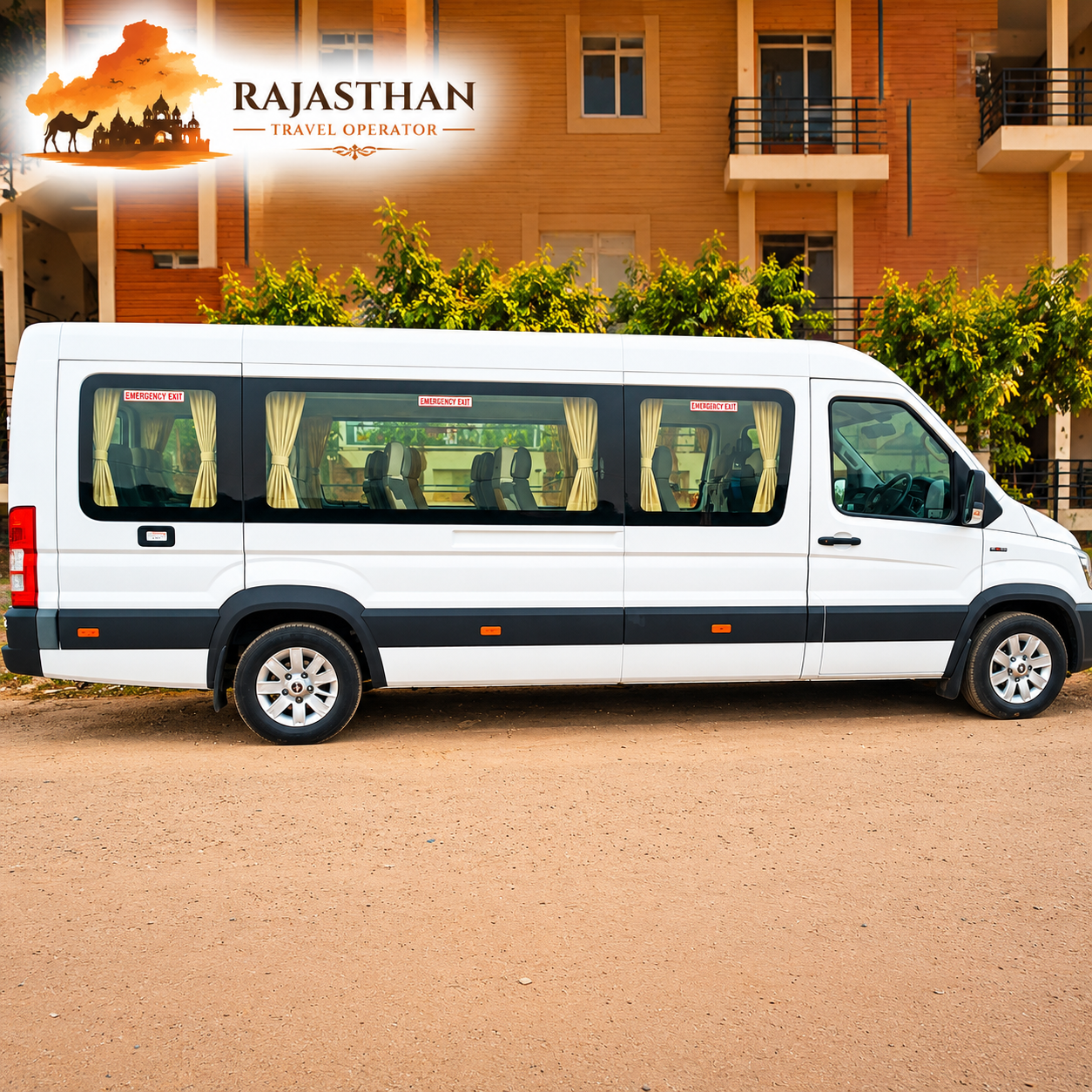
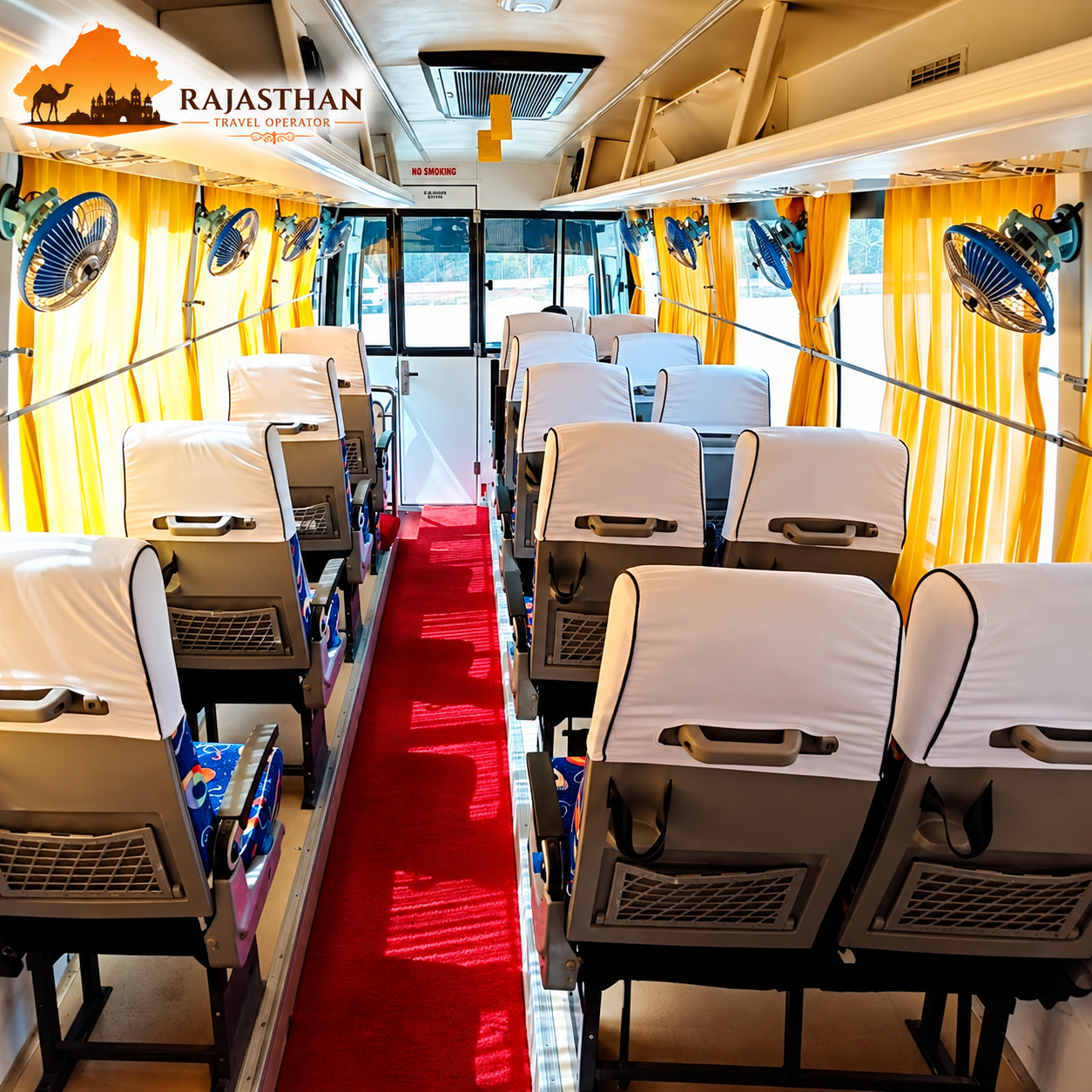
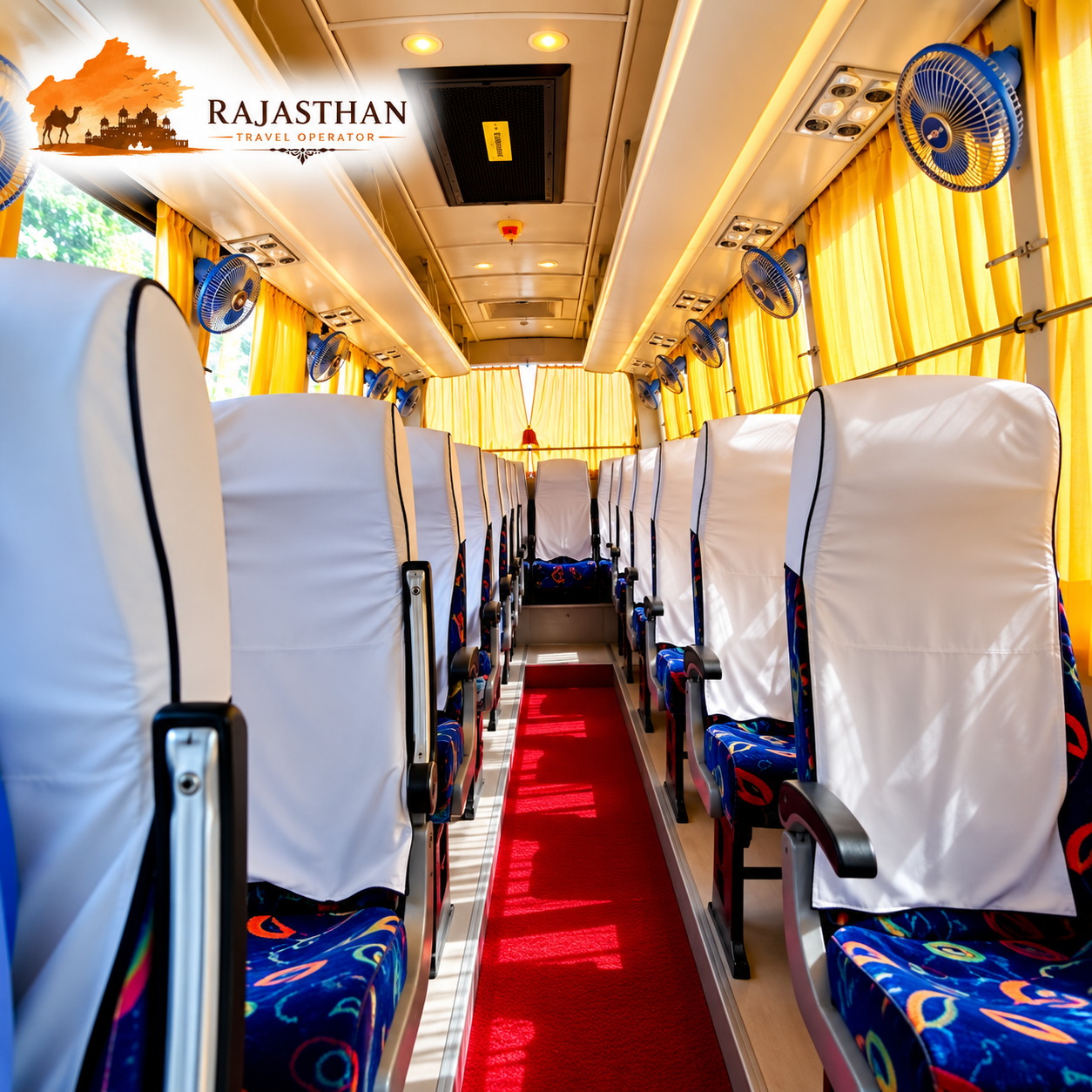
A standard, basic tempo traveller comes with pushback seating, a dashboard-mounted AC blower, and not much else. It gets the job done for a short trip, but it isn’t built for comfort over long hours. Luxury trim sits on top of that same ladder-frame chassis — the same vehicle family used across the whole standard range, from the 9 seater tempo traveller through the larger bodies — and adds four things that genuinely change how a trip feels.
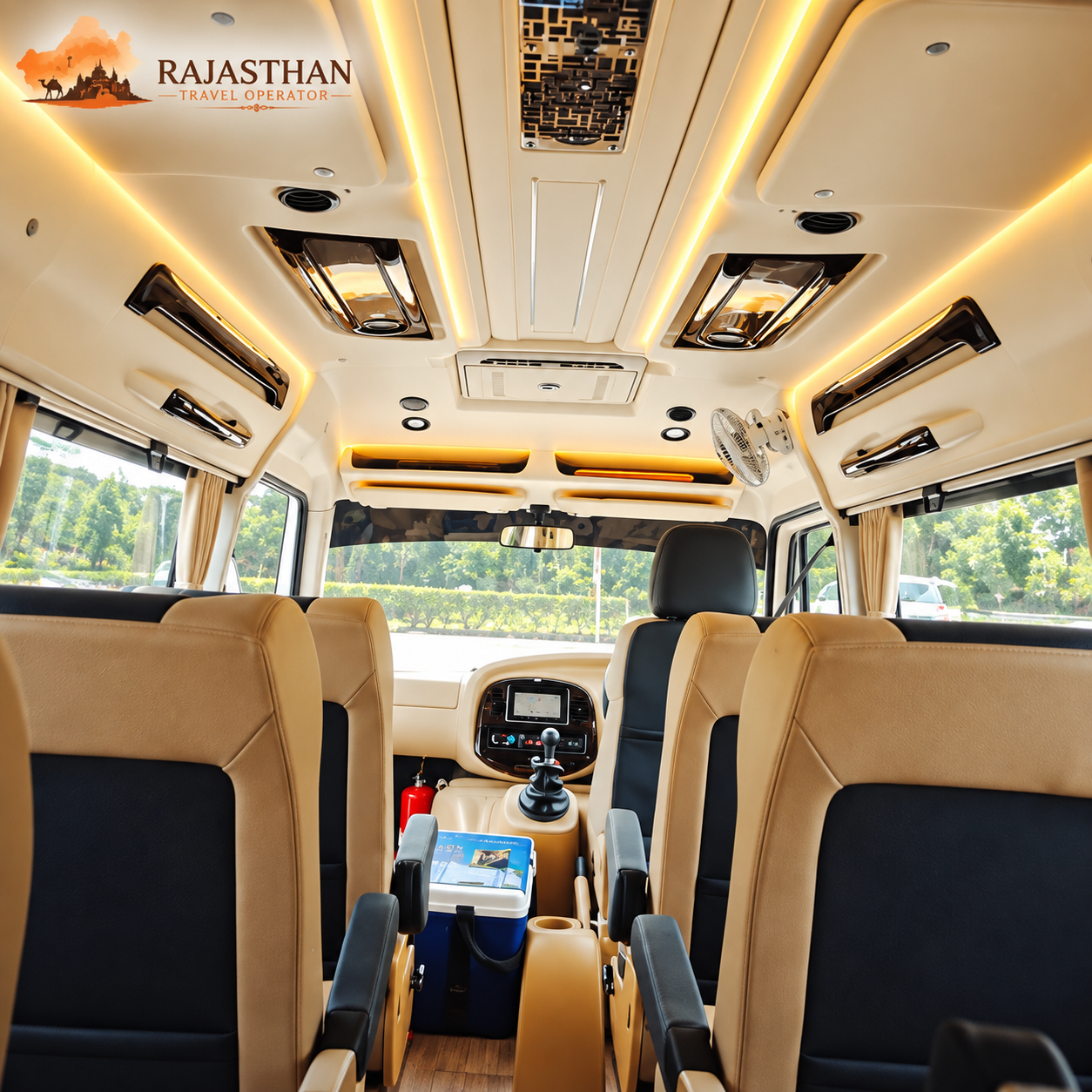
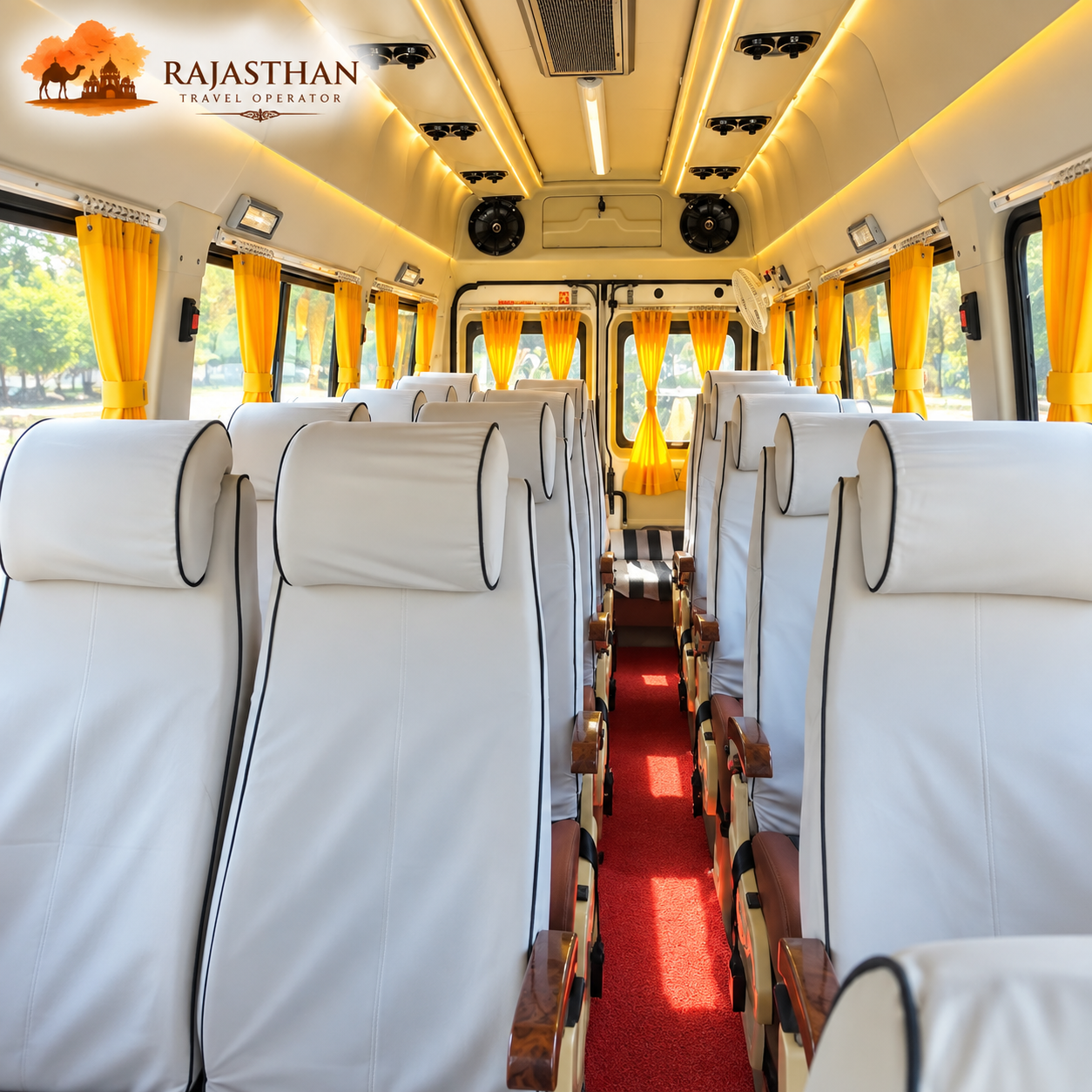
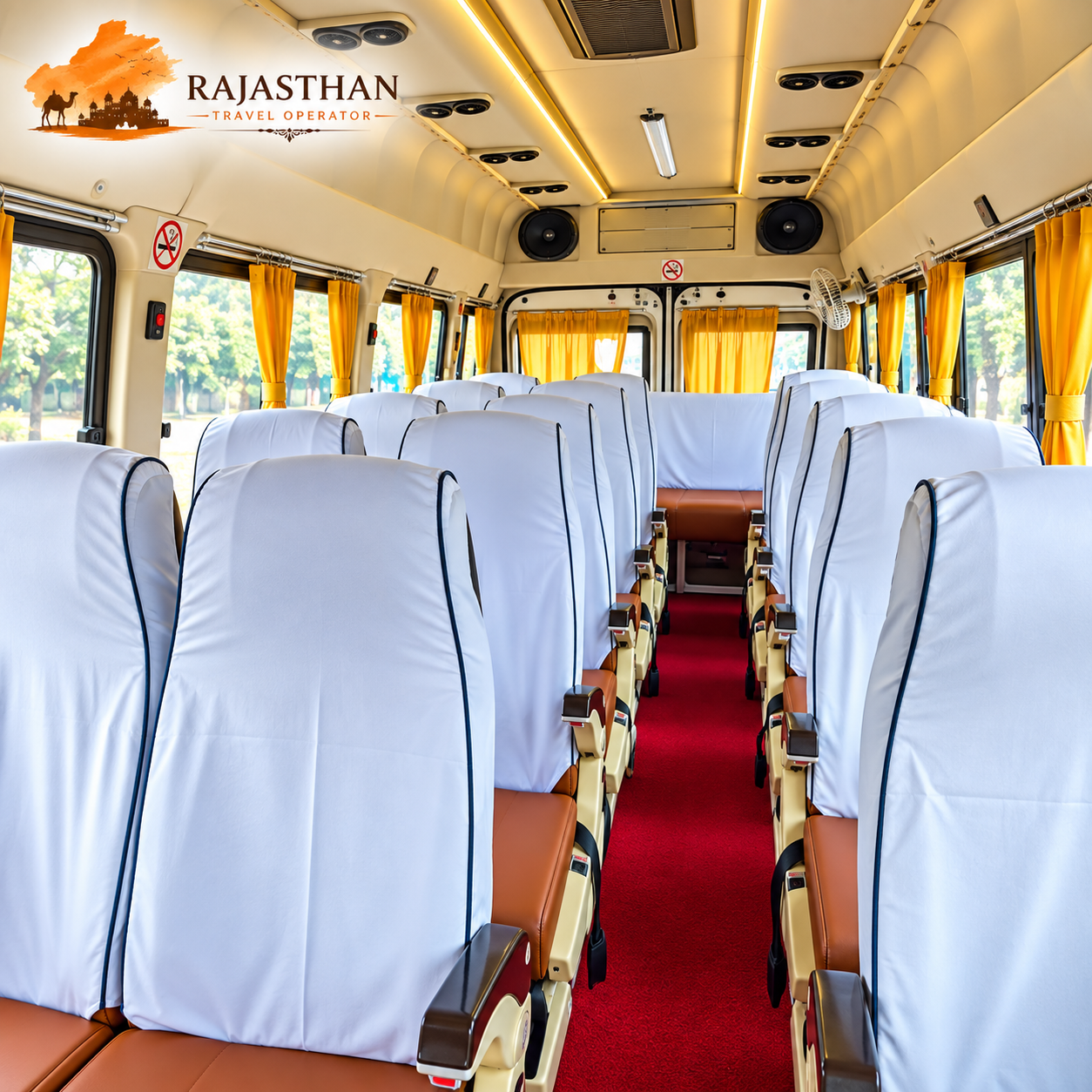
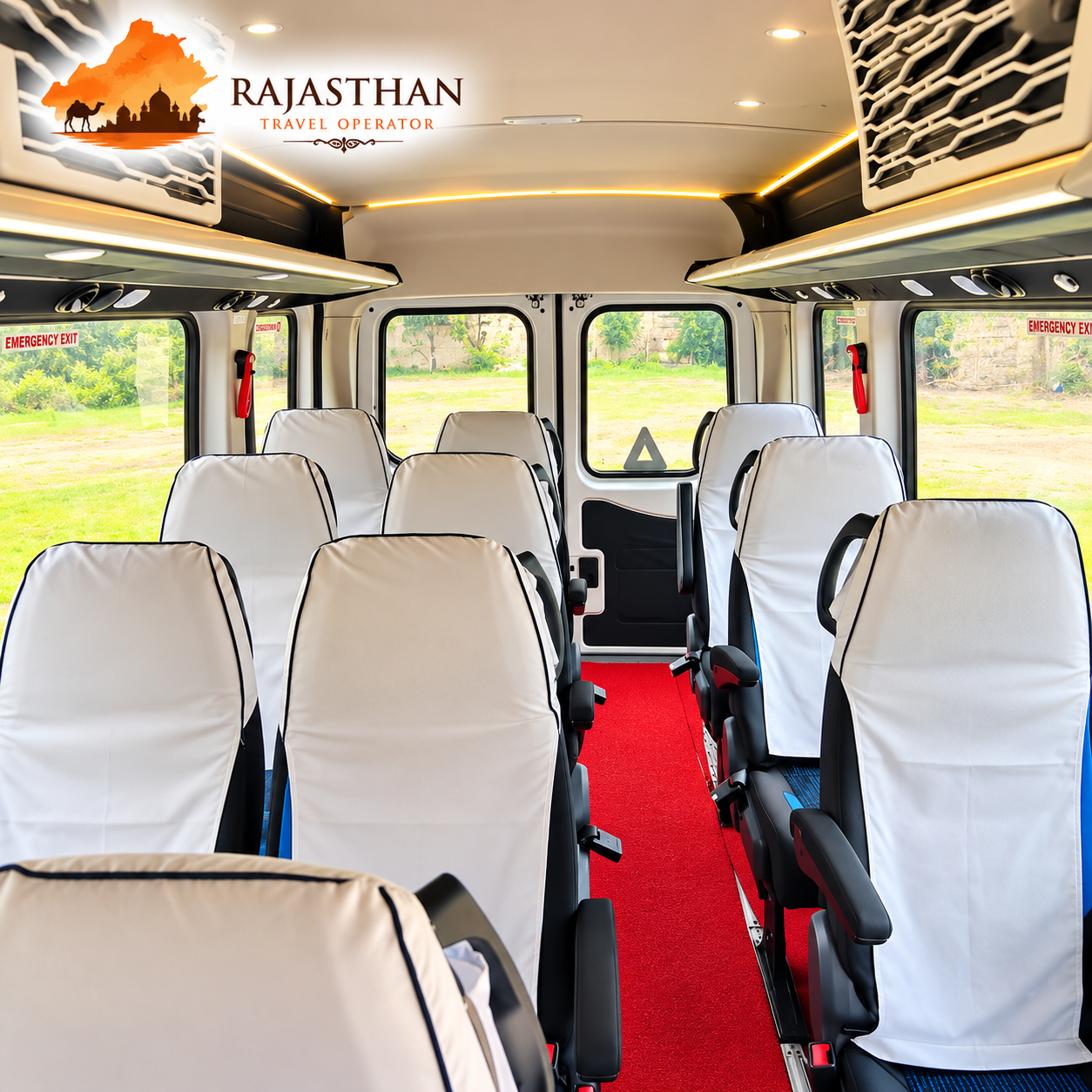
Roof-mounted AC instead of a dashboard blower. This is the single biggest difference in a Rajasthan summer, and it’s also the one detail photos never capture. A dashboard blower struggles to cool a full cabin evenly, especially toward the back rows, while roof-mounted AC distributes cool air across the whole length of the vehicle far more consistently.
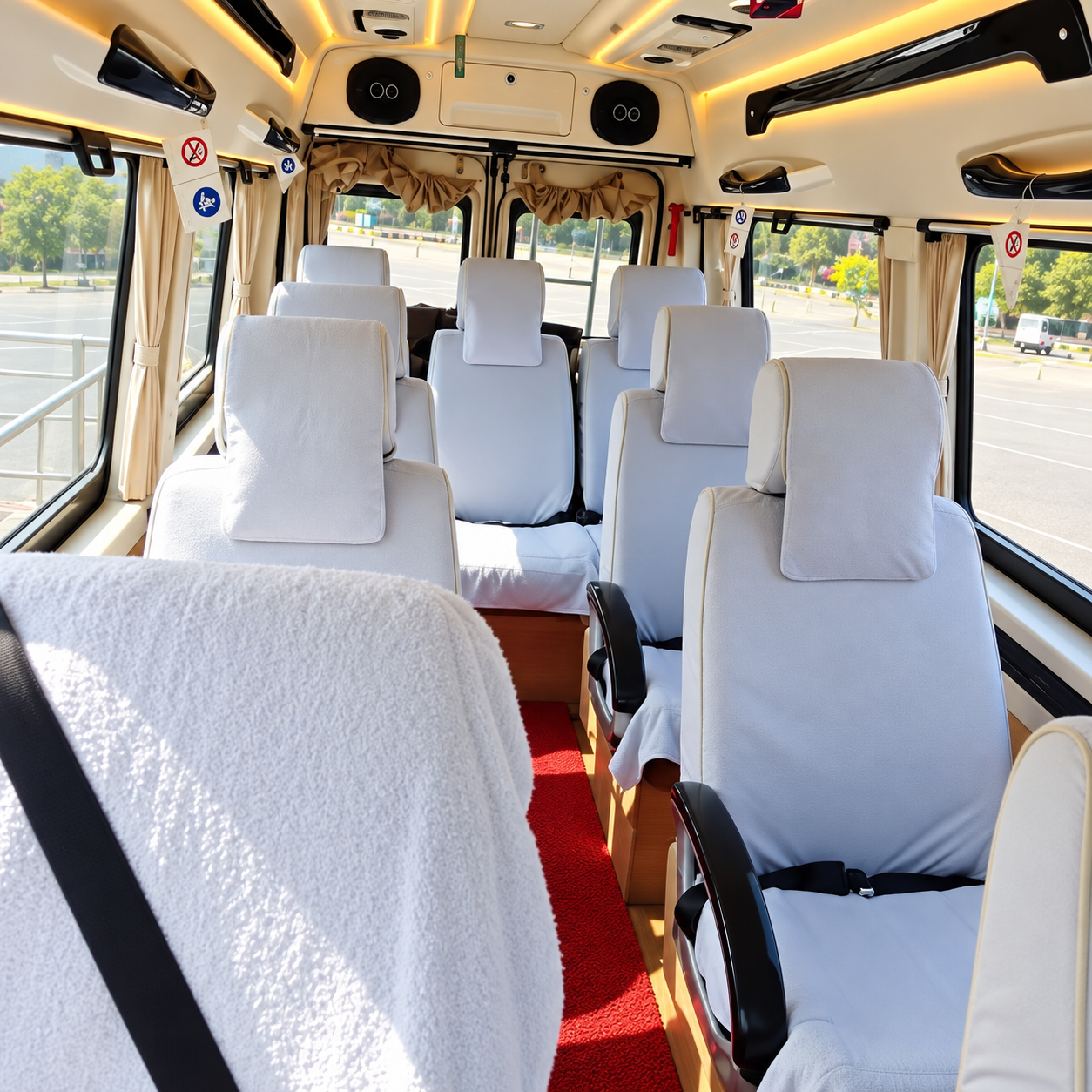
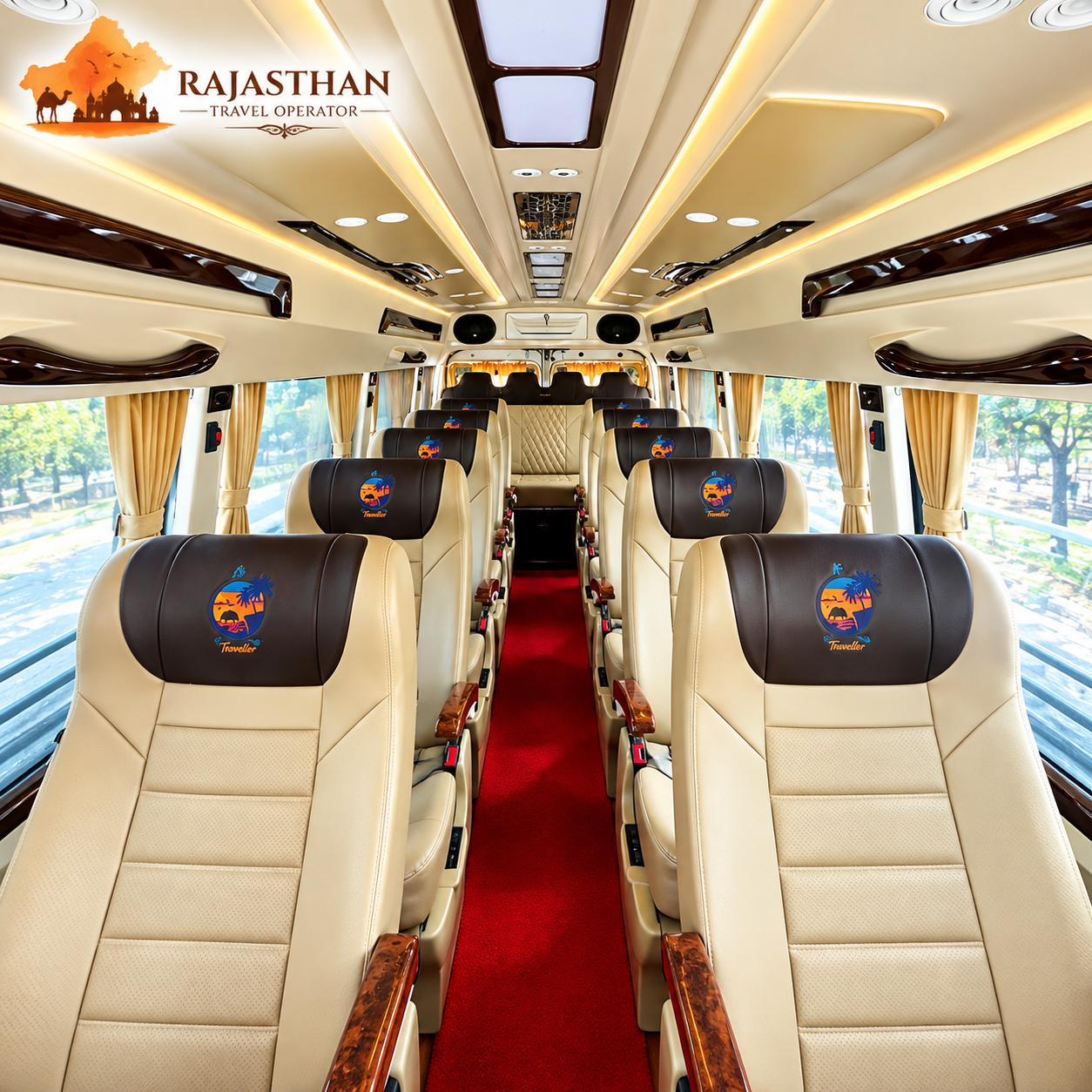
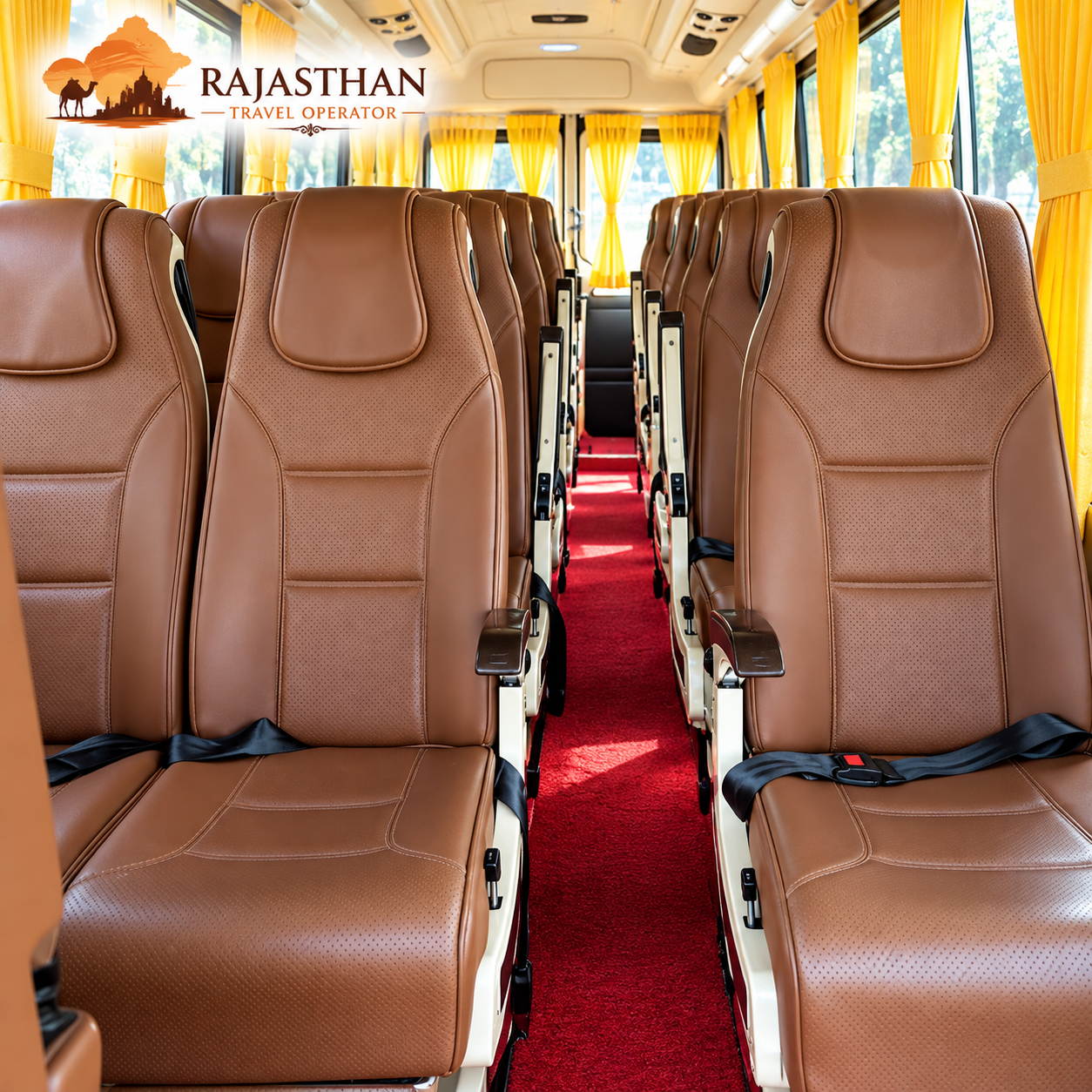
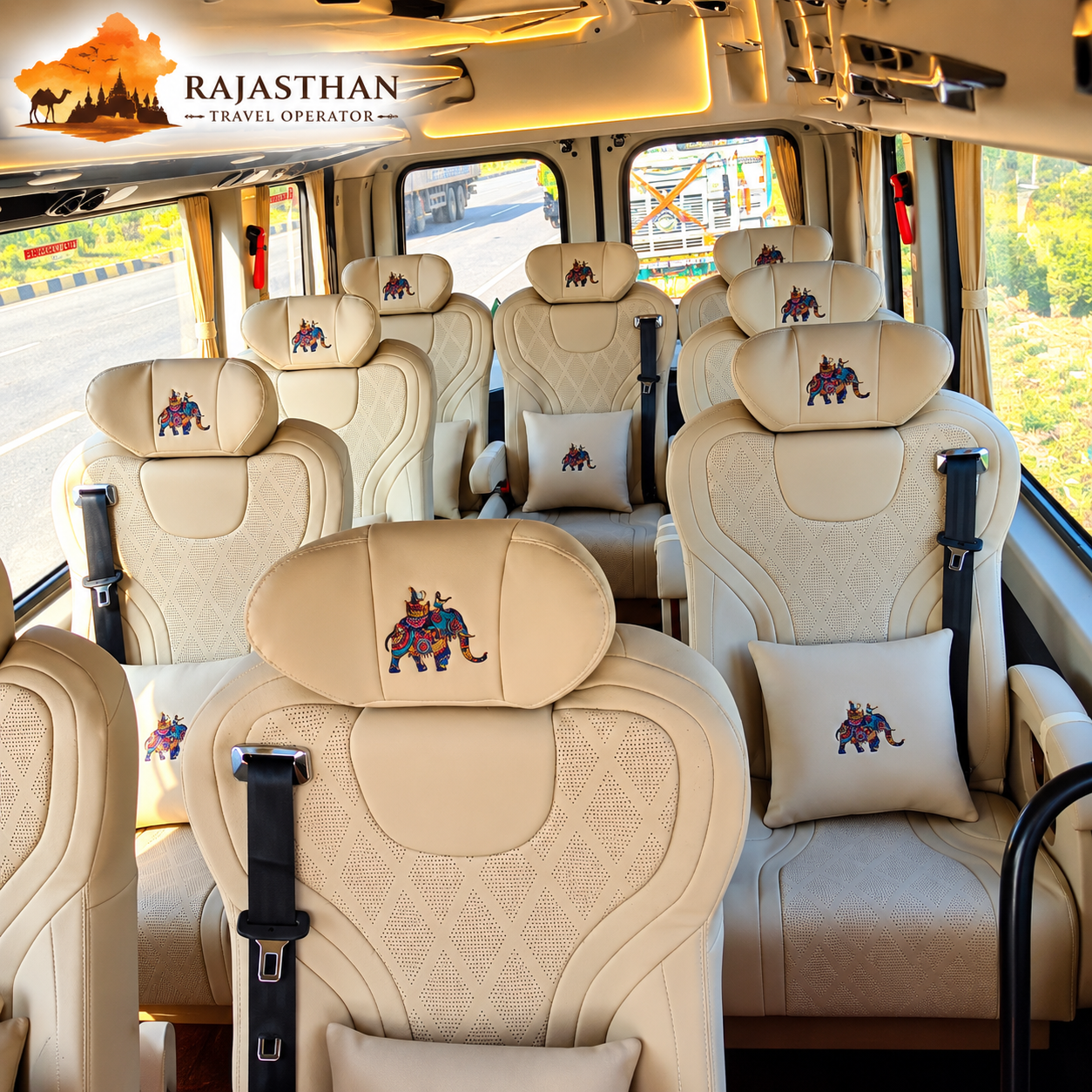
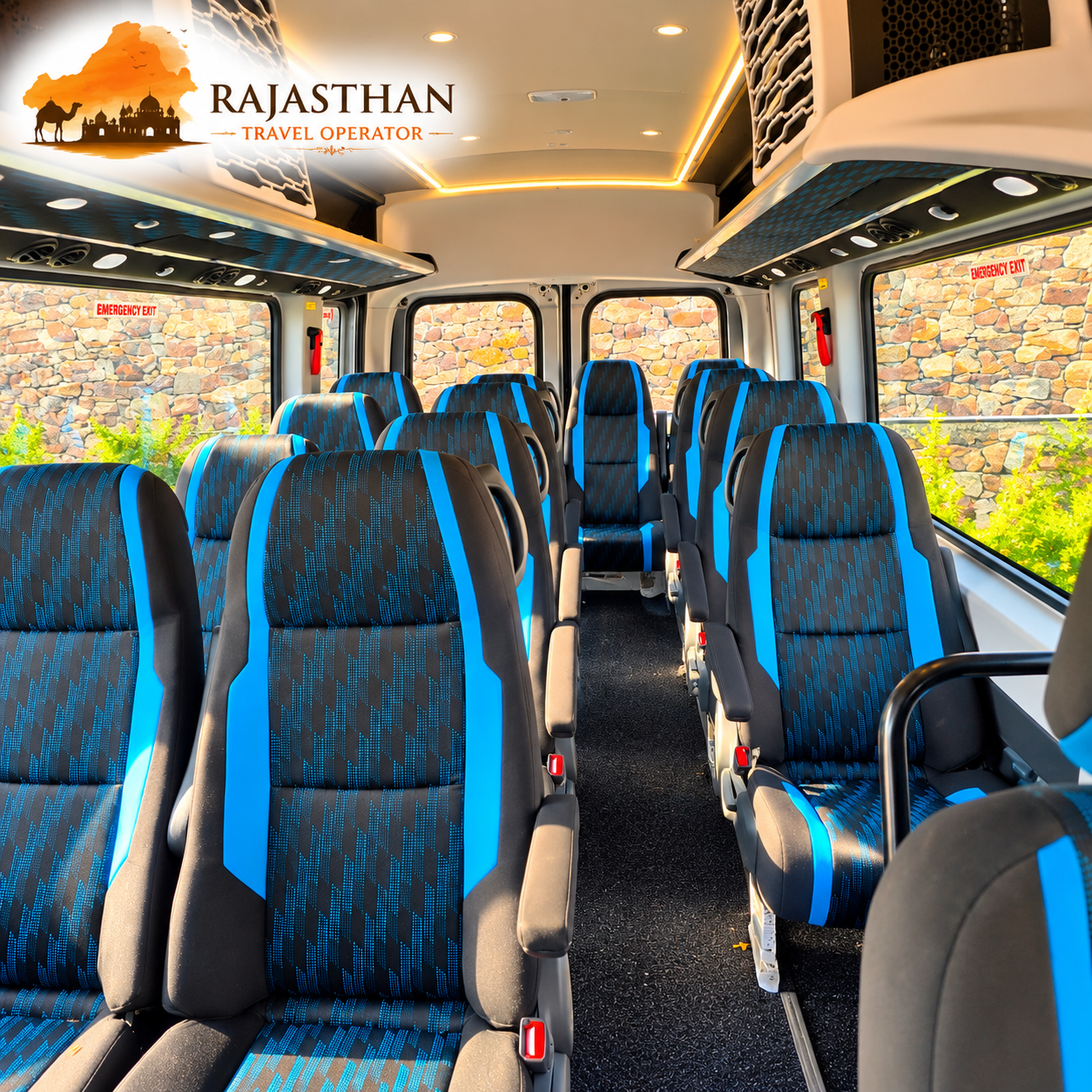
Reclining, better-padded seats instead of fixed pushback rows. Not dramatically different in width or spacing — that’s a separate seating configuration question, covered by Maharaja layouts — but genuinely more comfortable to sit in for five or six hours at a stretch.
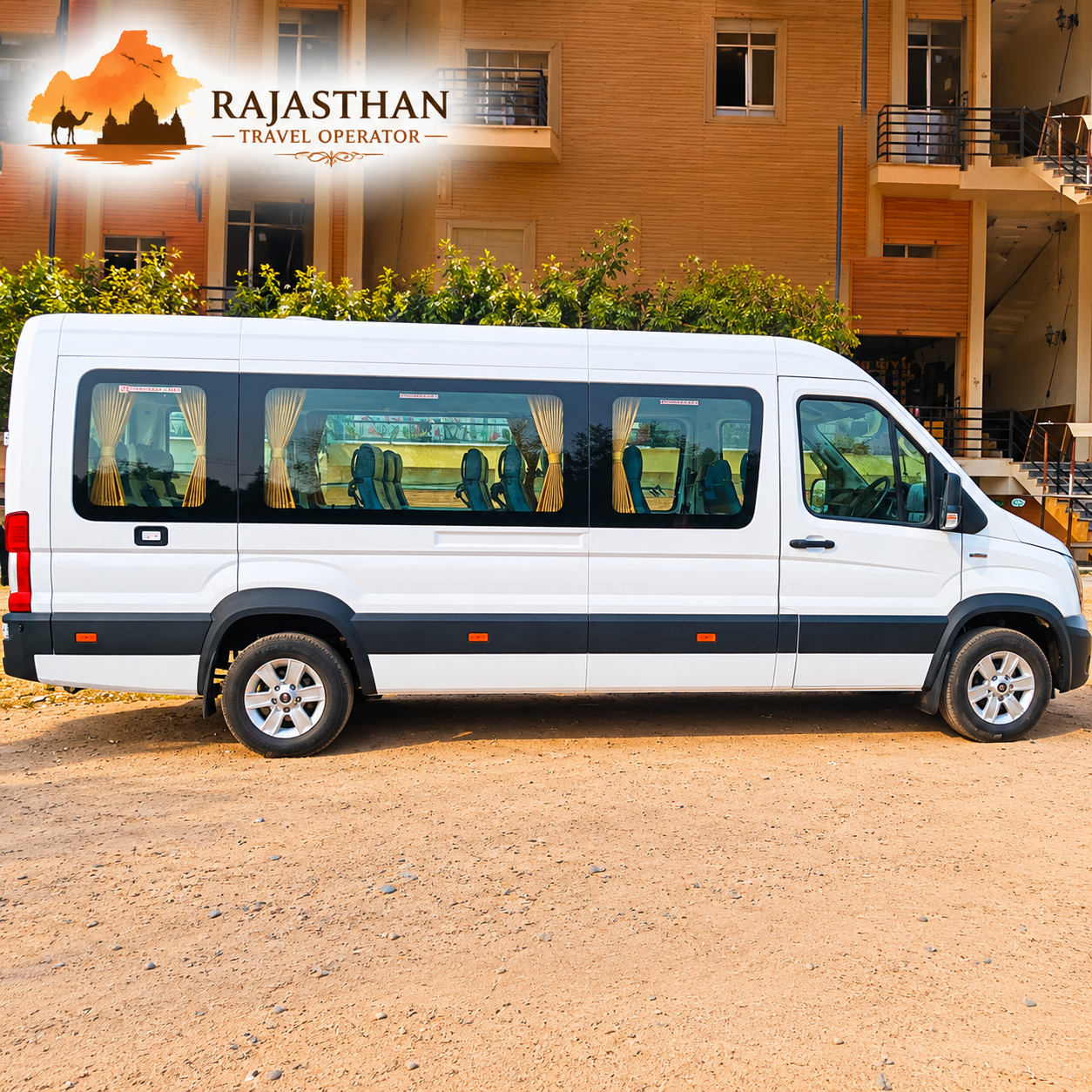
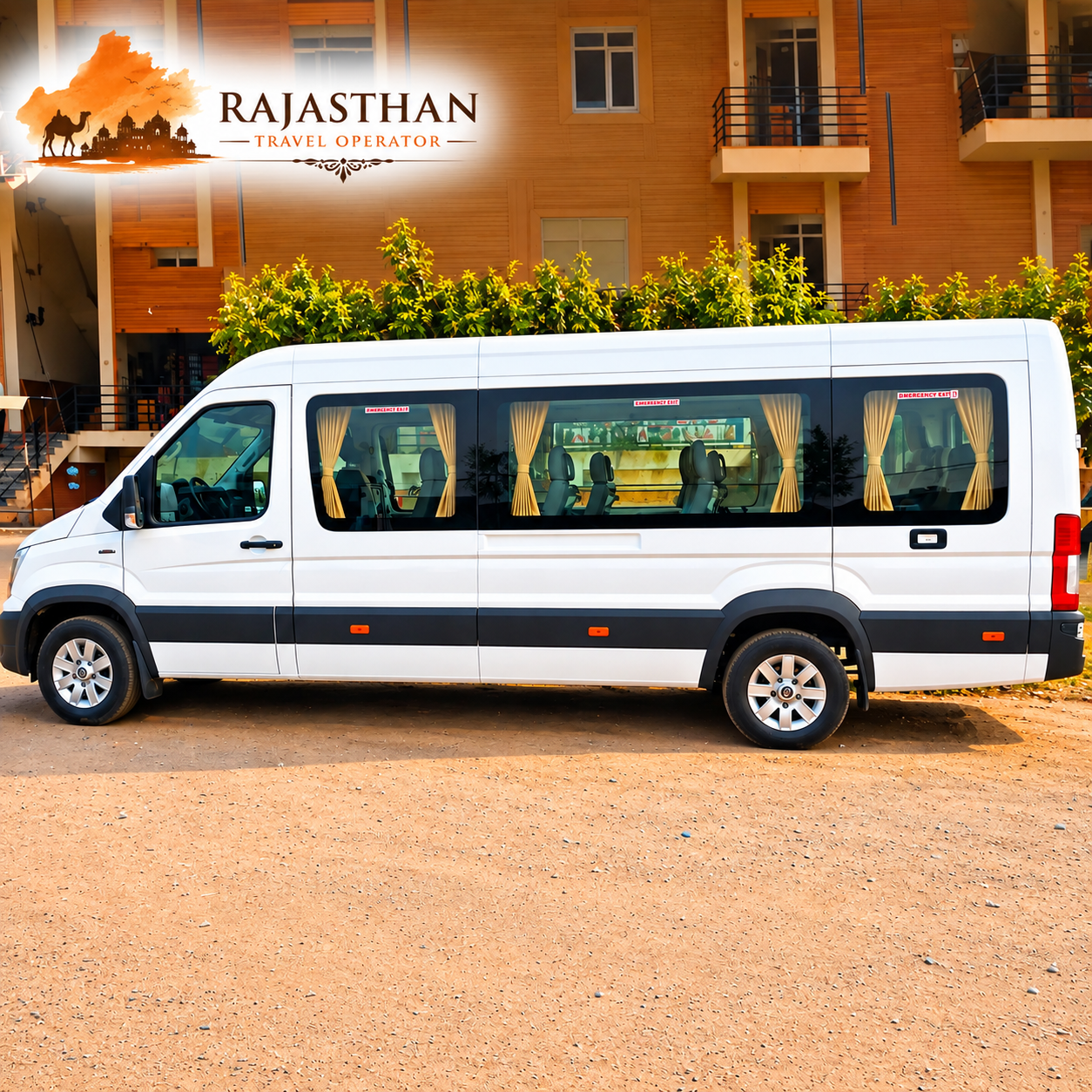
Curtains and interior finish. Small on their own, but they add up to a cabin that actually feels considered rather than purely functional — useful for blocking afternoon sun on a west-facing highway stretch, and for a bit of privacy on longer trips.
A working sound system. Minor in the grand scheme, but on a multi-hour drive with a mixed-age group, it’s the difference between a quiet, slightly tense cabin and one where the trip actually feels like part of the holiday.
None of these change the vehicle’s fundamental chassis, seat count, or luggage capacity. Luxury trim is about how the trip feels, not how many people or bags the vehicle can carry — that stays tied to the underlying model, whether it’s a 10 seater tempo traveller, a tempo traveller 12 seater, or something larger.
What Luxury Trim Does Not Change
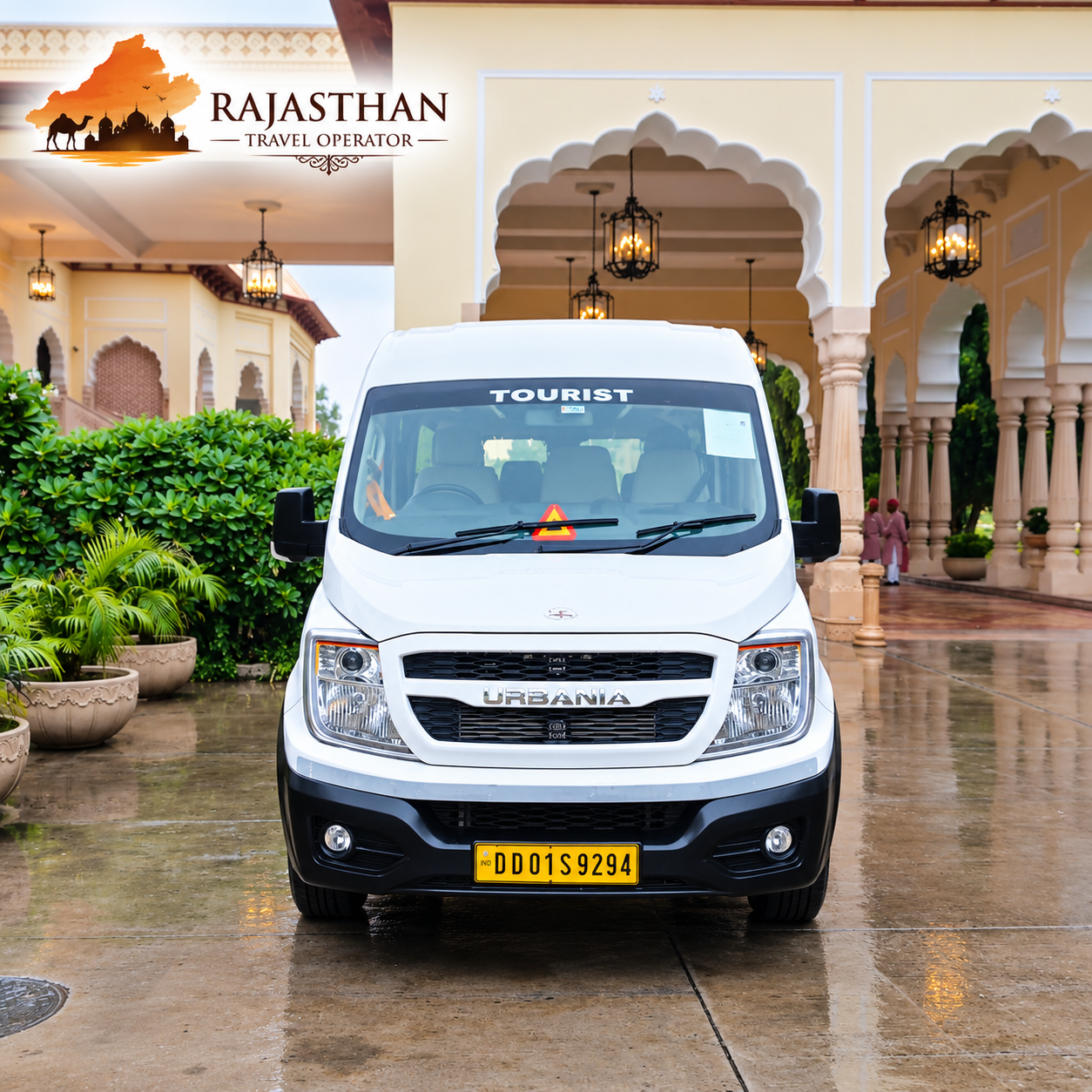
This is worth stating clearly, because it’s where quotes sometimes blur two separate decisions into one. Luxury trim doesn’t add extra luggage space — that’s determined by the chassis and roof carrier, not the seat upholstery. It doesn’t change the number of seats or the row spacing — that’s a seating configuration question, covered separately under Maharaja seat layouts if wider individual chairs matter more to your group than a standard row setup. And it doesn’t change the fundamental ride quality of the chassis itself — a luxury-trim standard tempo traveller still rides on a ladder frame, with the same handling characteristics as the basic version of the same body. If ride quality on long highway stretches is your actual priority above seat comfort and finish, that’s a chassis decision, and it points toward the Urbania tempo traveller platform instead, not toward luxury trim on a standard body.
Keeping these three things separate — trim, seating configuration, and chassis — is the single most useful mental model for navigating this entire category without overpaying for the wrong upgrade.
Why the Roof Carrier Advantage Matters More Than People Realise
Because the luxury trim sits on the same ladder-frame chassis as the basic version, it keeps the one advantage that no amount of Urbania comfort can match: a roof carrier. Big suitcases go up top under a tarp and rope, the boot behind the last row stays free for day bags and water bottles, and the aisle stays walkable even with a full group aboard. For any multi-day, multi-city Rajasthan circuit — Jaipur to Jodhpur to Udaipur, a full Golden Triangle loop, or a run out to Jaisalmer — this single fact usually matters more to how the trip actually goes than any interior finish detail.
This is why a luxury tempo traveller on the standard chassis is often the more practical premium choice for a bag-heavy family trip, compared to paying a similar or higher premium for the luxury Urbania tempo traveller, which trades that roof storage away entirely for a smoother highway ride. Neither is wrong — they’re solving different problems, and it’s worth being honest with yourself about which one your specific trip actually has.
Across the Seat Count Range: How Luxury Trim Shows Up Differently
At the smaller sizes — the 9 and 10 seater tempo traveller range — luxury trim is often the difference between a short trip feeling merely fine and a longer one feeling genuinely comfortable. For a family doing a weekend circuit to Ranthambore or Pushkar, it’s a worthwhile upgrade at a relatively small cost increase.
At the mid-size range — the tempo traveller 12 seater and 12 seater hire in Jaipur — this is where luxury trim earns its keep most reliably. It’s the size most families actually book for a proper multi-day Rajasthan circuit, and the collective hours a mid-size group spends together in the vehicle make the AC and seat quality difference add up fast across several long driving days.
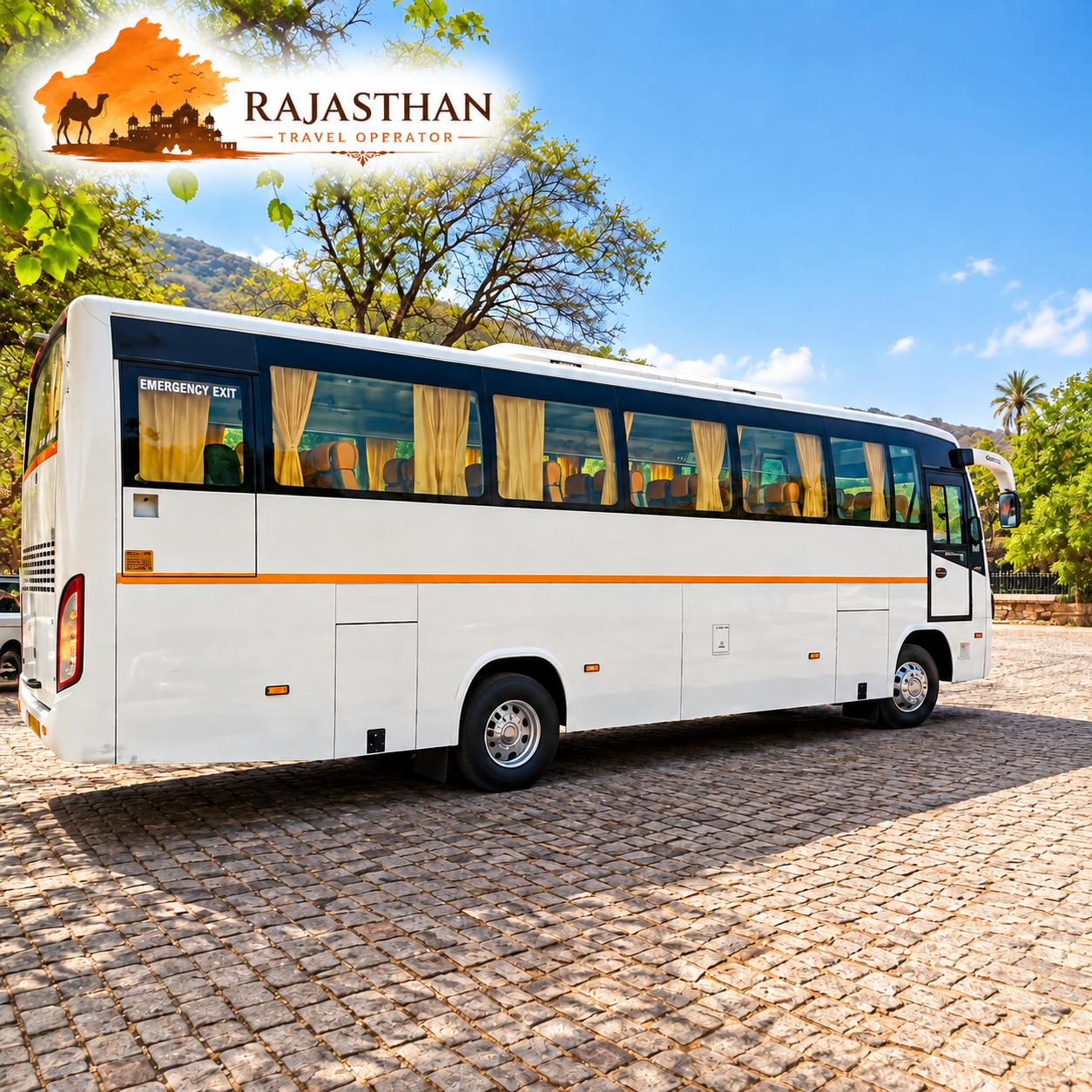
At the larger sizes — the 16 seater tempo traveller, tempo traveller 17 seater, and 20 seater tempo traveller — luxury trim stops being optional in any practical sense. With this many passengers spending real hours together on a highway leg, a dashboard blower simply can’t keep the back rows comfortable, and the collective discomfort of a large group in a basic-trim vehicle compounds fast on a multi-day trip. This is the bracket where the premium is most worth paying, almost as a baseline rather than an upgrade.
Luxury Trim vs. Maharaja Seating: Two Different Upgrades
People sometimes assume these are the same thing, and they’re genuinely not. Luxury trim upgrades AC, seat padding, and finish, while keeping the same number of seats in the same row layout. Maharaja seating reduces the seat count in exchange for wider individual chairs with more space between rows. You can have a basic vehicle with Maharaja seats, or a luxury-trim vehicle with standard rows — they’re independent decisions that happen to often get bundled together in marketing.
If your group is small enough that losing some seats to gain width doesn’t create a capacity problem, and legroom is the priority, look at Maharaja configurations. If your group needs every seat it’s booked and simply wants a more comfortable version of that same seating, luxury trim alone is the right call. Many fleets can also combine both — luxury trim on a Maharaja-configured vehicle — worth asking about directly if budget allows.
What Luxury Trim Actually Costs, and Why
The premium over a basic vehicle reflects real equipment differences, not just marketing markup — roof-mounted AC units cost more to install and run than a dashboard blower, better seats cost more to source and maintain, and a well-kept interior takes more upkeep between bookings. Expect the premium to scale somewhat with seat count too, since a larger vehicle needs a bigger AC system and more seats to upgrade.
What’s worth watching for is whether the “luxury” label is backed by a specific, checkable answer, or just asserted. Ask the operator directly: is the AC roof-mounted or dashboard, what year is the vehicle registered, and can you get a recent photo of the actual vehicle being assigned to your booking. A transparent operator answers all three quickly. One that responds with general reassurance instead of specifics is worth a second look before you pay an advance.
Routes Where the Premium Shows Up Most
Jaipur–Udaipur and Jaipur–Jodhpur. Six to seven hours of highway where the AC and seat comfort difference stops being a nice detail and starts being the reason the whole group is still in a good mood by the second toll plaza.
The Golden Triangle. Jaipur–Agra–Delhi across three or four days, where the combination of long driving hours and multiple hotel stops makes both the interior comfort and the roof carrier’s luggage flexibility genuinely valuable together.
Jaipur–Jaisalmer. One of the longest single-day drives in the state, and one of the clearest cases where a basic-trim vehicle would leave a group genuinely uncomfortable by the final stretch.
Mount Abu and the Aravalli belt. Longer, hillier driving where a well-maintained, properly cooled vehicle matters even more, since gradient sections put more strain on both the engine and the AC system.
Temple and pilgrimage circuits. Khatu Shyam Ji, Salasar, Nathdwara, Pushkar — often involving mixed-age groups with elderly passengers, where consistent AC and comfortable seating make a genuine difference to how the trip is remembered.
Before You Book — Six Things to Confirm in Writing
Ask exactly what “luxury” includes. AC type, seat material, curtains, sound system — get it named specifically, not assumed from the label alone.
Confirm the AC is roof-mounted, not a stronger dashboard unit marketed as an upgrade. These are genuinely different systems with different comfort outcomes on a long trip.
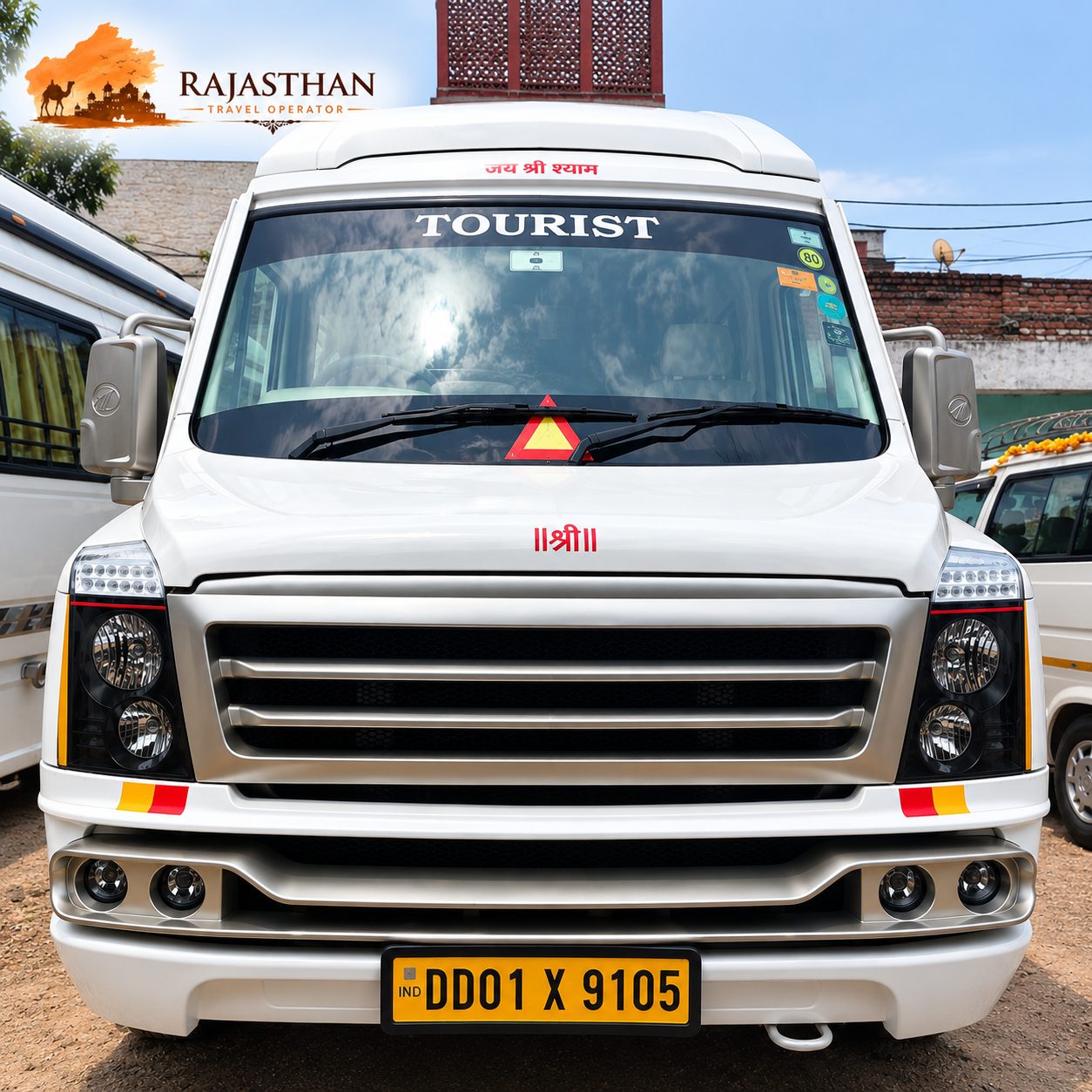
Ask for the vehicle’s registration year. A newer vehicle in luxury trim performs more reliably than an older one dressed up for photos — a fast, direct answer is itself a good sign about the operator.
Confirm the roof carrier is fitted for your specific bag count. It’s standard on this chassis, but say your exact luggage volume and get it confirmed in writing rather than assumed.
Get the kilometre cap and beyond-cap rate. Multi-city Rajasthan routes cross the daily allowance routinely — get the per-km overage figure in the same message as the quote.
Get one all-inclusive number. Base rental, driver allowance, tolls, permits, night halt — folded into a single figure on WhatsApp, so the luxury premium is a visible, specific line rather than buried into a vague total.
Frequently Asked Questions
What’s the actual difference between a basic and luxury tempo traveller? Roof-mounted AC instead of a dashboard blower, better-padded reclining seats, curtains and interior finish, and a working sound system. The chassis, seat count, and luggage capacity stay the same as the base version of the same body.
Does luxury trim mean more legroom or wider seats? Not necessarily — that’s a separate seating configuration decision, covered by Maharaja seat layouts. Luxury trim upgrades comfort and finish within the existing row layout, unless you specifically request both upgrades together.
Is luxury trim worth it for a short trip? Less so — the comfort gap between basic and luxury matters far more over five or six hours than over a forty-five-minute city transfer. For genuinely short, local bookings, it’s a smaller priority.
Should I choose luxury tempo traveller or Urbania for a comfortable trip? Luxury tempo traveller if luggage and budget matter more, since it keeps the roof carrier advantage. The Urbania tempo traveller platform, especially in its own luxury Urbania trim, if ride quality on long highway stretches matters more than roof storage.
How early should I book a luxury tempo traveller in Jaipur? Four to seven days ahead in normal season, depending on seat count. Around wedding muhurats, Diwali, the Pushkar fair window, and long weekends, book seven to fourteen days out — the well-maintained luxury-trim vehicles across every size get committed first, and what’s left over rarely matches the listing photos.
Final Word
Luxury trim on a tempo traveller is a genuinely worthwhile upgrade when it’s the real thing — roof-mounted AC that actually cools the whole cabin, seats that hold up over a long day, and a vehicle that matches its photos when it shows up at your gate. It’s a wasted premium when it’s just a label attached to a basic van. Full comparisons across the whole fleet, standard and premium alike, are on the tempo traveller on rent page if you want to see exactly where this trim fits against every seat count in the range.
Ask what’s specifically included, confirm AC type and registration year directly, and get one all-inclusive quote in writing before you commit. Do that, and the word “luxury” stops being a guess and starts being exactly what you paid for.