Why This Size Deserves More Than a Quick Look
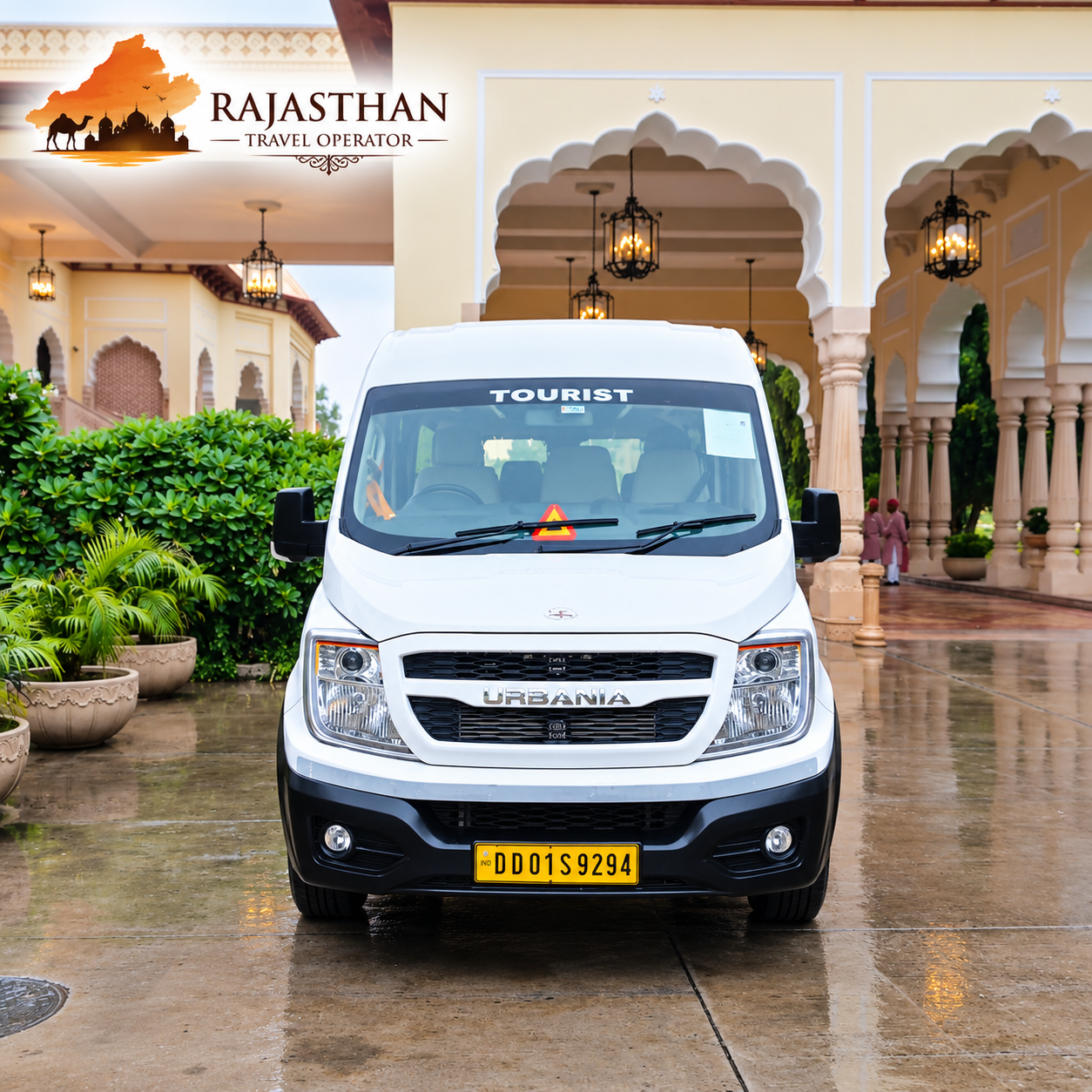
Most people searching for a “12 seater tempo traveller in Jaipur” already know roughly what they need — a family or small group, a real itinerary, and a vehicle that can hold everyone without splitting into two cars. What they usually don’t know going in is how much variation hides behind that one number. Twelve seats can mean a properly spaced body with real legroom throughout, or a tighter configuration where the same body used for a 10 seater has simply had two more rows filled in. Both get quoted as “12 seater.” Only one of them is a comfortable twelve.
This guide goes deeper than a quick comparison — body construction, seating reality, luggage math, trim options, route-by-route detail, and the actual cost drivers, so that by the end you know exactly what to ask for and why it matters.
The Body: What “12 Seater” Actually Sits On
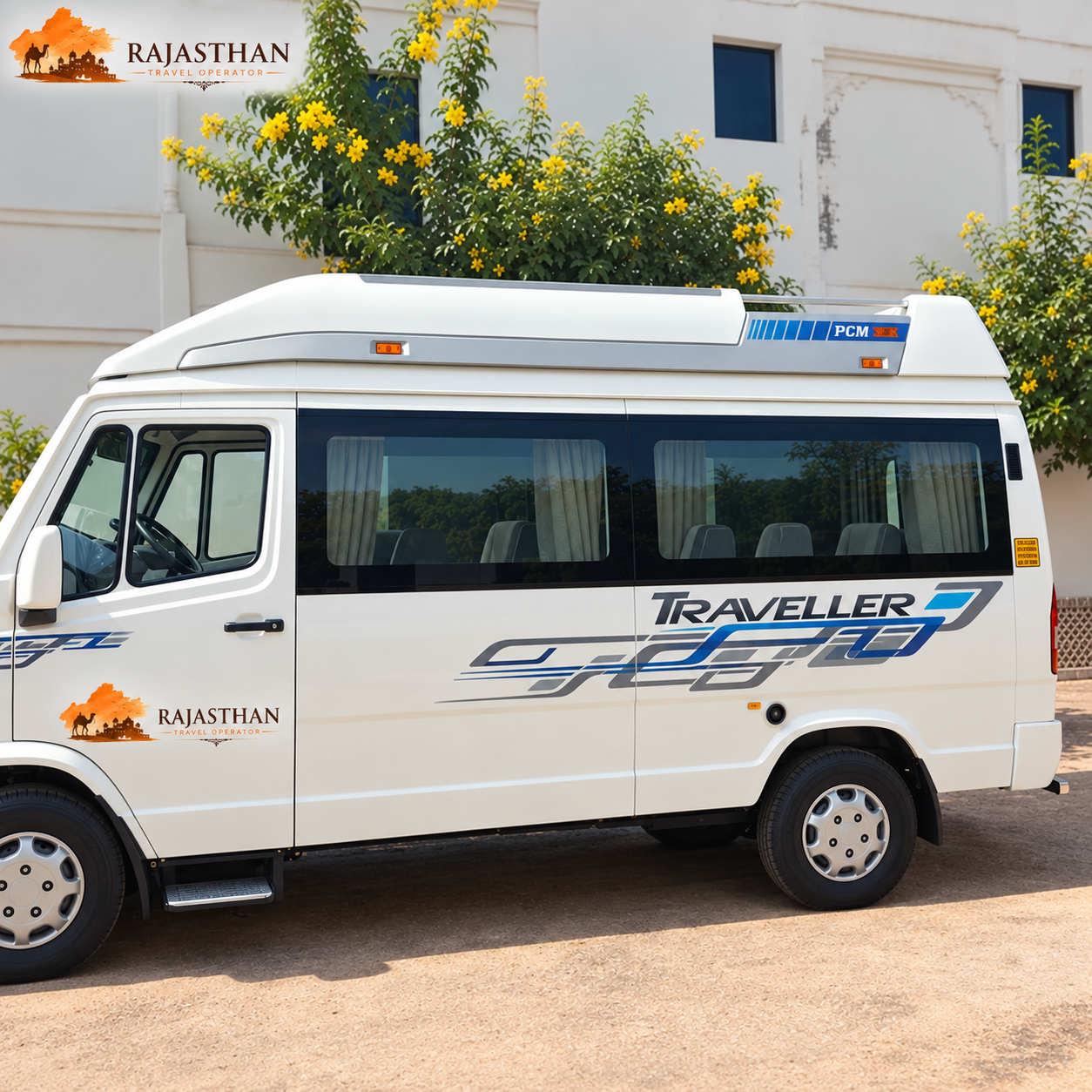
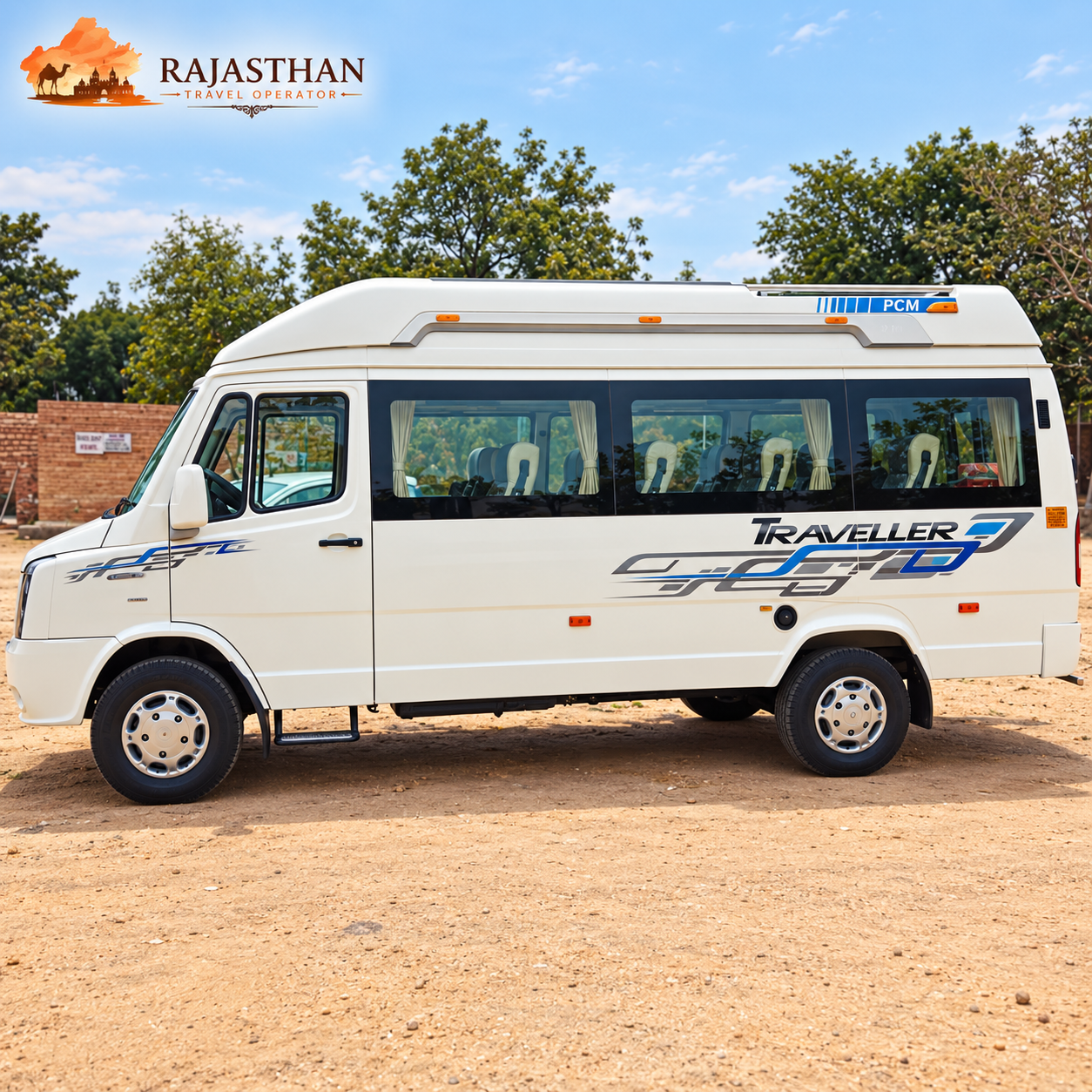
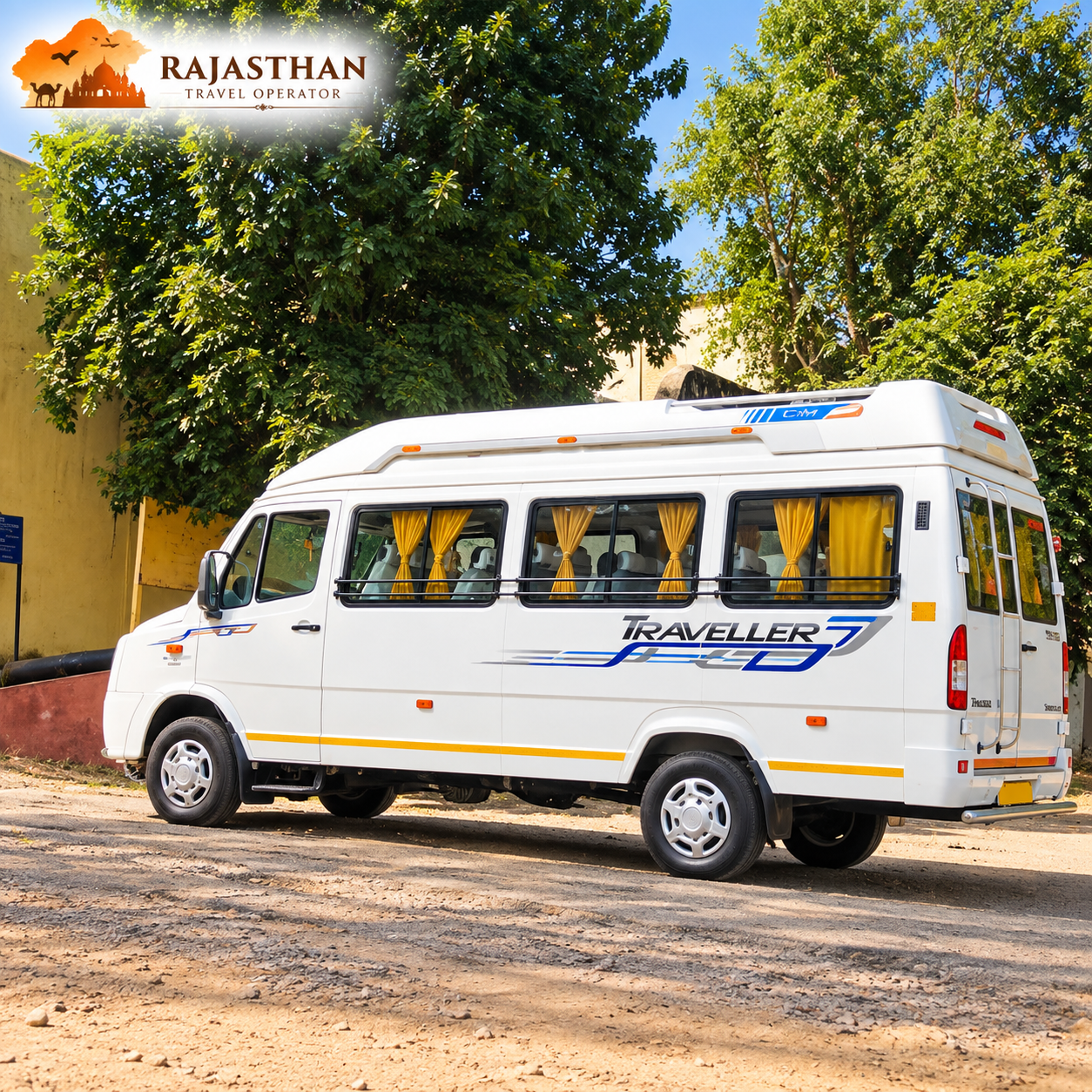
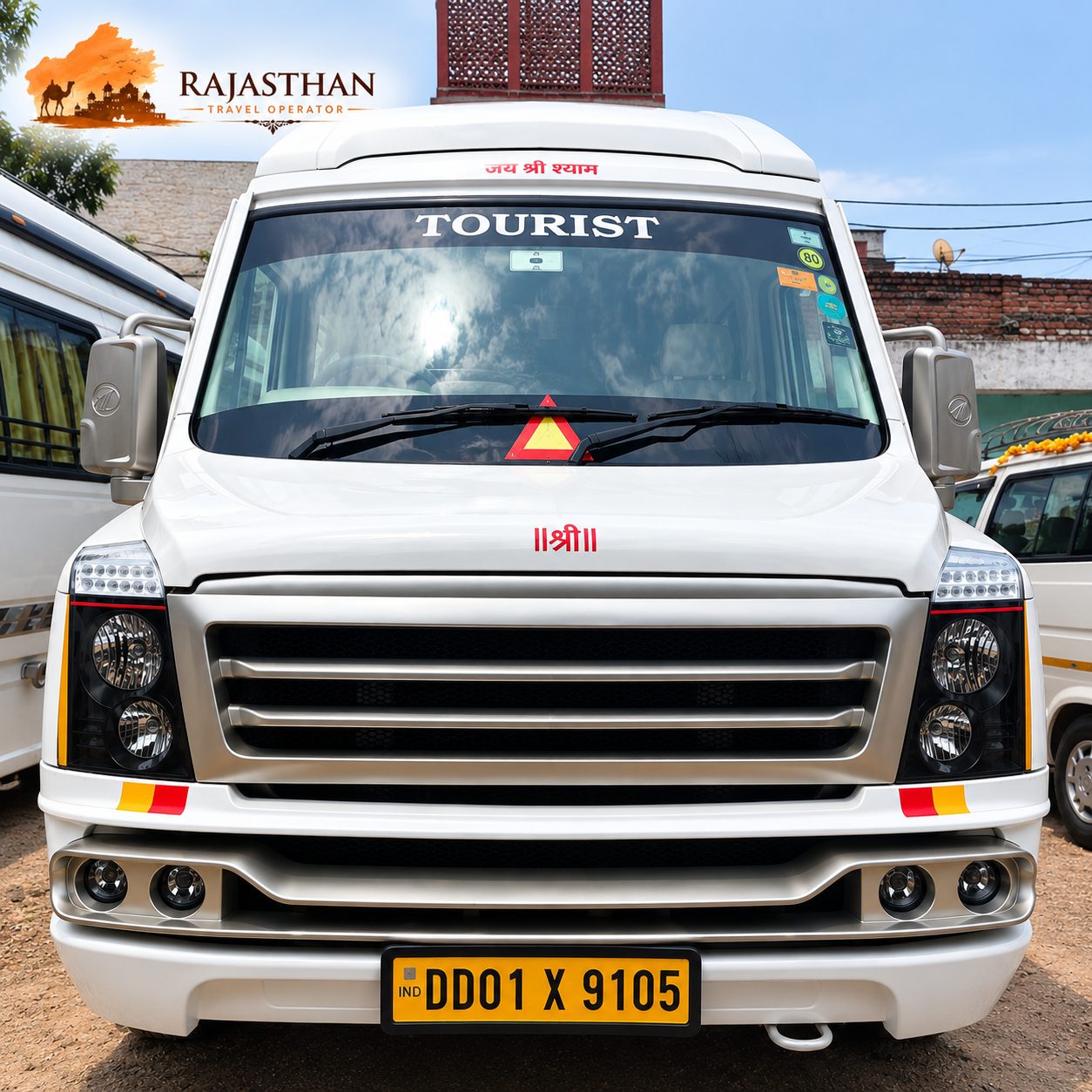
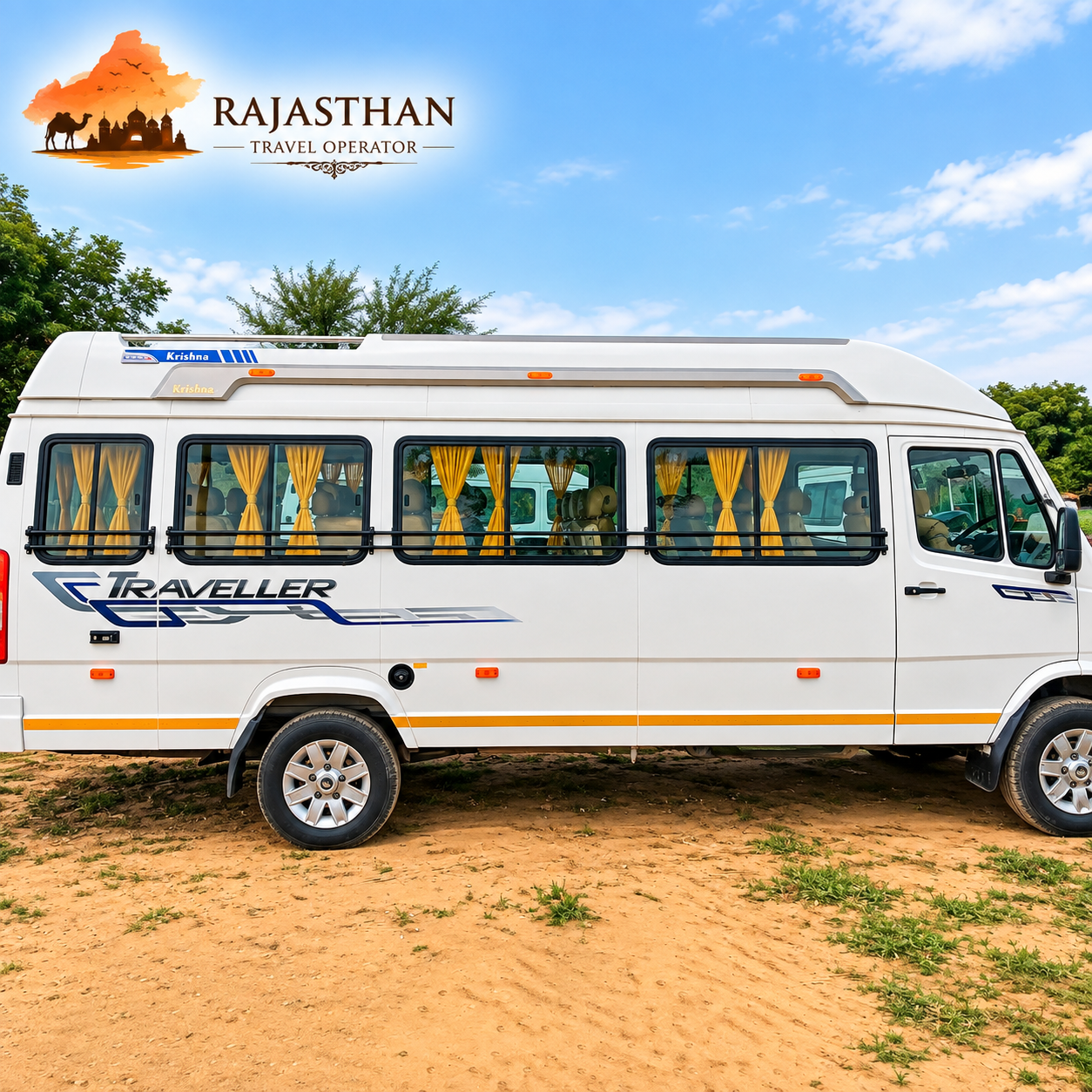
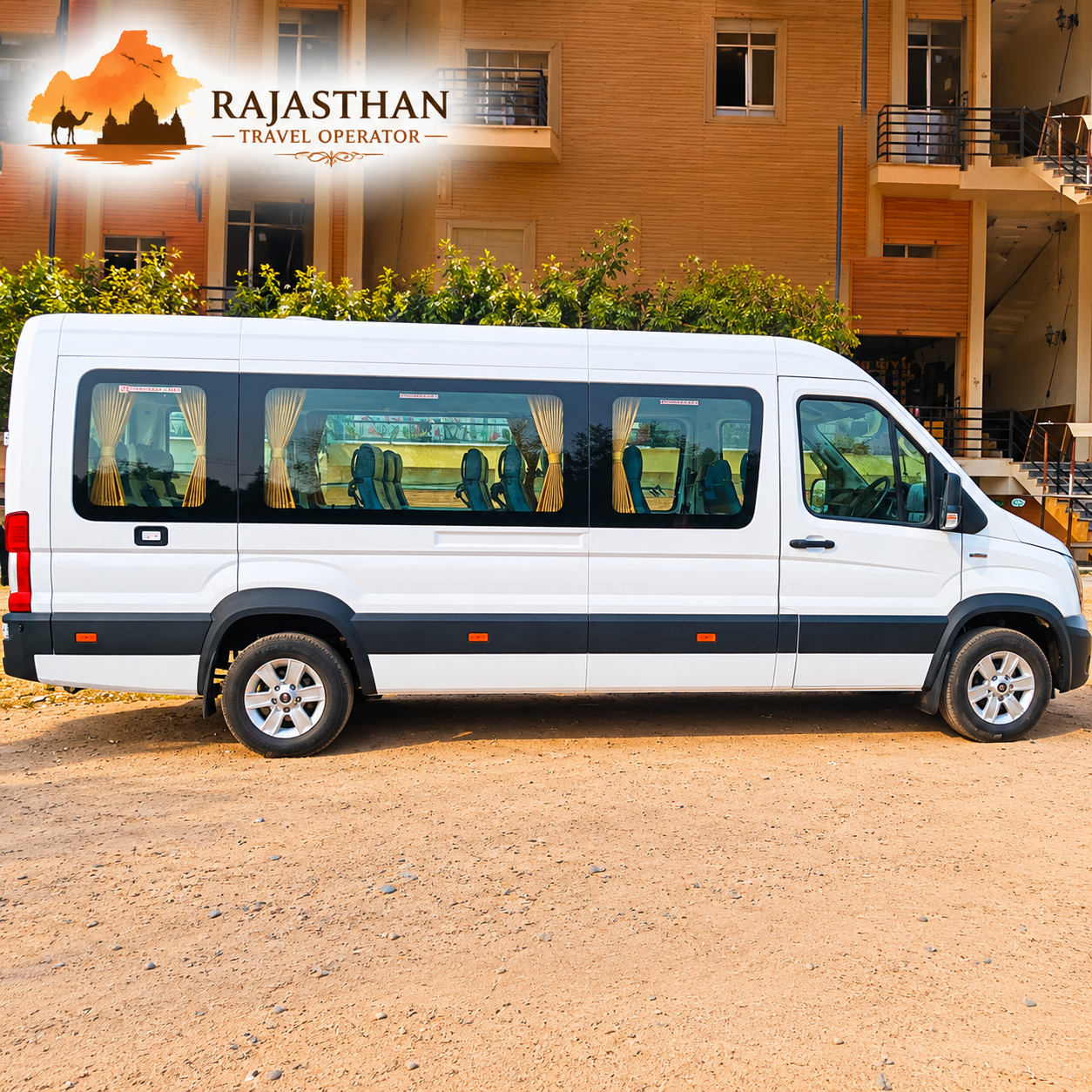
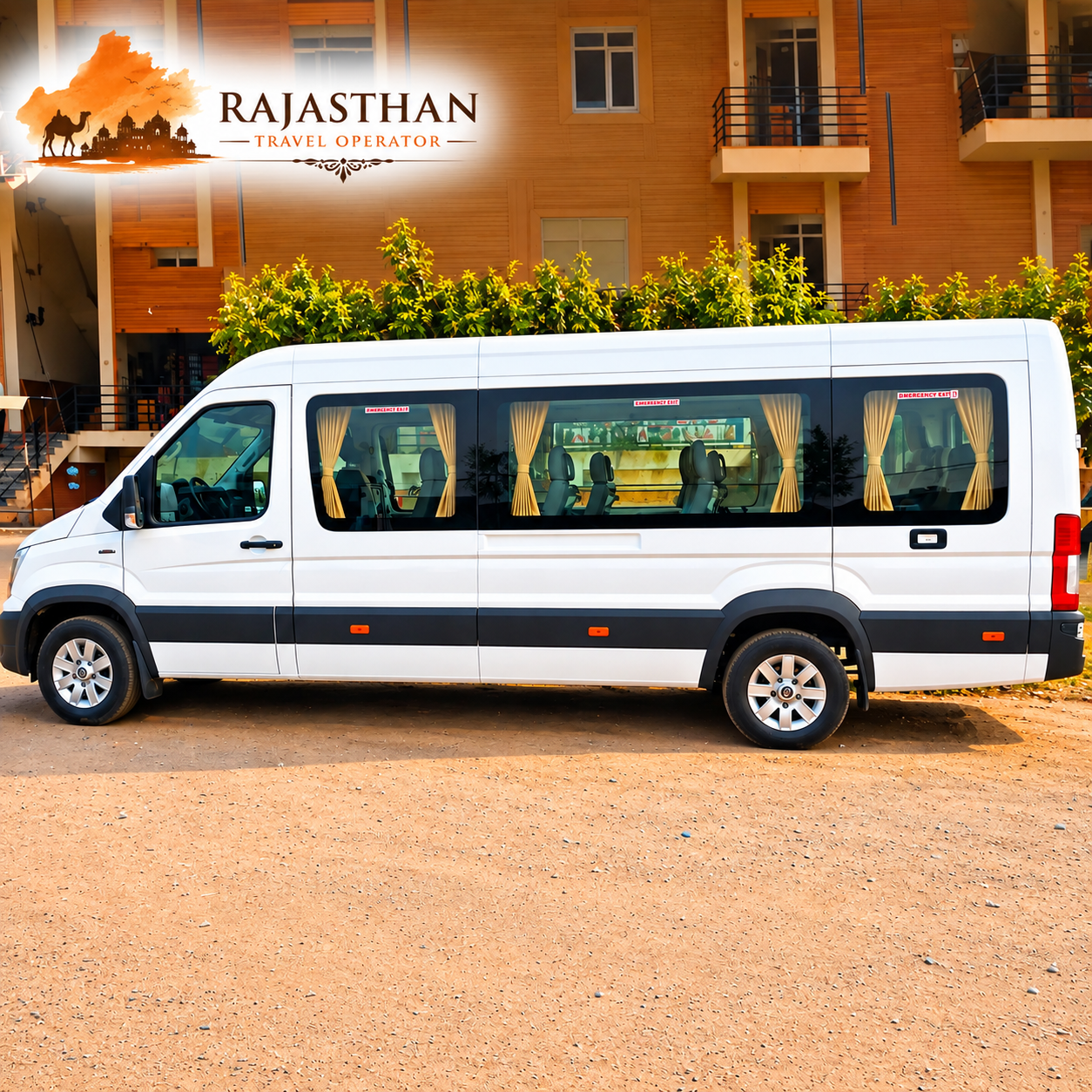
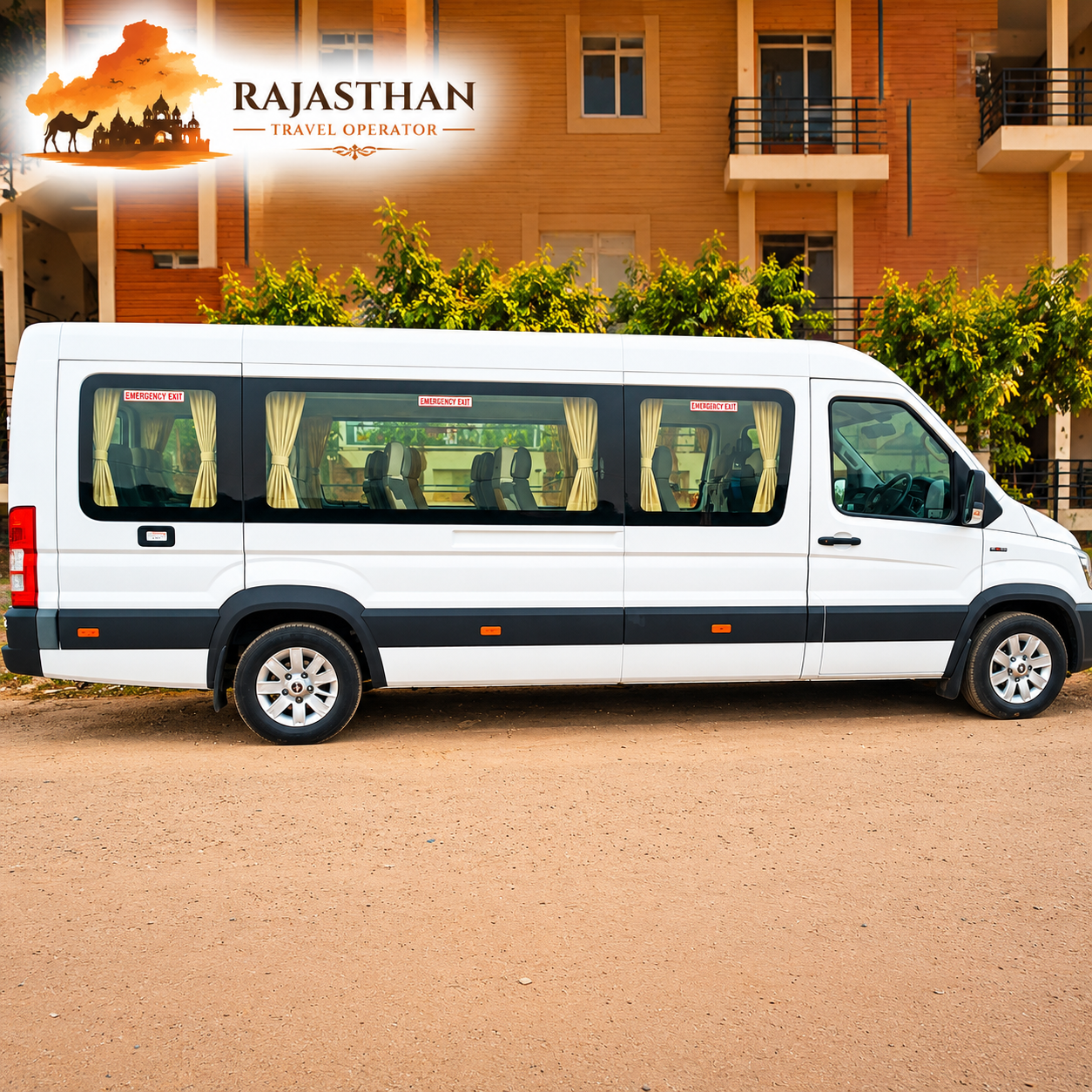
A tempo traveller at this seat count is built on the same ladder-frame chassis family used across the standard range — from the 9 seater tempo traveller up through the larger bodies. The difference at twelve seats is that this is where operators split into two genuinely different approaches. Some fleets run their 12 seater on the same body used for the 10 seater, with two extra rows filled in — tighter legroom for the same footprint. Others use a longer body, closer to what’s used for the 16 seater tempo traveller, configured down to twelve seats with proper spacing throughout.
Because this seat count sits at almost the exact midpoint of the fleet, it’s often built on whichever body the operator has spare capacity on, reconfigured to twelve seats rather than ten or sixteen. That’s not a problem in itself — but it means the exact model and seat layout genuinely varies between operators in a way it doesn’t as much at the very small or very large ends of the range. Always ask for the specific model being quoted, not just the seat count.
Seating Reality: What Twelve Passengers Actually Experience
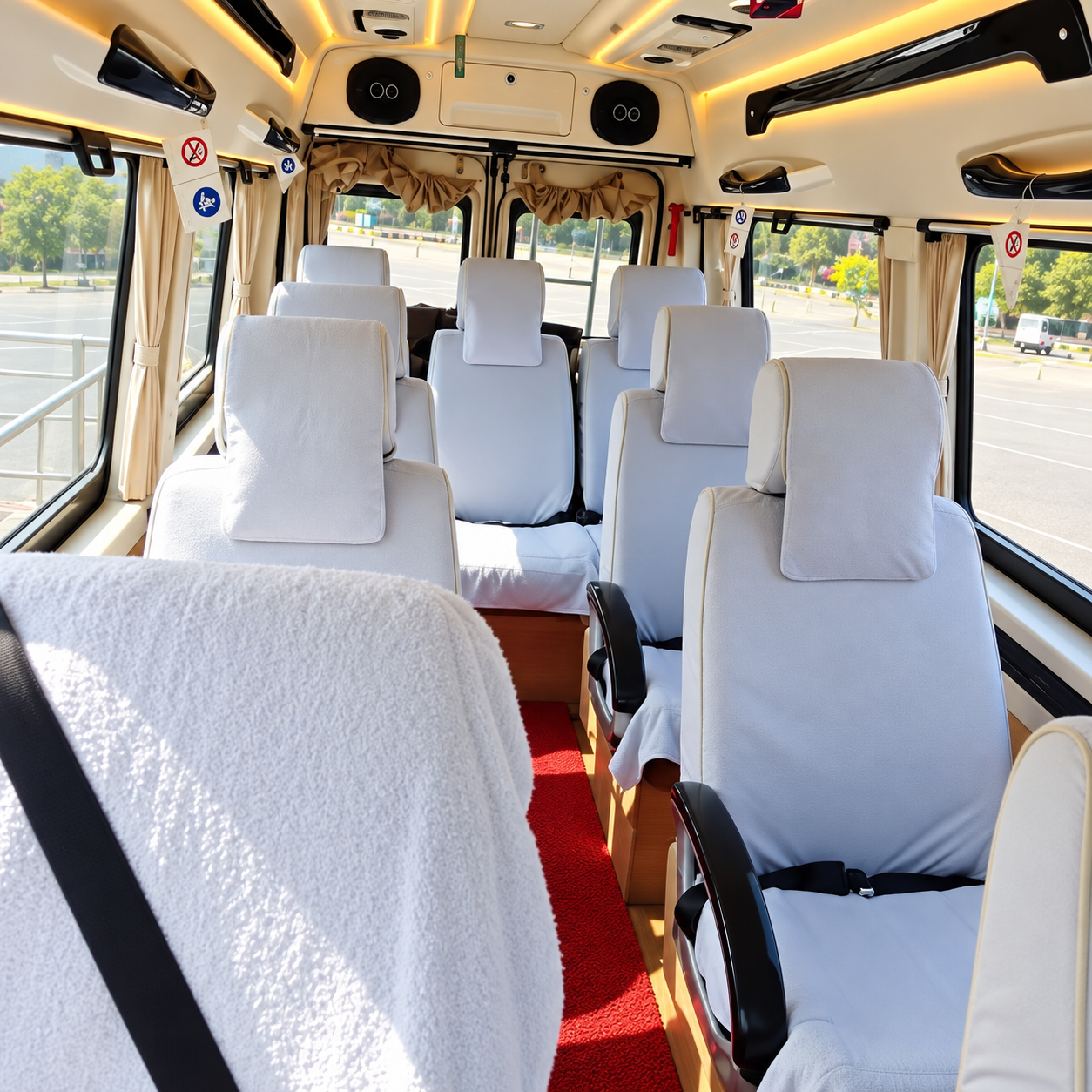
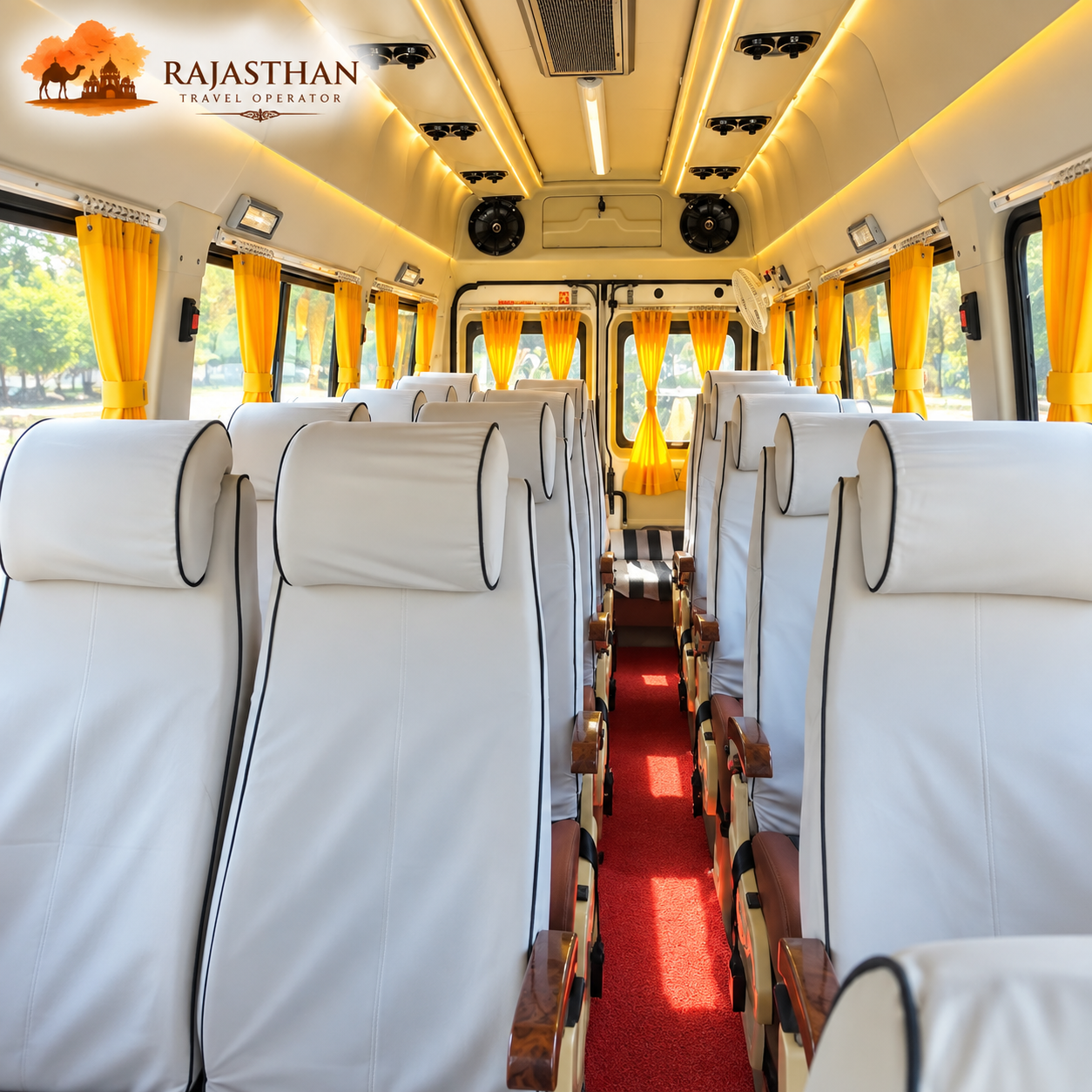
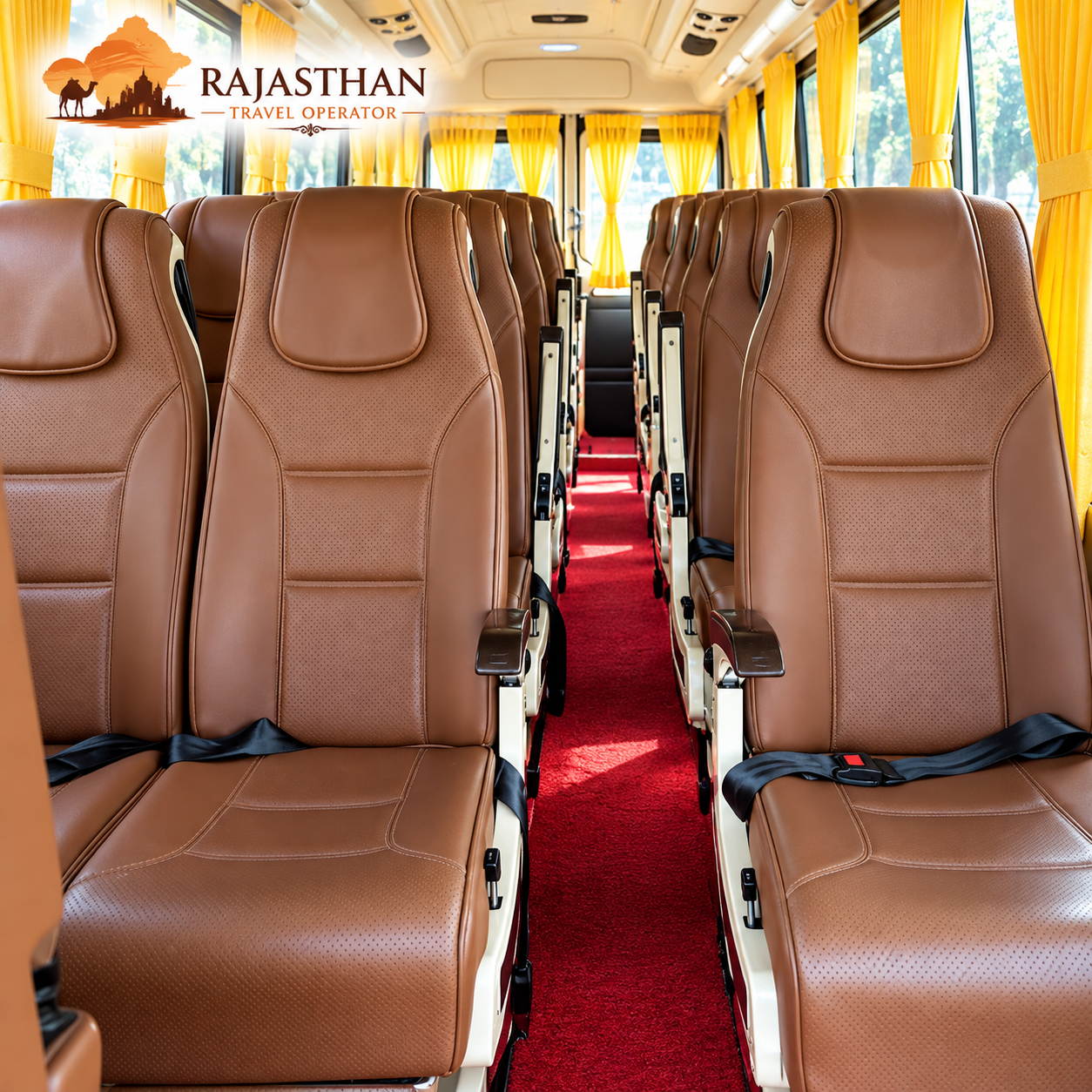
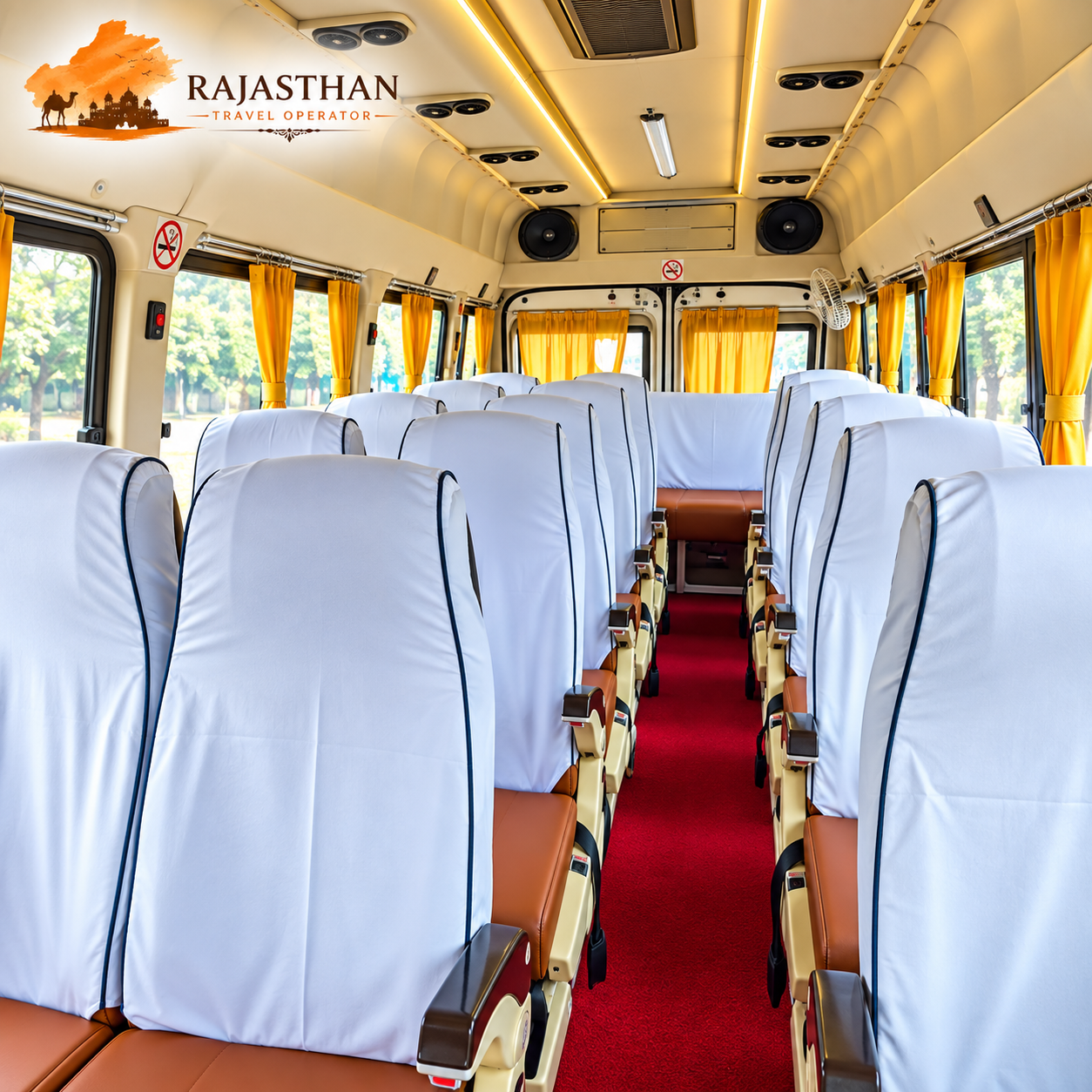
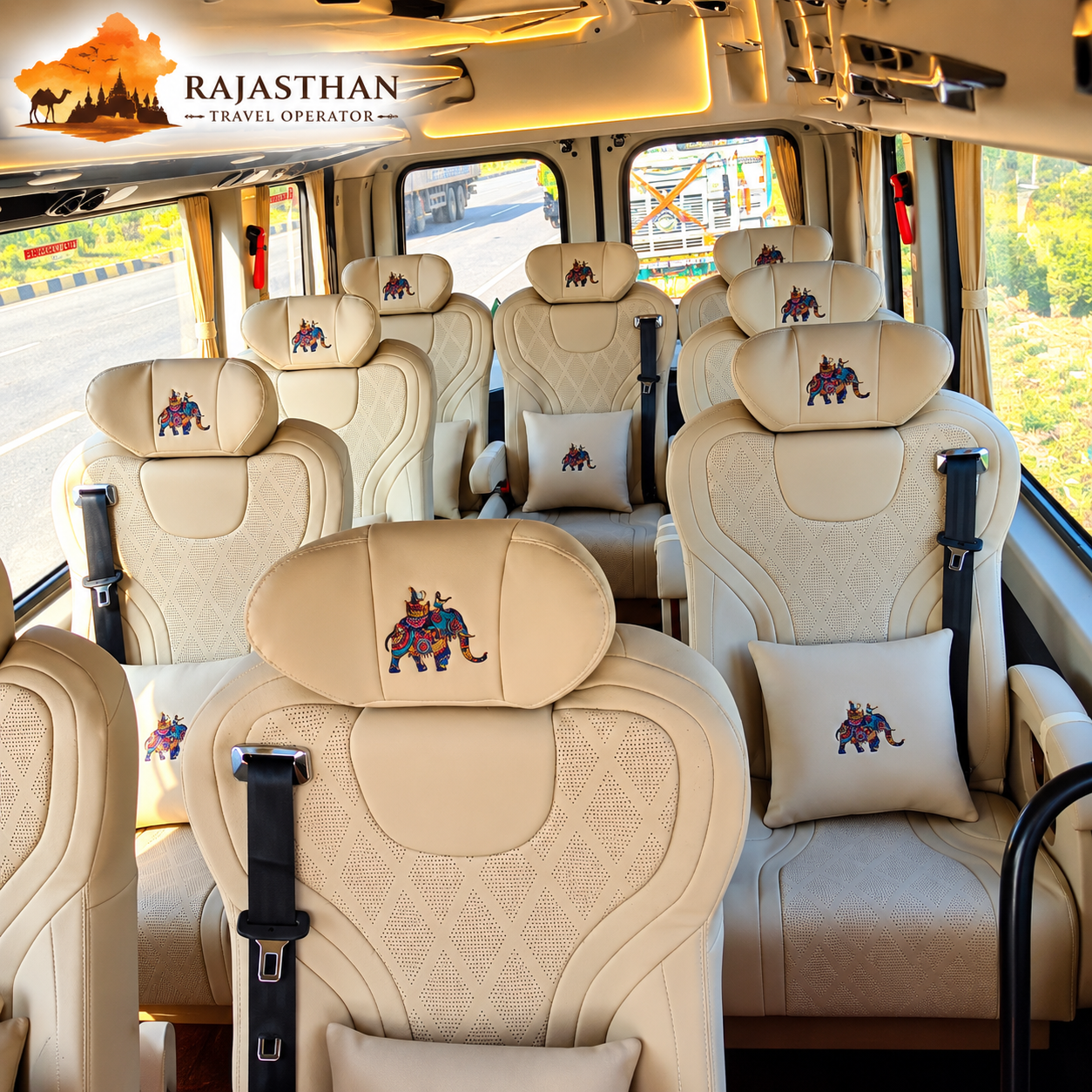
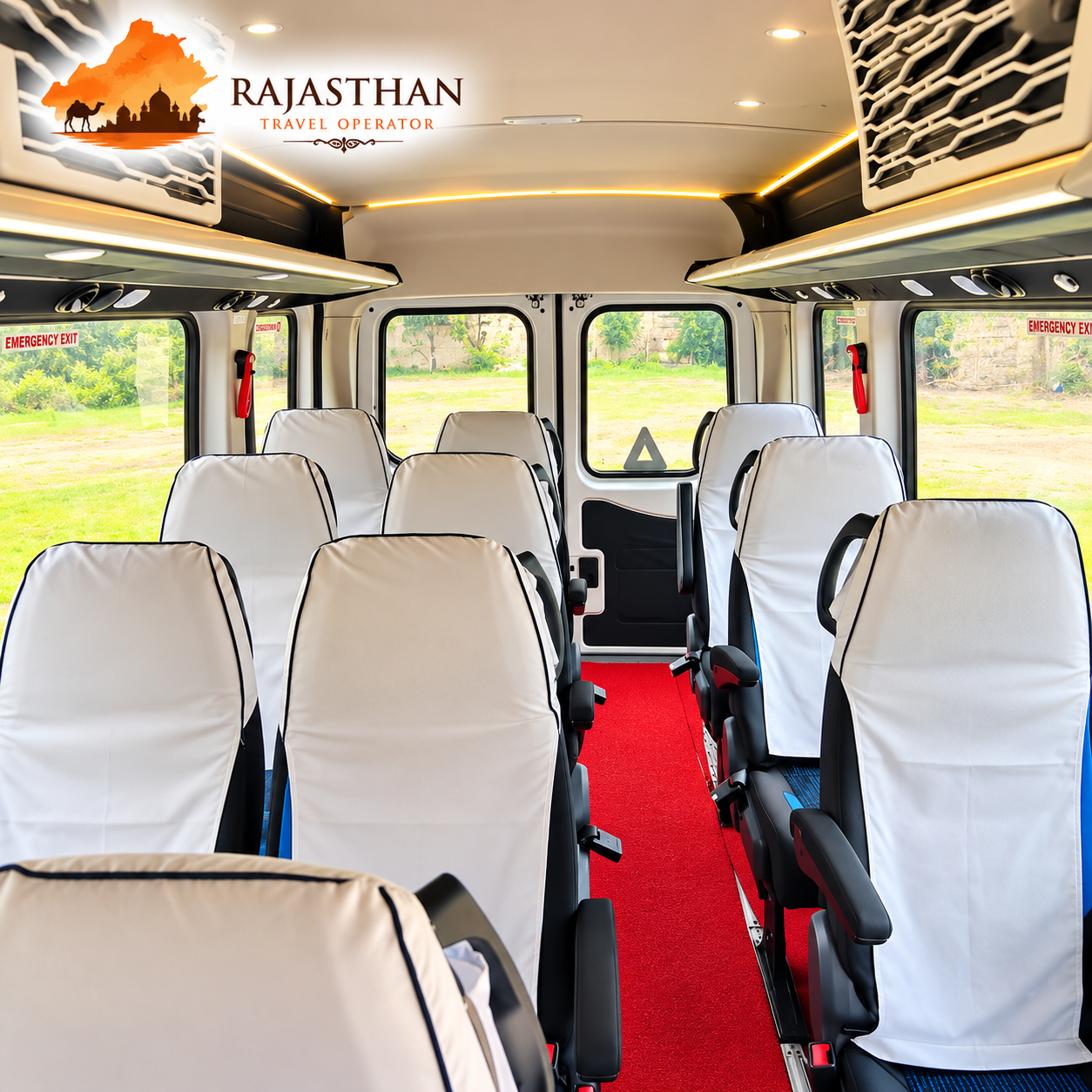
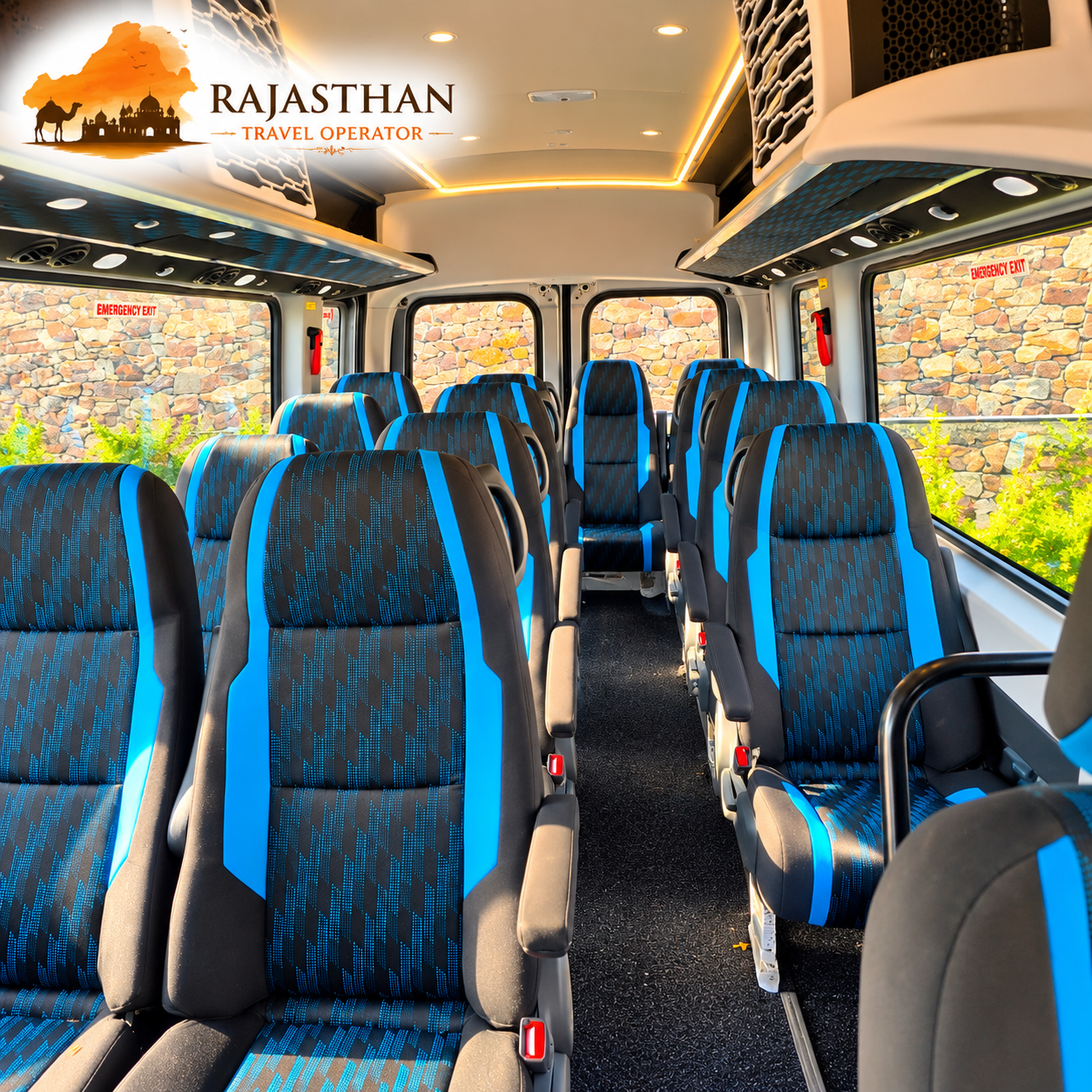
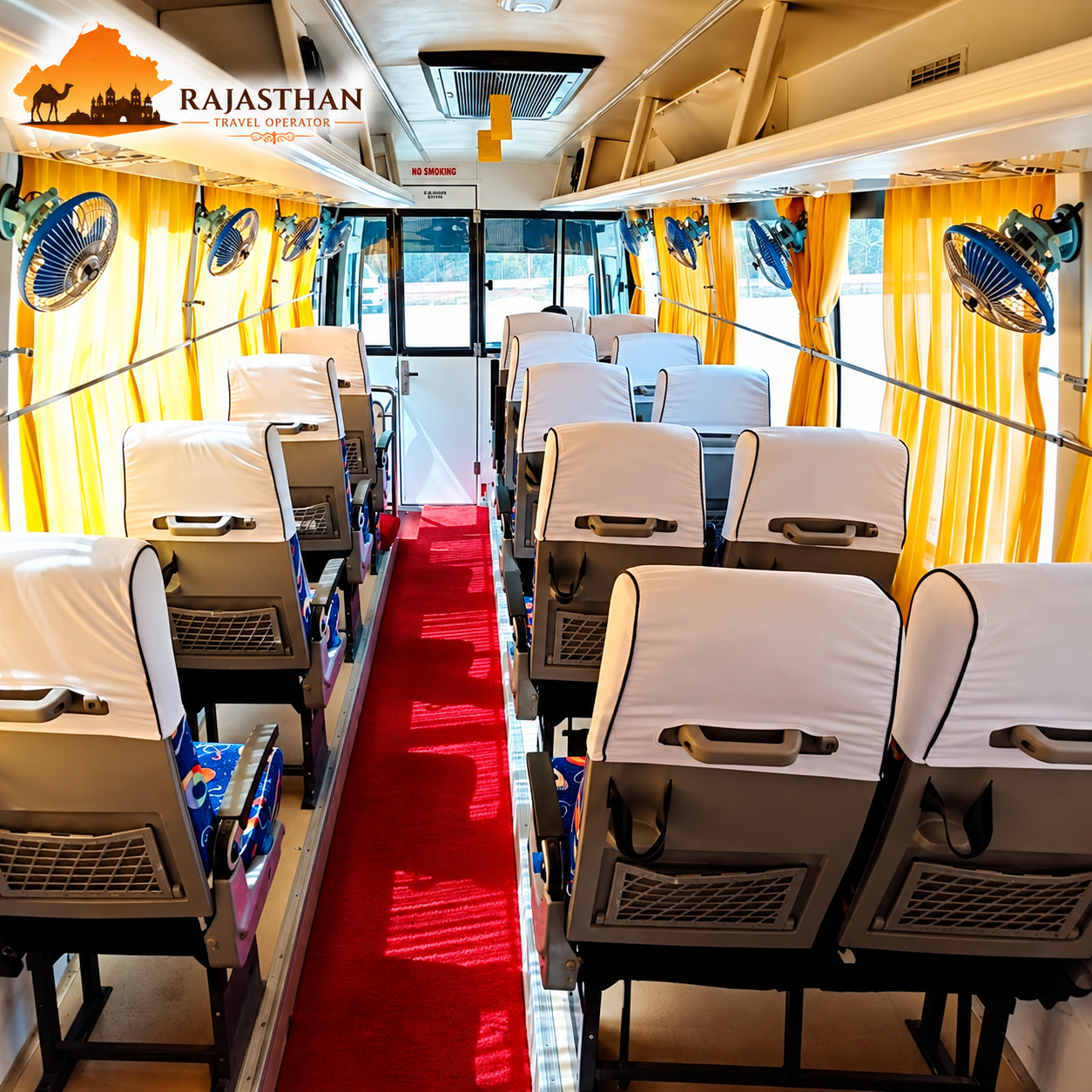
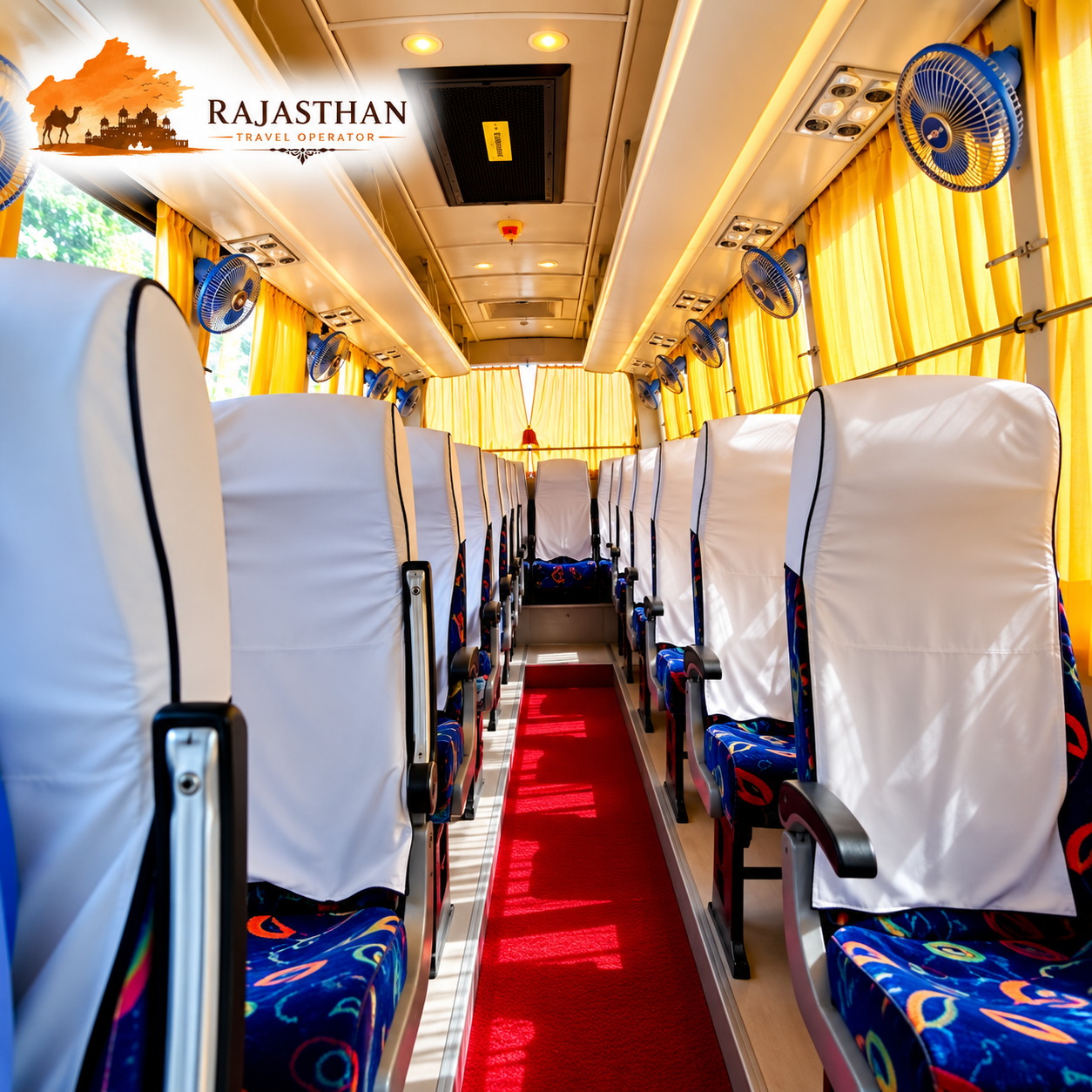
On a properly specified 12 seater, expect real space between rows and an aisle wide enough to move through without turning sideways past other passengers. Row spacing at this size should be noticeably better than a tightly packed 10 seater running on the same shorter body — if it isn’t, that’s a sign the vehicle you’re being quoted is closer to a stretched small van than a purpose-built mid-size body.
This is worth testing with a direct question to the operator: ask for the row spacing or general seat pitch, not just “comfortable seating.” A transparent operator will have this answer ready. One that doesn’t is worth treating cautiously, especially for a multi-day booking where twelve people will spend real hours in these seats.
Luggage: The Math That Actually Matters at This Size
Twelve adults on a multi-day Rajasthan circuit is a serious volume of luggage — not backpacks and overnight bags, but full-size suitcases for a week-long trip across multiple cities. This is where the standard tempo traveller chassis earns its keep over the Urbania tempo traveller platform, which at every seat count it offers has no roof carrier at all.
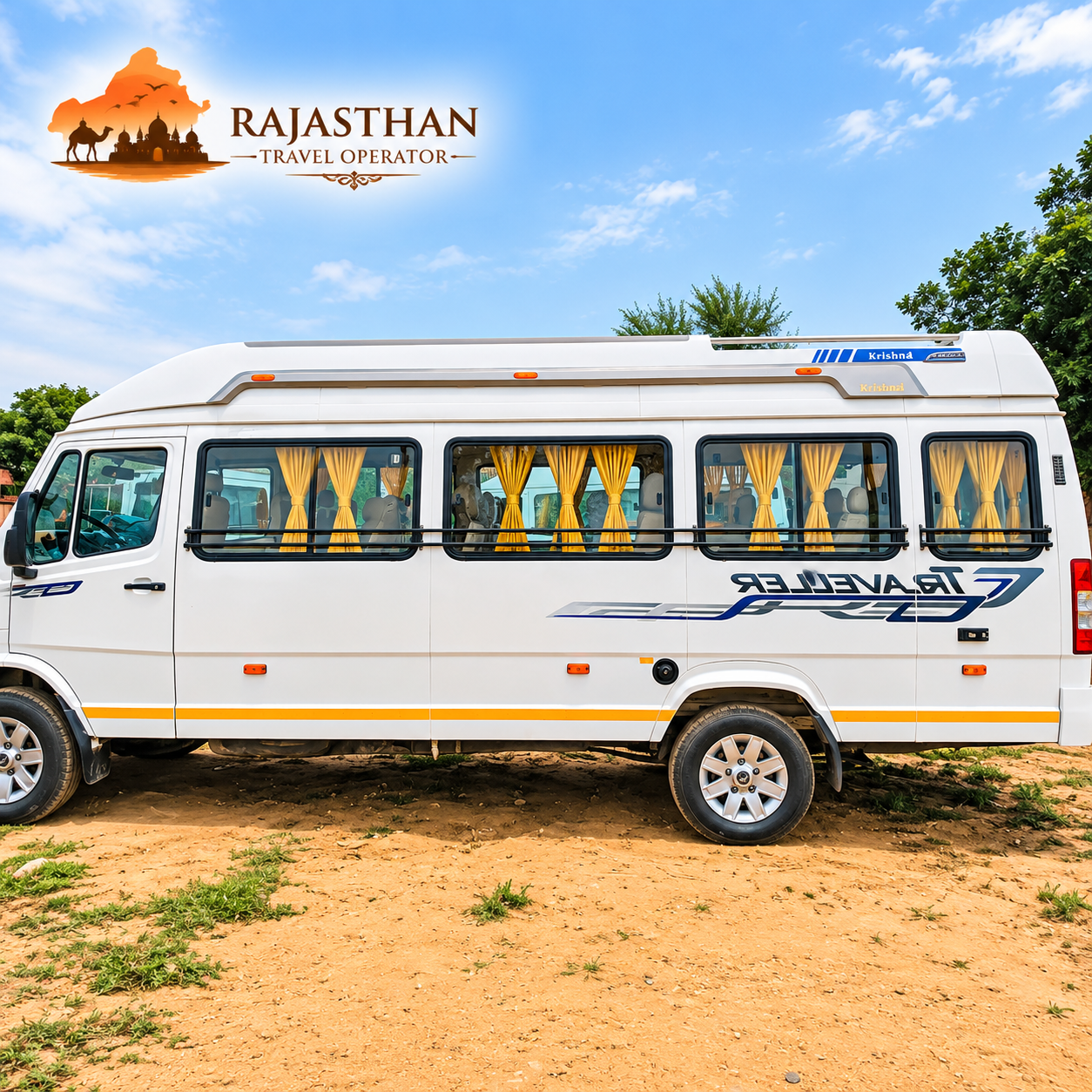
The 12 seater keeps its ladder frame, and with it, a roof carrier — which at this passenger count is close to essential for any real multi-day trip. Assume you’ll need it fitted, and say so clearly when booking. Give the operator your actual bag count and rough dimensions rather than a vague estimate, so the carrier can be sized and roped properly before the vehicle leaves for pickup. A 12 seater with twelve suitcases and no roof carrier confirmed in advance is one of the most common ways this booking goes wrong.
Trim Options, Explained Properly
Trim at this size isn’t a minor add-on — with twelve people spending real hours together on a multi-day trip, the gap between a basic setup and a properly equipped one compounds fast.
Basic trim gets you pushback seating and a dashboard blower. Workable for a short daytime transfer, genuinely uncomfortable on a six-hour highway leg in peak summer with a full group aboard.
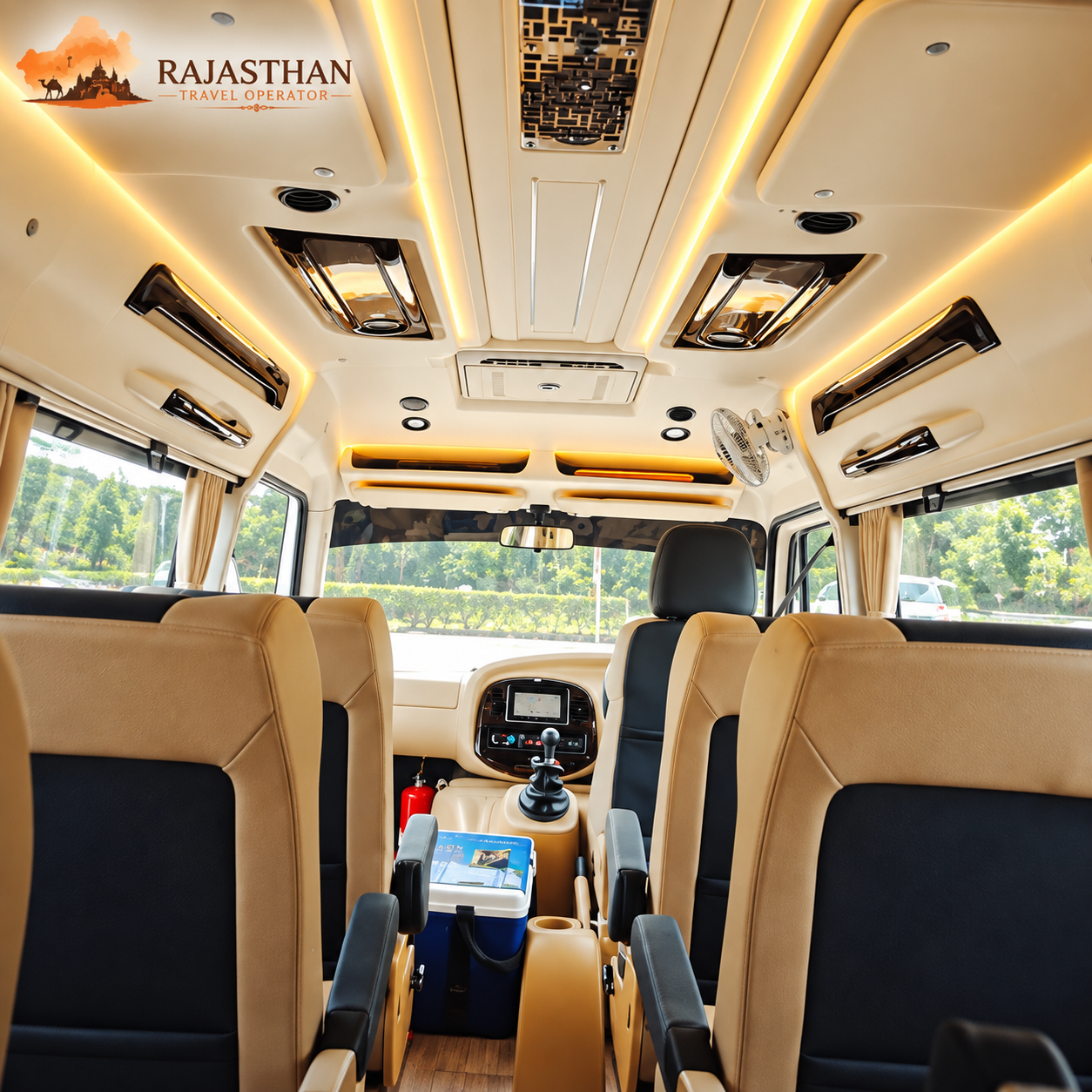
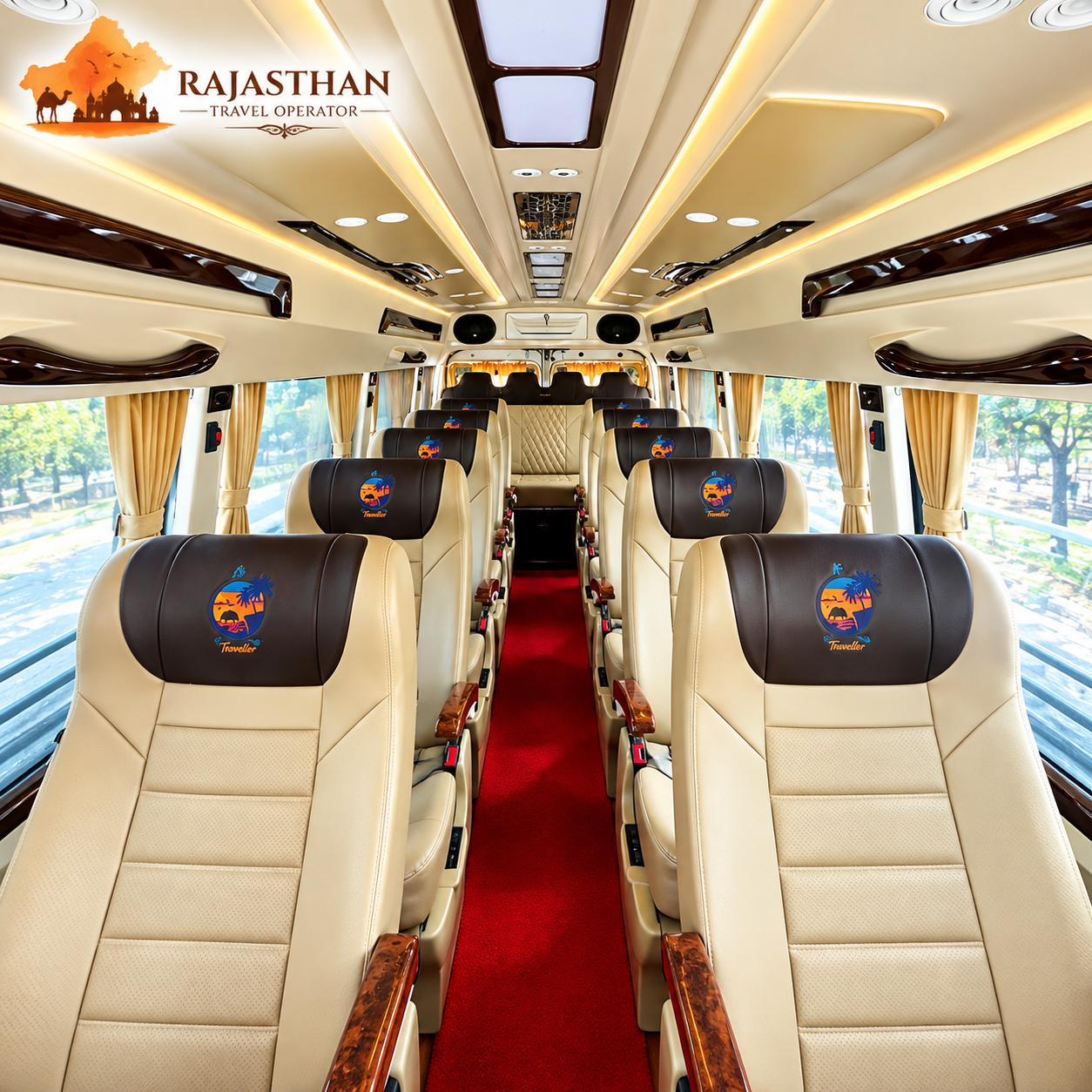
Luxury trim — see the luxury tempo traveller page for the full specification — adds roof-mounted AC, better seat padding, curtains, and a working sound system. At this seat count, roof-mounted AC is worth treating as close to essential rather than optional, since dashboard blowers struggle to cool a full cabin evenly on a long summer highway leg.
Wider individual seating is available on some fleets under a Maharaja seat tempo traveller configuration — fewer, wider chairs with armrests on both sides instead of standard rows. At twelve seats, this usually means a genuinely comfortable step up without cutting the headcount too aggressively, unlike at larger sizes where a full Maharaja layout starts to work against the group size the vehicle is meant to serve. Worth asking about by name if extra space matters more to your group than fitting exactly twelve people.
How the 12 Seater Compares Across the Fleet
Directly below it, the 10 seater tempo traveller is often built on a very similar or identical body, reconfigured with two fewer rows filled in. If your group is genuinely ten rather than twelve, that size will usually cost slightly less for essentially the same vehicle, with even more legroom per person. Directly above it, the 16 seater tempo traveller is a meaningfully larger jump — a longer body built specifically for large-group travel — and worth booking instead if your real number is closer to sixteen than twelve.
For groups considering the ride-comfort trade-off, the 12 seater Urbania is the closest premium alternative, with a noticeably smoother highway ride but no roof carrier at all — a real consideration given how much luggage a group this size typically carries on a multi-day trip. And for anyone whose headcount turns out smaller than expected once the final list is confirmed, the standard 10 seater or even the smallest sizes in the range are worth checking rather than overbooking a twelve-seat vehicle for a group that’s actually shrunk to eight or nine.
Route-by-Route: Where This Size Genuinely Performs Best
Jaipur–Udaipur and Jaipur–Jodhpur. Six to seven hours of highway with a full twelve-person group aboard. This is the exact scenario a properly specified body was built for — by hour three, the difference between a cramped configuration and a genuinely spaced one becomes obvious to everyone in the back rows.
The full Golden Triangle circuit. Jaipur–Agra–Delhi across three or four days, with luggage loaded and unloaded at every hotel stop. At twelve passengers, this is where the roof carrier does more practical work than any single feature inside the cabin — confirm it’s fitted before the vehicle leaves for pickup, every single day of the trip.
Large joint-family pilgrimage circuits. Khatu Shyam Ji, Salasar, Nathdwara, and Pushkar, where an extended family wants to travel as one group for a shared religious occasion rather than splitting across vehicles based on who arrived where first.
Mount Abu and the Aravalli belt. Longer, hillier driving with sustained climbing sections. At this passenger load, ask specifically for a newer vehicle — an older engine working hard on ghat roads with twelve people and a loaded roof carrier is a genuinely different stress test than flat highway driving.
Corporate offsites and small team retreats. Where twelve colleagues need to move together for a training, conference, or event, and single-vehicle logistics matter as much as comfort.
What Actually Drives the Cost at This Size
The base rental sits above the mid-size bracket’s entry point, reflecting the vehicle’s length and running cost — expected, and not something to negotiate away. What’s worth understanding is how the other cost layers behave specifically at twelve seats. Driver allowance and night halt charges follow the same structure as smaller vehicles, but multi-city Rajasthan itineraries booked at this size tend to run longer and cover more distance on average, simply because groups this size are more often doing a full circuit rather than a single weekend trip. That means the daily kilometre cap — usually 250–300 km — gets crossed more routinely here than on shorter mid-size bookings, and the per-km overage rate matters more as a result.
Tolls and permits scale with route length rather than passenger count directly, but a twelve-person, multi-city itinerary naturally racks up more toll plazas and, for interstate routes, a state permit cost that should be confirmed as included or billed separately upfront. None of these are unusual charges — they’re the real cost of moving a group across state lines — but they’re exactly the layers that make one quote look cheaper than another purely because it left something out.
Common Booking Mistakes at This Size
The most frequent mistake is treating “12 seater” as a fixed spec rather than asking for the actual model and row spacing — leading to a group that expected proper spacing and got a tighter 10-seater body reconfigured instead. The second most common is assuming the roof carrier will simply be there without confirming bag count and fitting in advance, which becomes a real problem the morning of departure rather than a minor inconvenience. The third is booking this size for a group that’s actually closer to eight or nine once the final list is confirmed — paying for capacity that goes unused when a smaller vehicle would have done the job for less. The fourth is accepting a base-rate-only quote without asking for tolls, permits, driver allowance, and night halt as a single all-inclusive figure, which is how a “cheaper” quote turns into a more expensive bill by the end of the trip.
Before You Book — Six Things in Writing
The exact model and seat layout. Ask for row spacing specifically, not just the seat count — this size varies more between operators than almost any other, since it’s often a reconfigured version of either a smaller or larger body.
AC type and vehicle registration year. Roof-mounted AC matters more on a full-cabin multi-hour trip than at smaller sizes, since dashboard blowers struggle to cool the back rows evenly. Ask for the RC year as a plain, quick number.
Roof carrier confirmation with your exact bag count. State your total luggage volume upfront and get the carrier plan confirmed as fitted for your specific dates, not assumed as standard.
Kilometre cap and beyond-cap rate. Multi-city Rajasthan routes at this size cross the daily cap routinely — get the per-km overage figure in the same message as the base quote.
Whether tolls and permits are included. Ask directly rather than assuming, especially for interstate routes like the Golden Triangle.
One all-inclusive number. Base rental, driver allowance, night halt, tolls, permits — all folded into a single figure on WhatsApp before you commit to anything.
Frequently Asked Questions
How many people actually fit in a 12 seater tempo traveller? Twelve passengers plus the driver, on a body that — when properly specified — gives real legroom throughout rather than a cramped configuration. Always confirm the exact model rather than assuming from the seat count alone.
Is a 12 seater the same vehicle as a 10 seater with two extra rows? Often close to it, since many Jaipur fleets run both on a similar or identical shorter body reconfigured by two rows. Others use a longer body closer to the 16 seater tempo traveller. Ask for the specific model and row spacing to be sure which version you’re being quoted.
Does it have a roof carrier? Yes — standard on this ladder-frame chassis, and genuinely useful at this passenger count given how much luggage twelve adults typically carry on a multi-day trip. Confirm it’s fitted and roped for your exact bag count.
Should I book a 12 seater or the 12 seater Urbania instead? The standard tempo traveller if luggage volume matters, since the roof carrier changes the entire equation for a multi-day trip. The 12 seater Urbania if ride comfort on long highway stretches is the priority and the group is willing to manage everything inside the cabin.
How early should I book a 12 seater in Jaipur? Four to five days ahead in normal season, since this size is one of the more commonly booked in most fleets. Around wedding muhurats, Diwali, the Pushkar fair window, and long weekends, book seven to ten days out — well-specified vehicles at this size get committed early.
Final Word
The 12 seater tempo traveller is a genuinely capable vehicle for a family or small group with a real multi-day itinerary, but it’s also one of the sizes where the gap between a good booking and a disappointing one comes down almost entirely to questions asked before payment rather than anything discovered at pickup. Full comparisons across the whole fleet, from the 10 seater tempo traveller at the smaller end up through this size and beyond, are on the tempo traveller on rent page if you want to see exactly where twelve lands against the sizes on either side.
Confirm the exact model and row spacing, lock in the roof carrier for your real bag count, settle on trim, and get one all-inclusive quote in writing before you commit. Get those right, and a group this size travels across Rajasthan exactly as smoothly as it should.