
Why the First Quote Is Never the Real Number
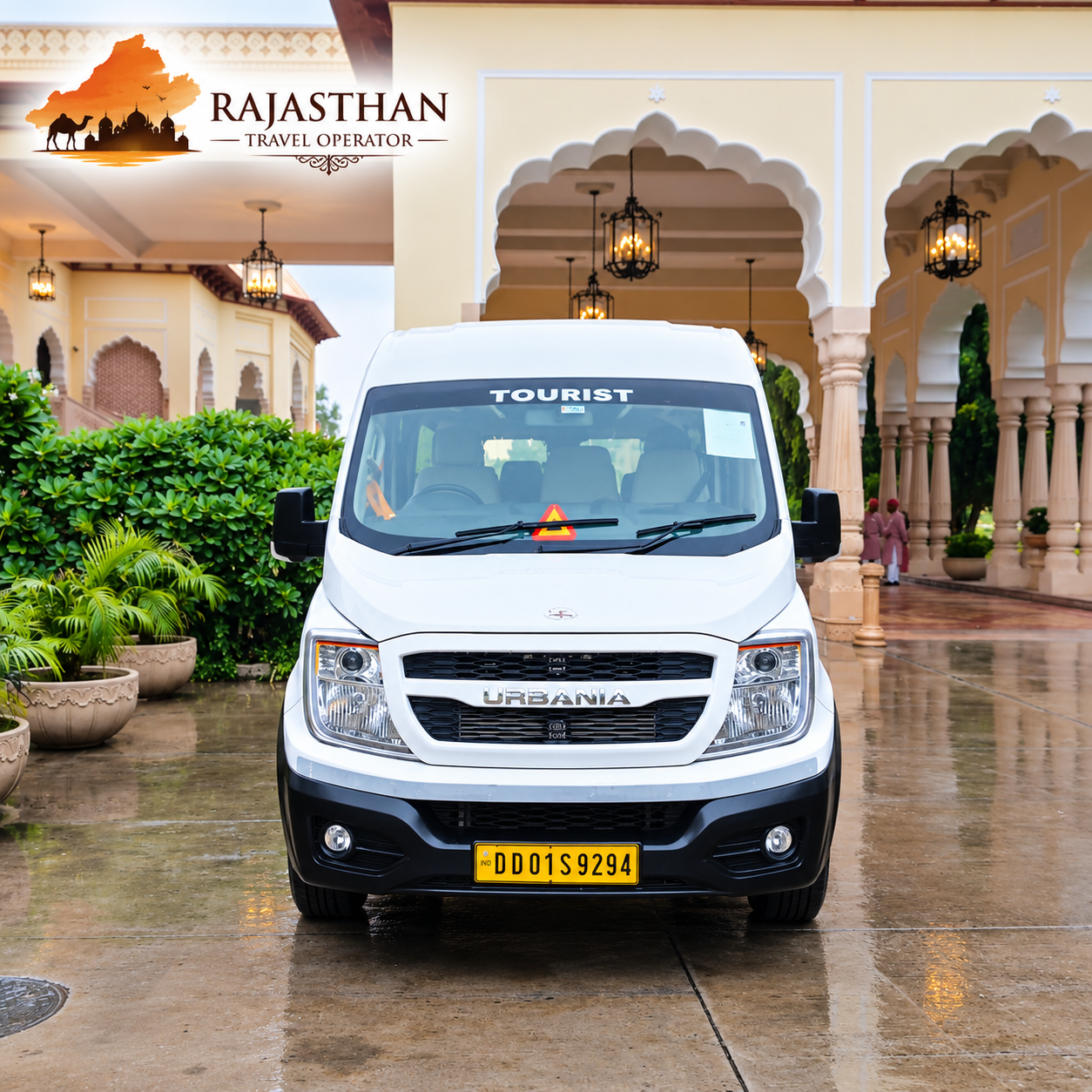
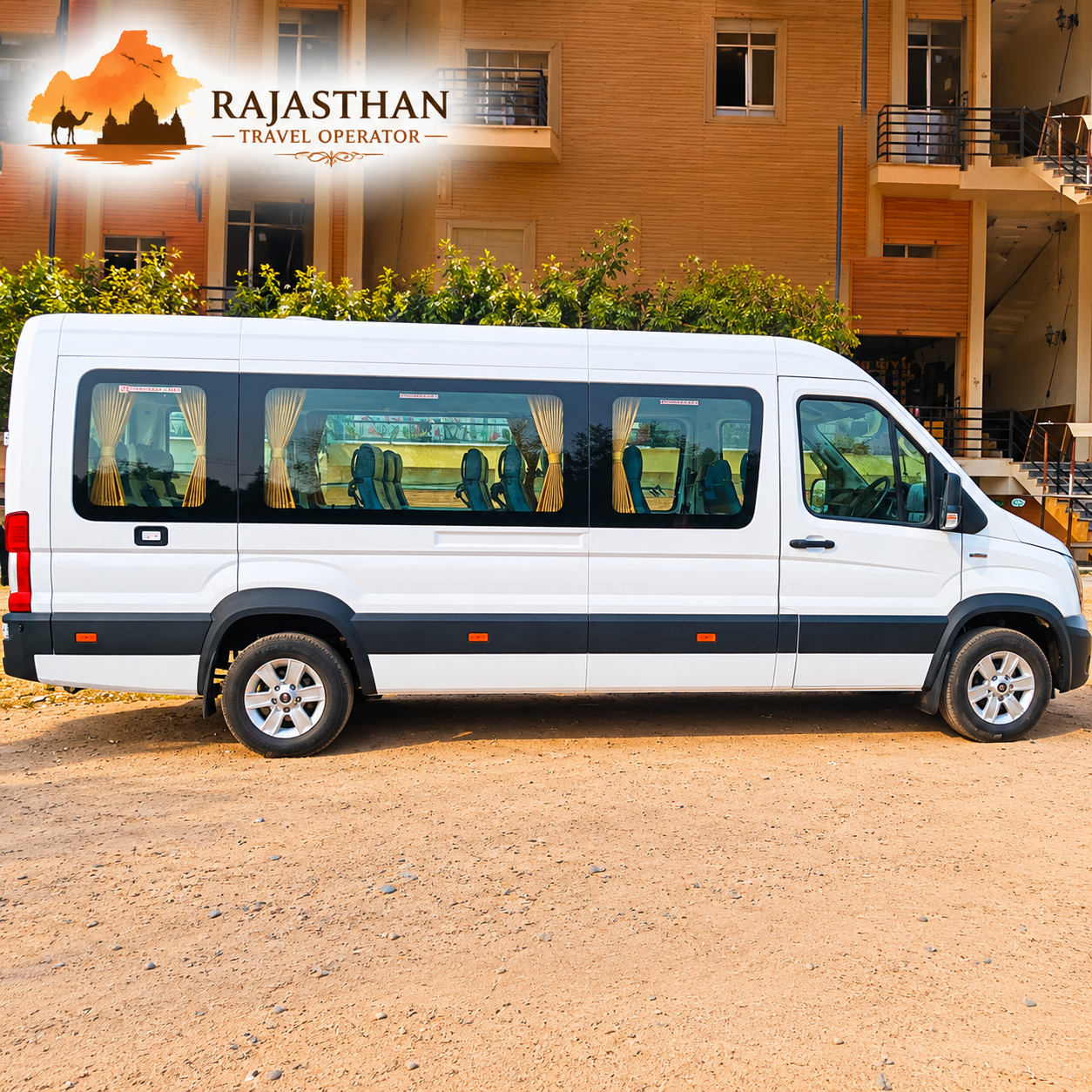
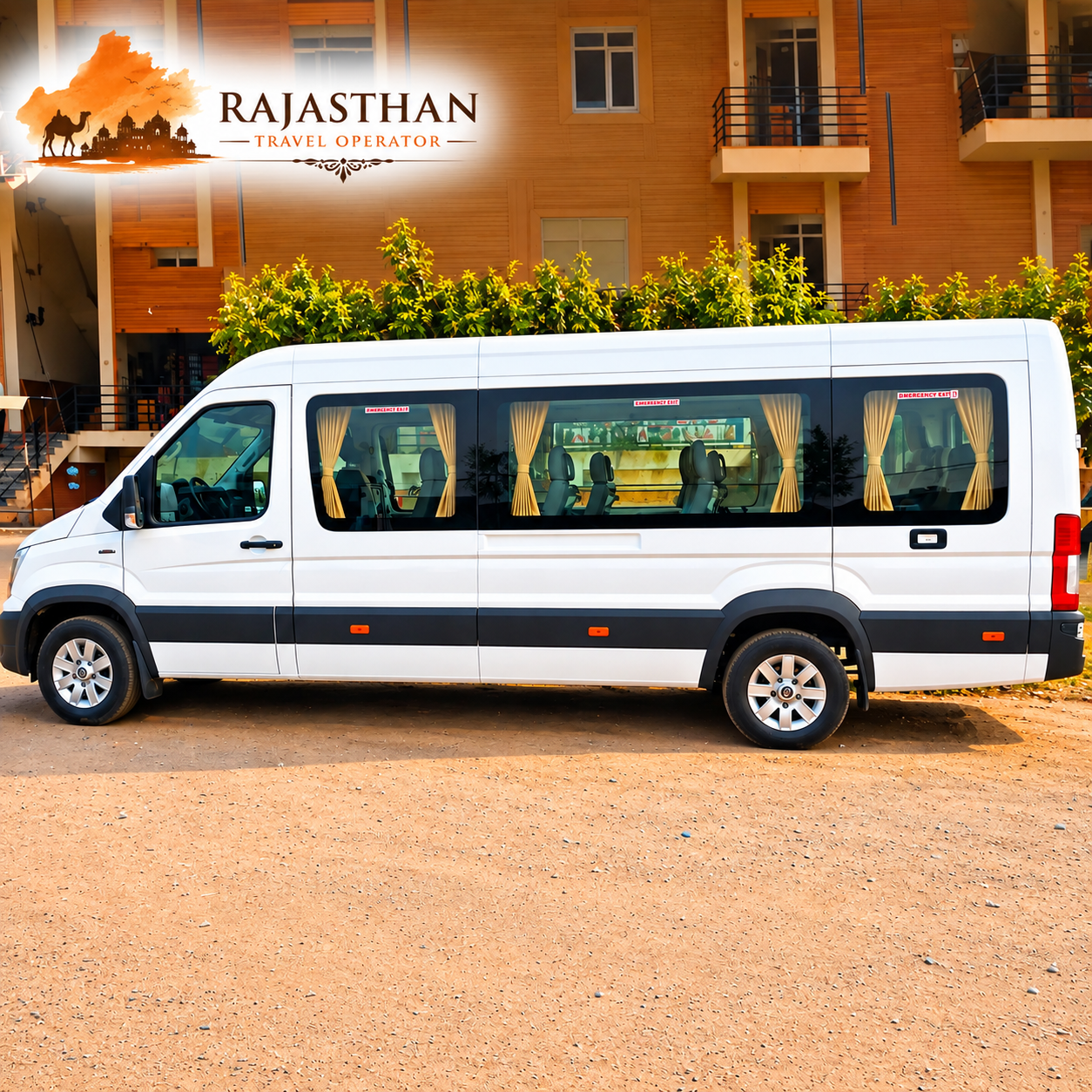
A 16 seater Urbania quote in Jaipur almost always arrives as one clean figure, and that figure is almost never the full picture. It’s the base rental — vehicle, driver, and a daily kilometre allowance — with several genuine cost layers sitting just outside it. None of these are hidden fees in a dishonest sense; they’re real costs of running a large, premium vehicle across real distance. But they add up fast at this seat count, more than at almost any smaller size, so it’s worth knowing exactly what to ask for before you compare two quotes side by side.
The Base Rental and Why It’s Higher Here Than Elsewhere
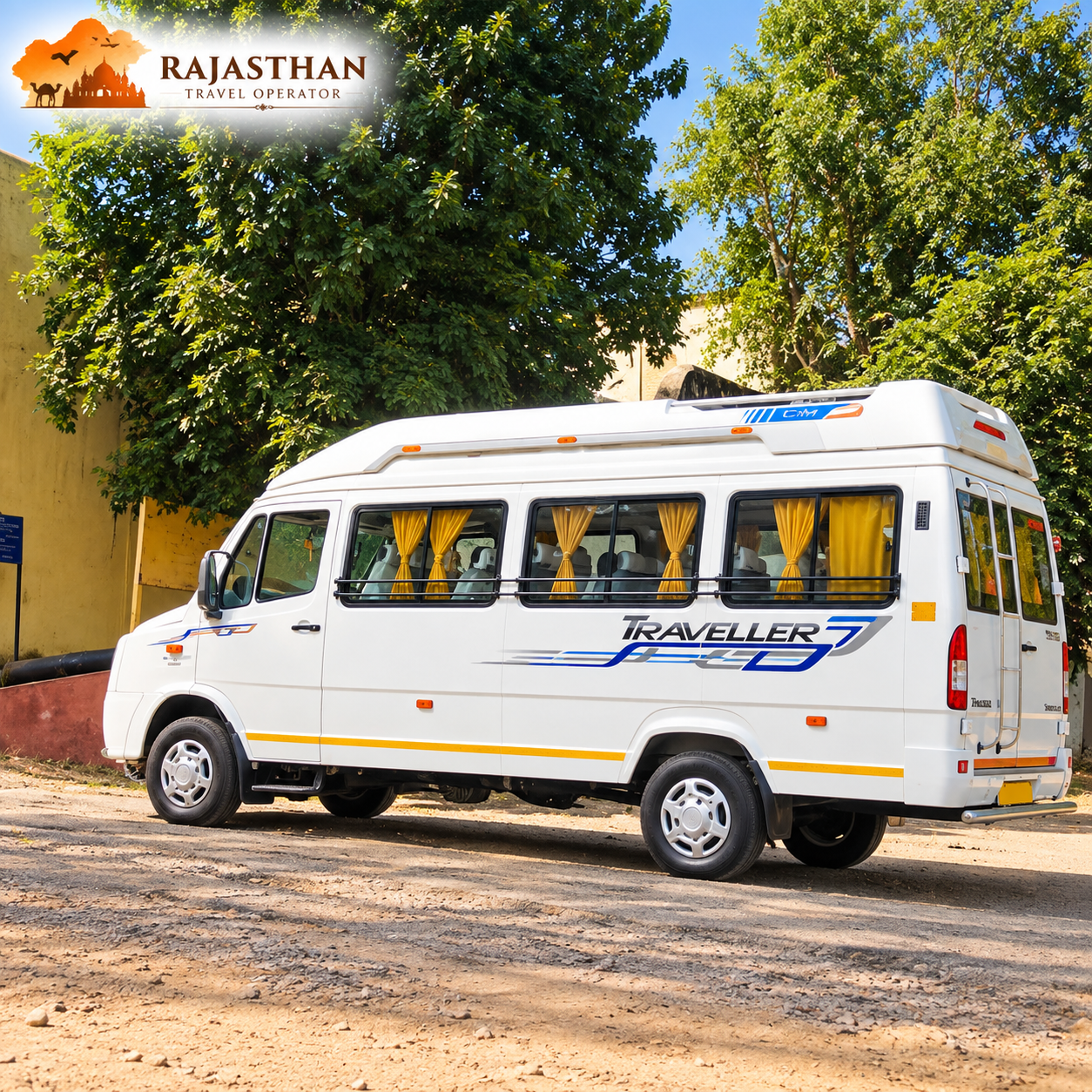
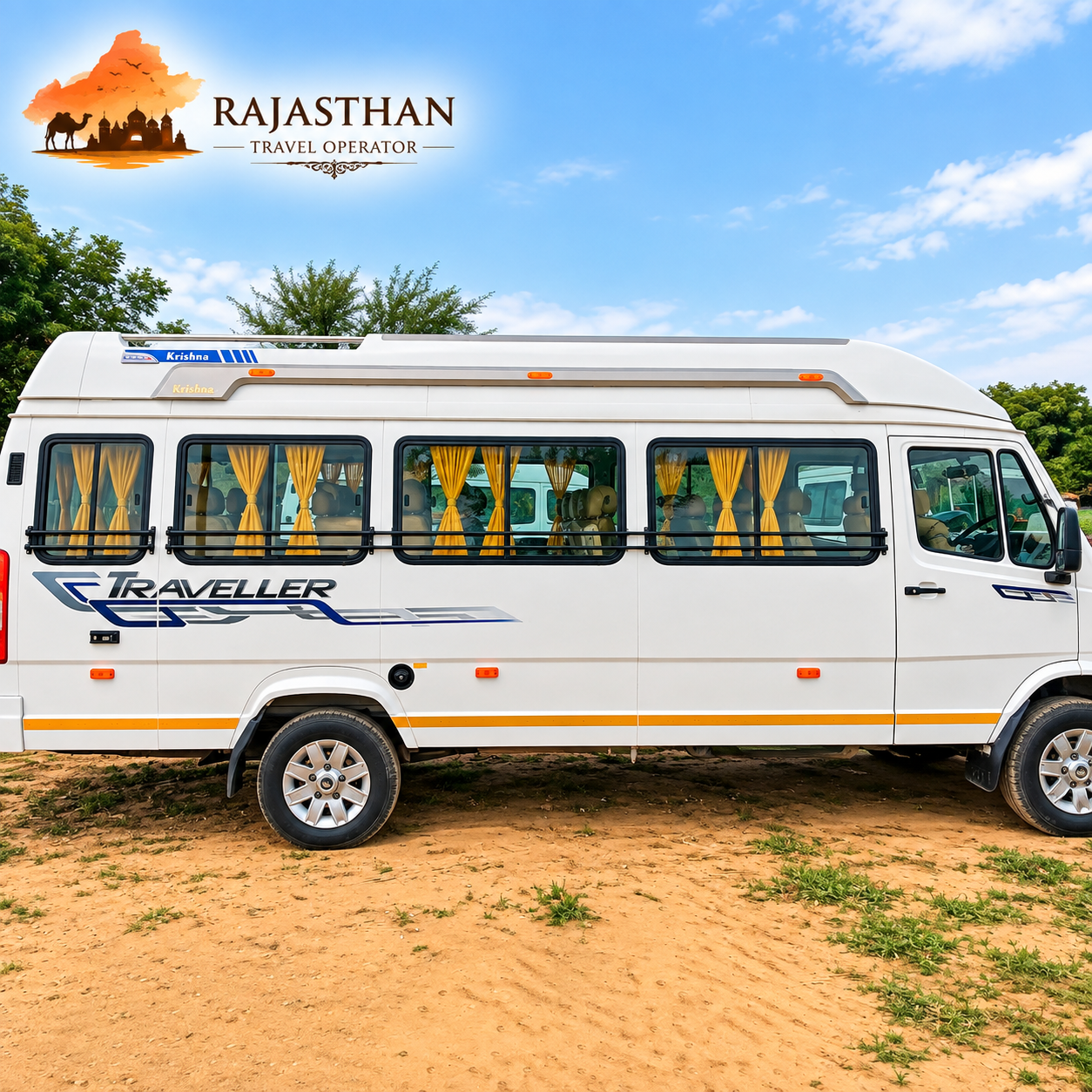
The core rate covers the vehicle, driver, and a fixed daily km allowance, usually 250–300 km for outstation bookings. On the Urbania tempo traveller platform, this base figure sits above what you’d pay for a same-sized standard chassis vehicle, and that premium is priced for the monocoque body’s smoother highway ride, not for extra features bolted on top.
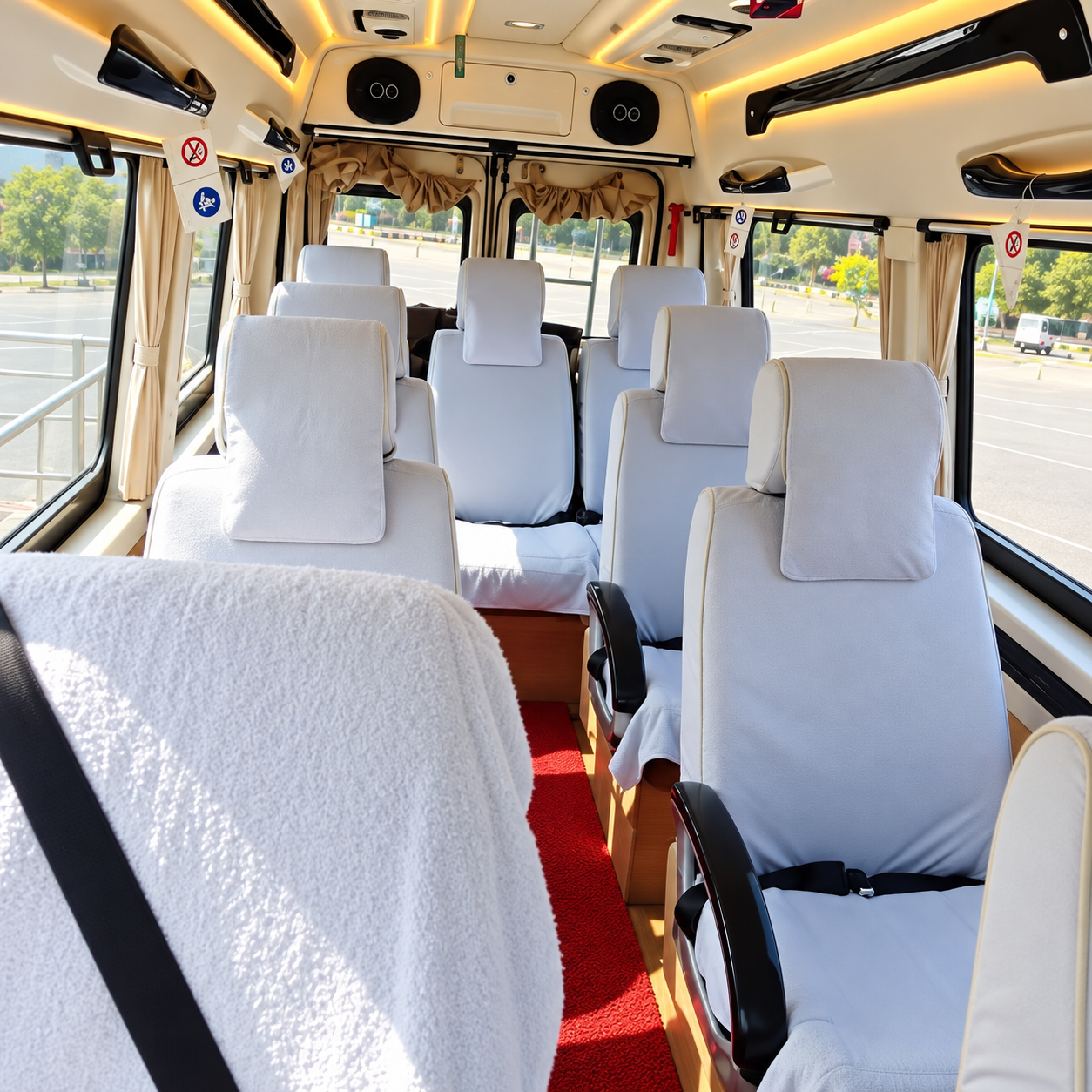
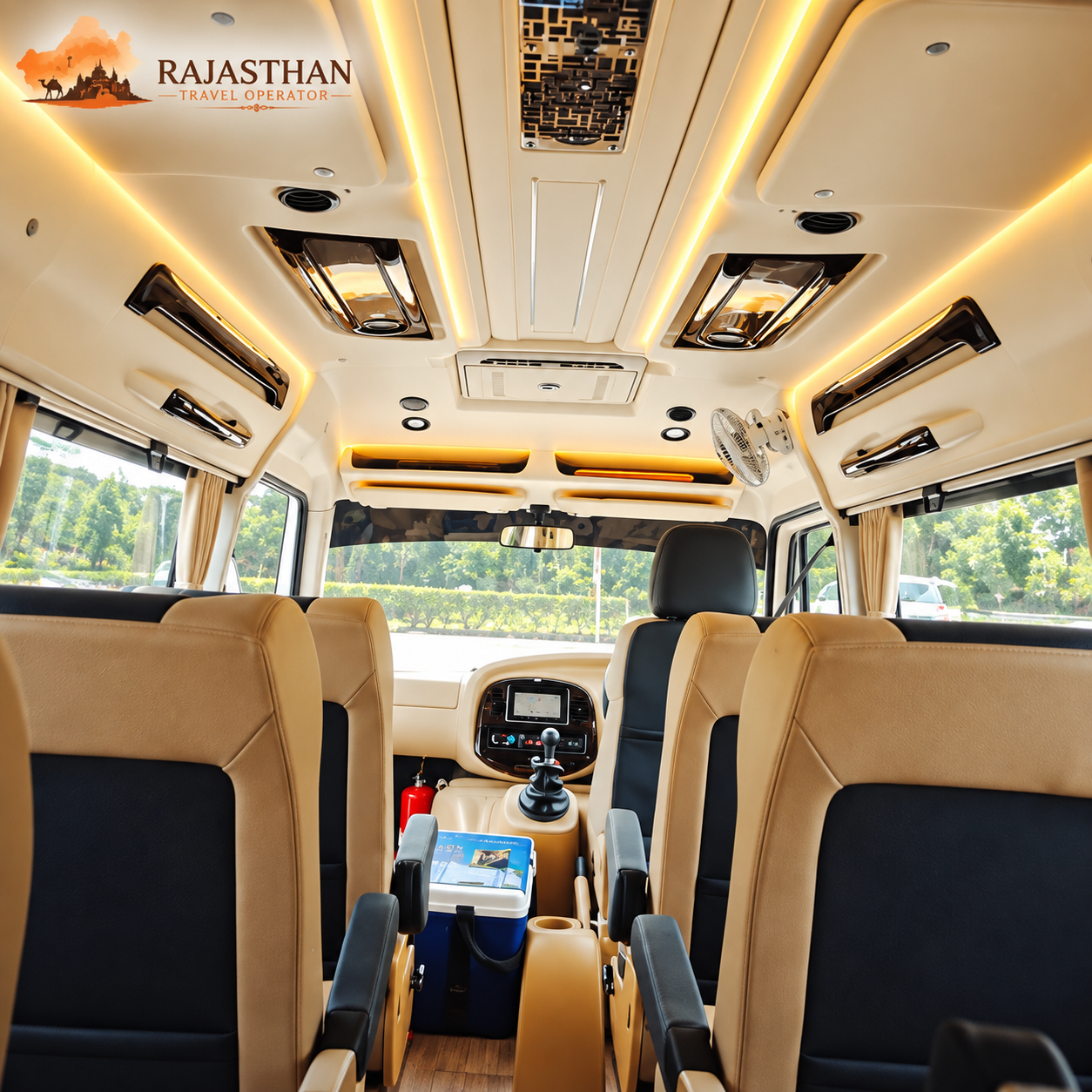
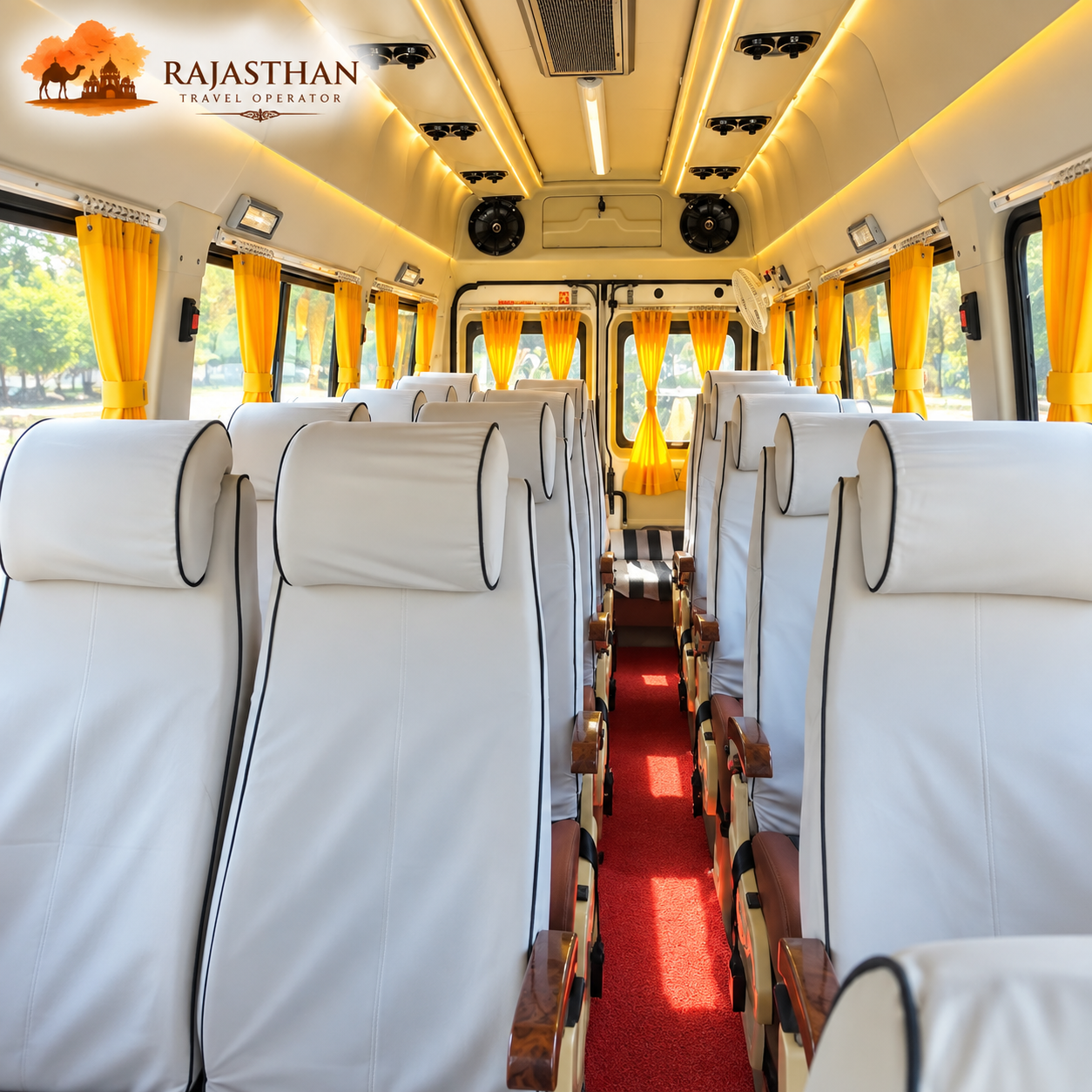
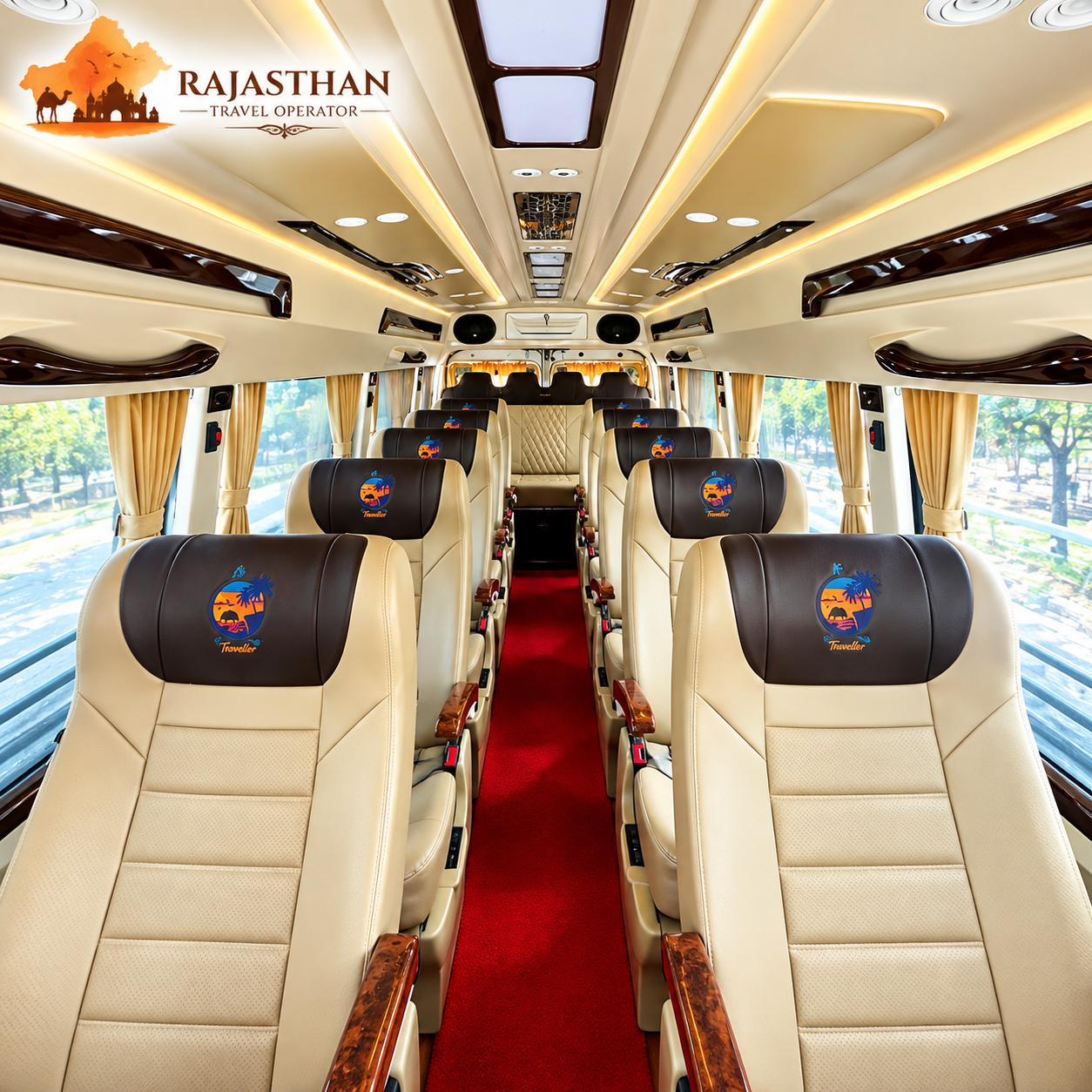
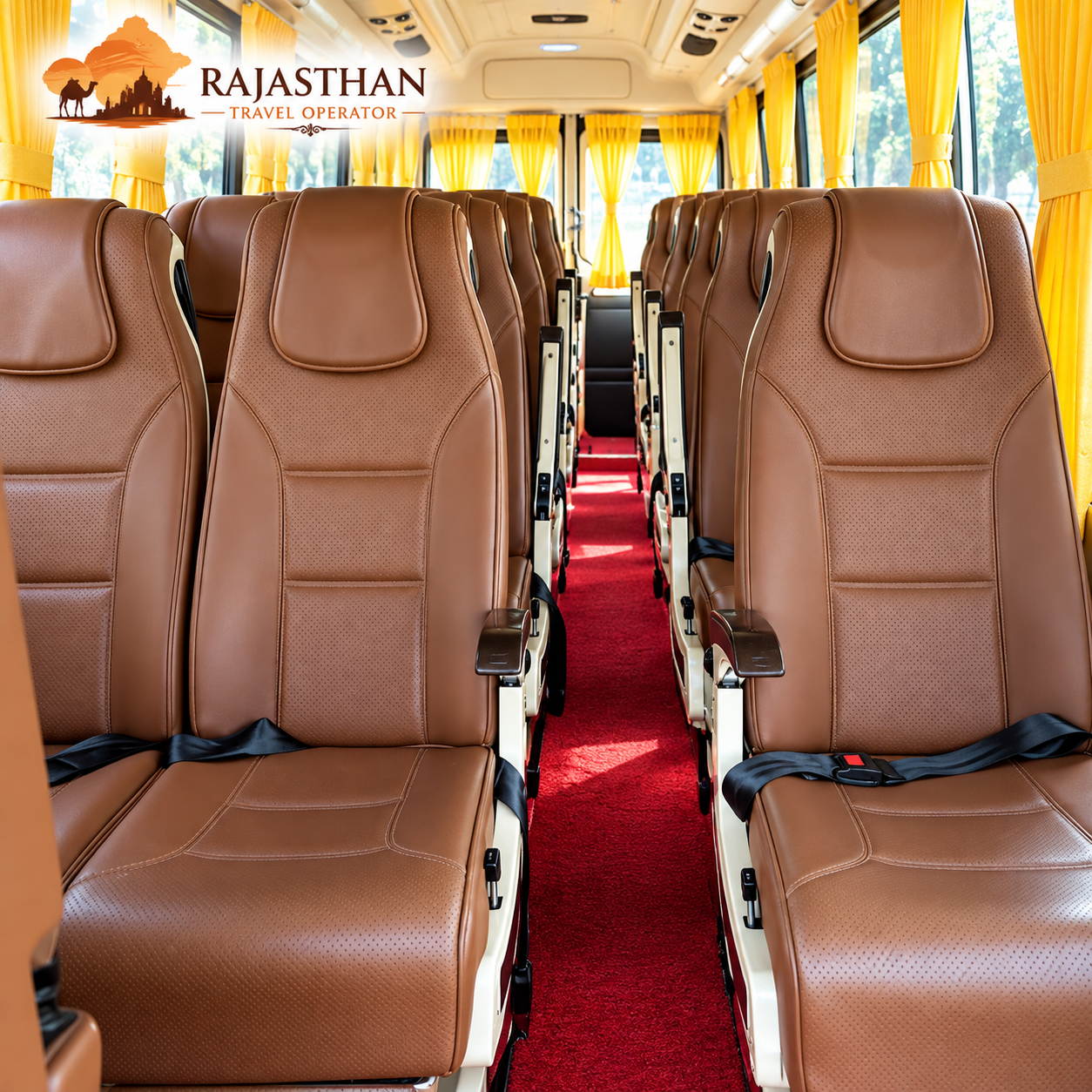
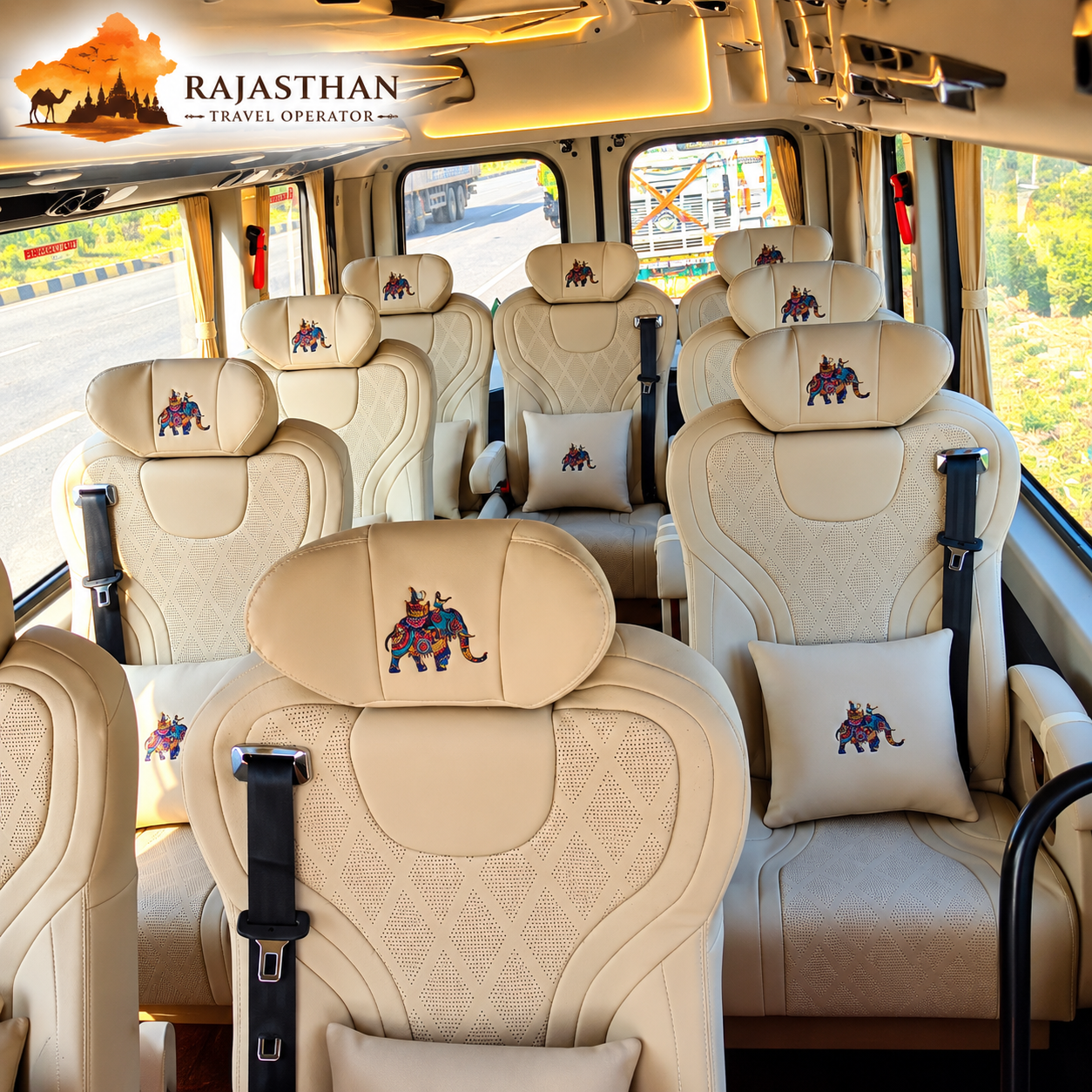
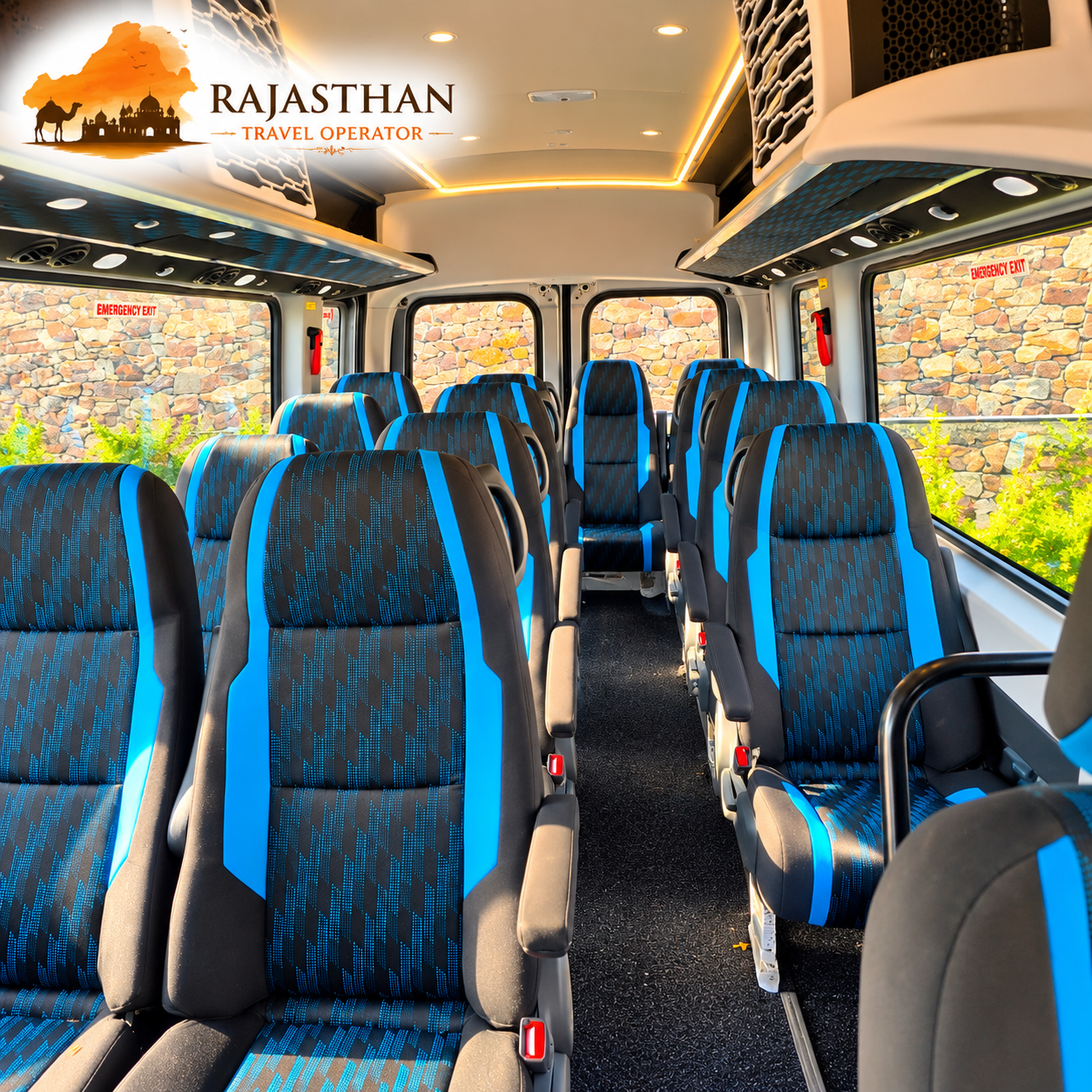
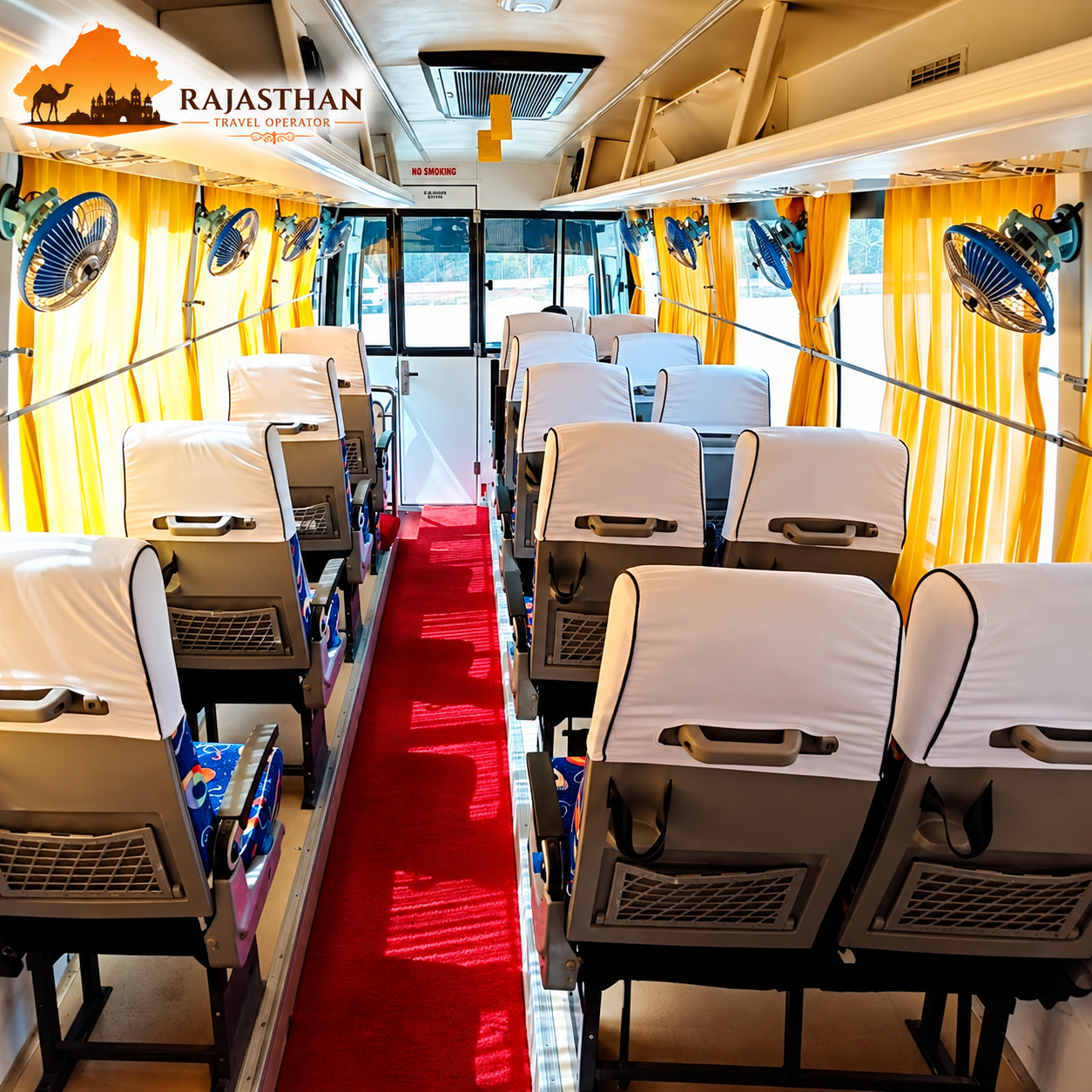
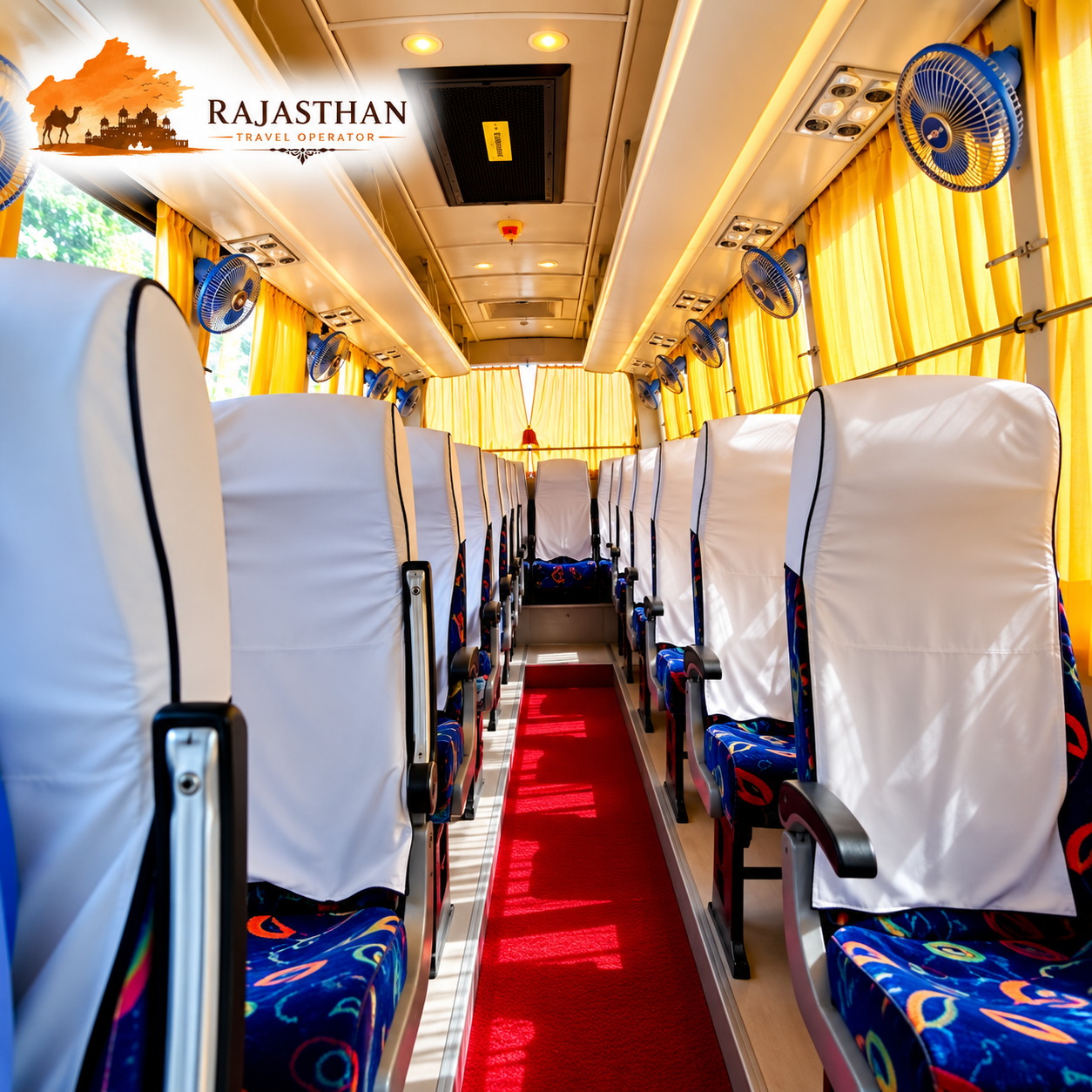
Trim adds another layer on top of that base premium. A standard-trim 16 seater Urbania gets decent AC and comfortable seating. A luxury Urbania tempo traveller — or the broader luxury Urbania tier some fleets offer across seat counts — pushes the rate higher still, in exchange for more even AC distribution across all rows and better seat quality. At sixteen passengers spending real hours together on a multi-day trip, this upgrade is worth pricing seriously rather than dismissing as an unnecessary extra.
The Per-Kilometre Rate: Where Large-Group Trips Cross the Cap Fast
The daily km cap matters more at this seat count than at smaller ones, mostly because a 16 seater Urbania is usually booked for genuinely large, multi-day, multi-city circuits rather than short local trips. Jaipur–Jaisalmer, or a full Golden Triangle loop, routinely crosses the daily allowance on the longer legs. Every kilometre past that cap is billed at a separate per-km rate, and this figure is worth locking down before you book, not discovered mid-trip.
Ask for the exact overage rate in writing, and for a multi-city itinerary, ask the operator to estimate your total route distance so you know upfront how likely you are to cross the cap and by how much.
Driver Allowance and Night Halt at This Scale
A large group on a multi-day outstation trip means the driver is away from home for the whole duration, and that comes with a daily allowance for food plus a separate night halt charge for every night spent outstation. These are usually flat per-day figures regardless of distance covered that day.
For a five- or six-day Rajasthan circuit with a full sixteen-person group, this adds a meaningful chunk to the total bill — often more than people budget for when they only account for the base rental. Ask for both figures as separate line items, and confirm exactly how many nights they’ll apply to based on your confirmed itinerary.
Tolls, Permits, and the Reality of Moving a Large Group
Multi-city Rajasthan routes cross a genuine number of toll plazas, and a large-group Urbania booking on a route like Jaipur–Agra–Delhi will rack these up steadily across a multi-day trip. Interstate legs typically also need a state permit, usually a fixed cost that’s either included in the quote or billed separately. None of this is unusual — it’s the real cost of running a big vehicle across state lines — but it’s exactly the kind of detail that makes one quote look cheaper than another purely because it left something out.
Ask directly whether tolls and permits are included in the headline number, or billed at actuals once the trip is complete.
The One Cost Factor That’s Different on This Platform
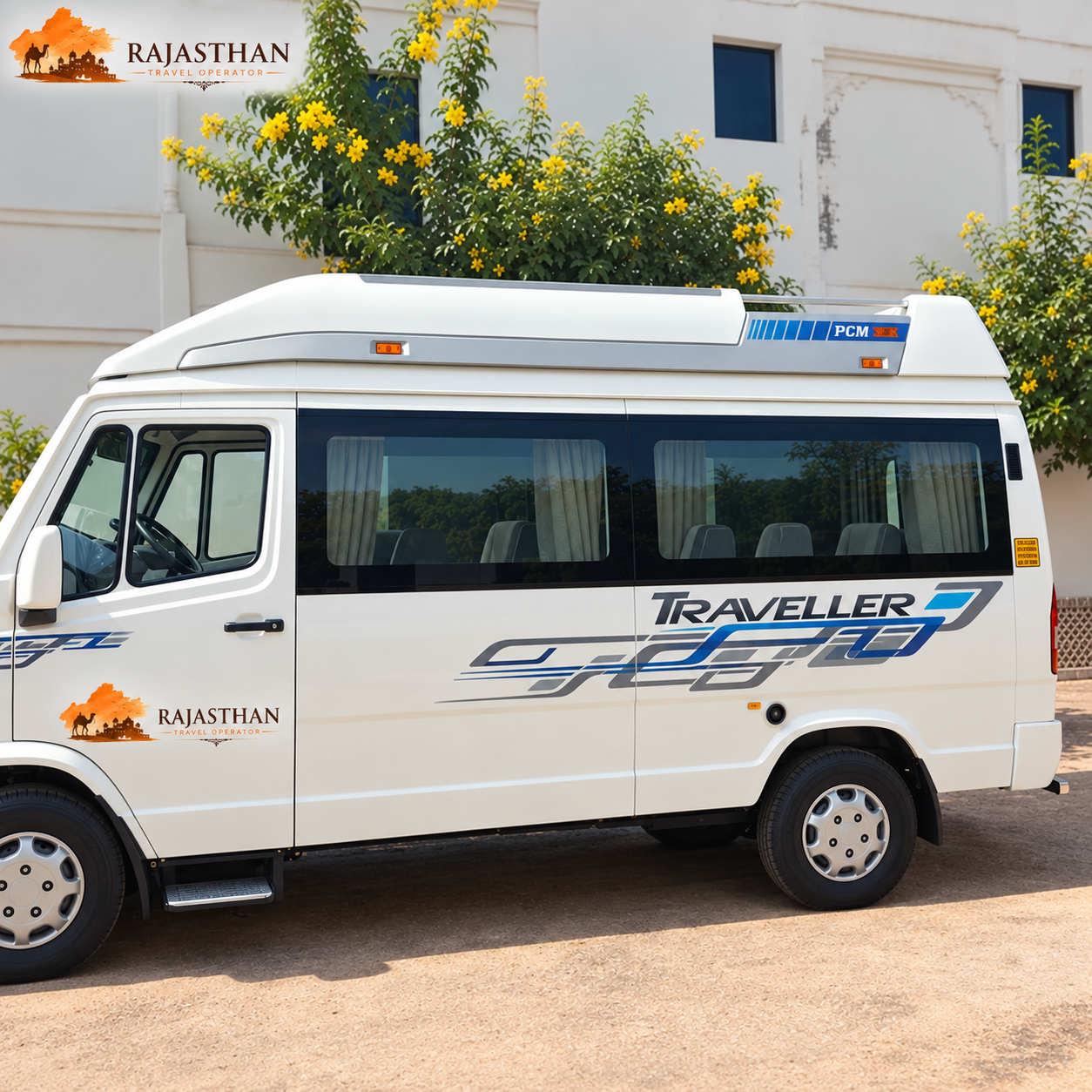
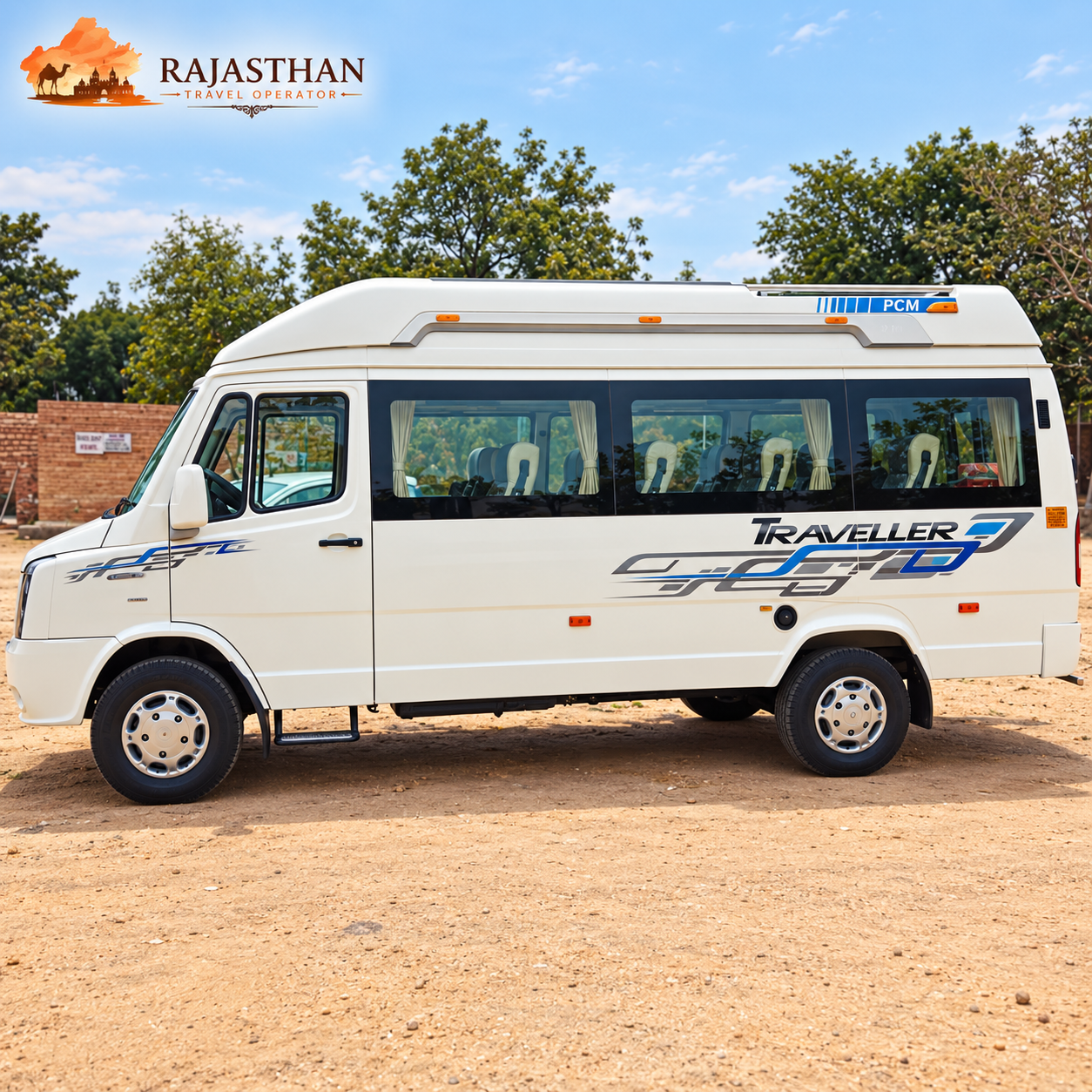
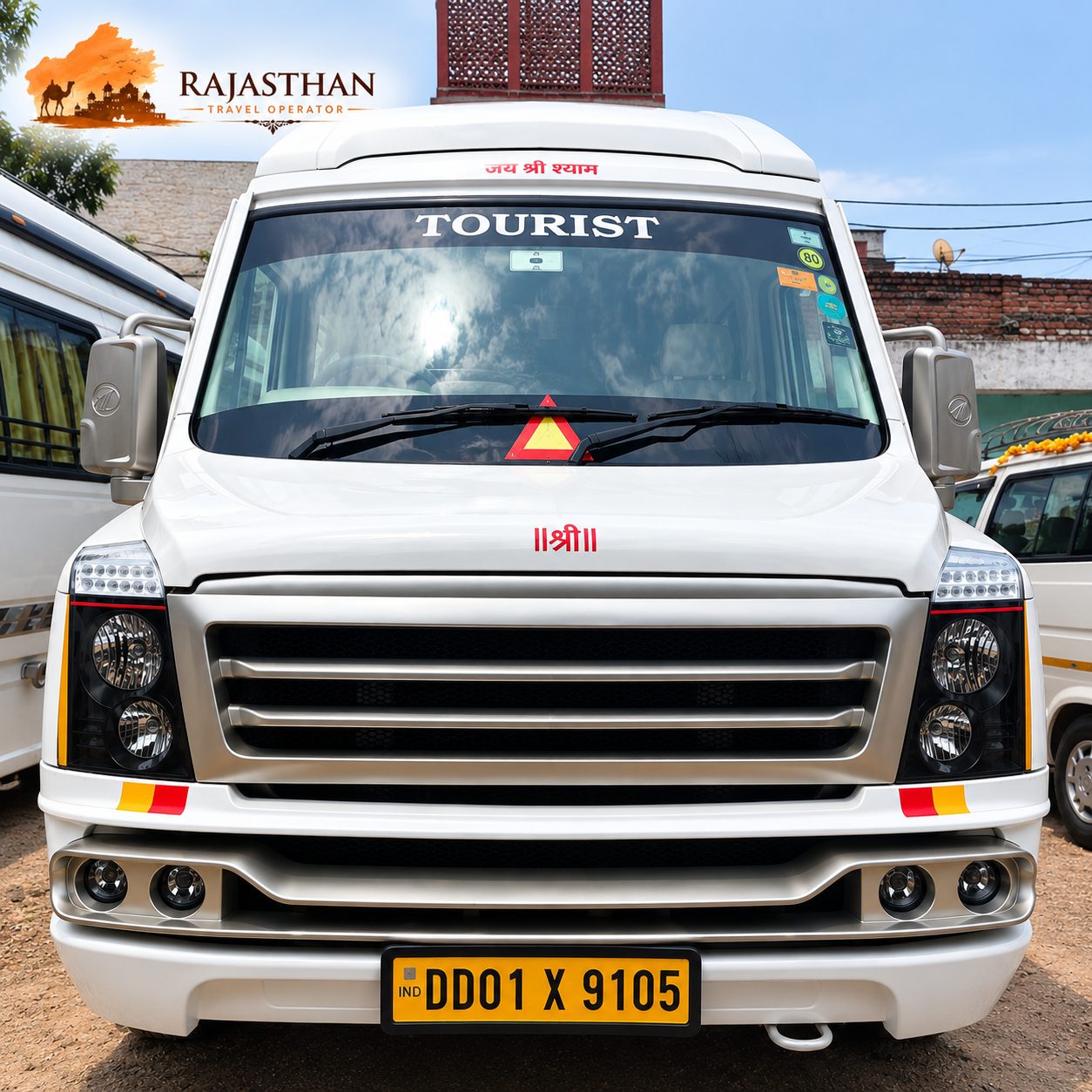
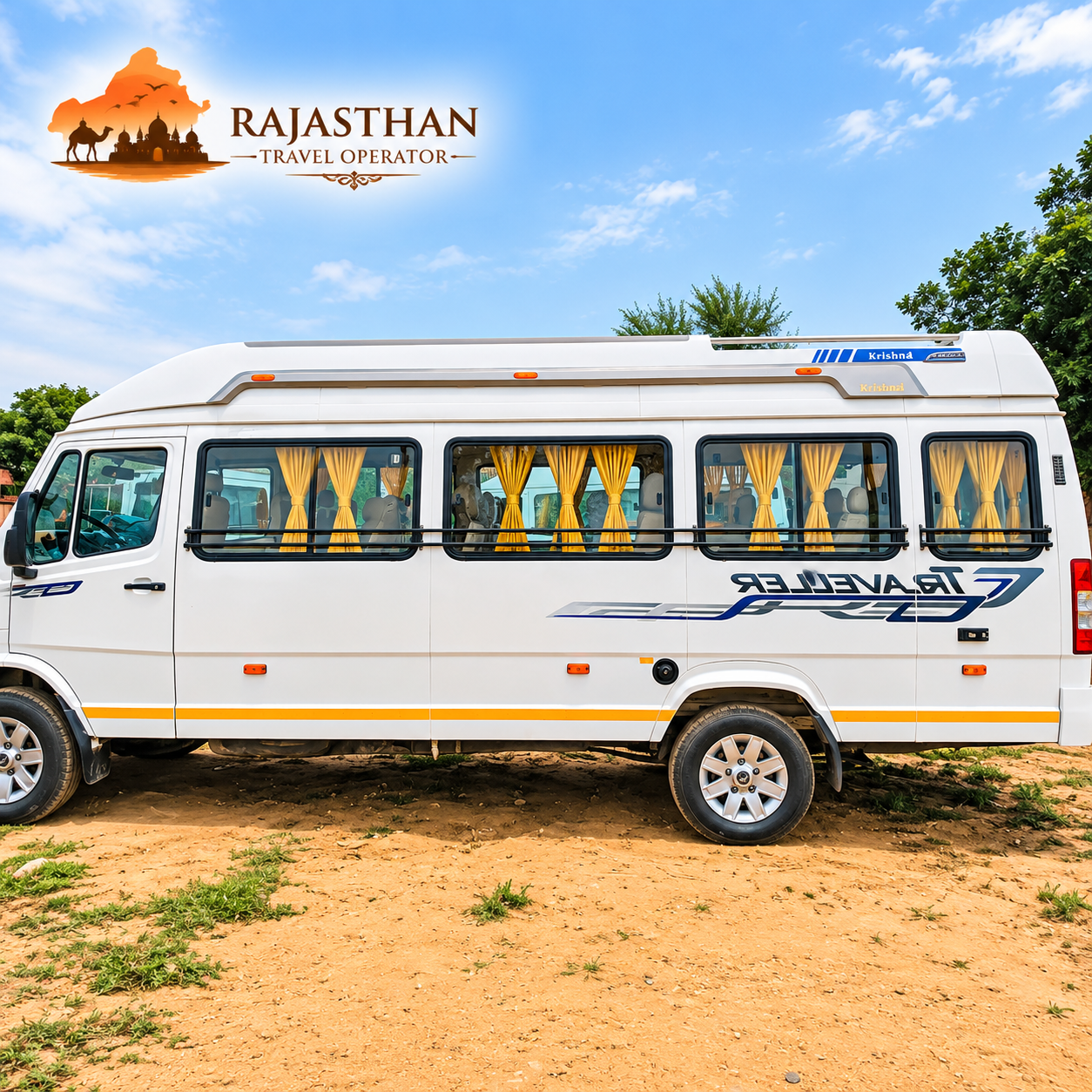
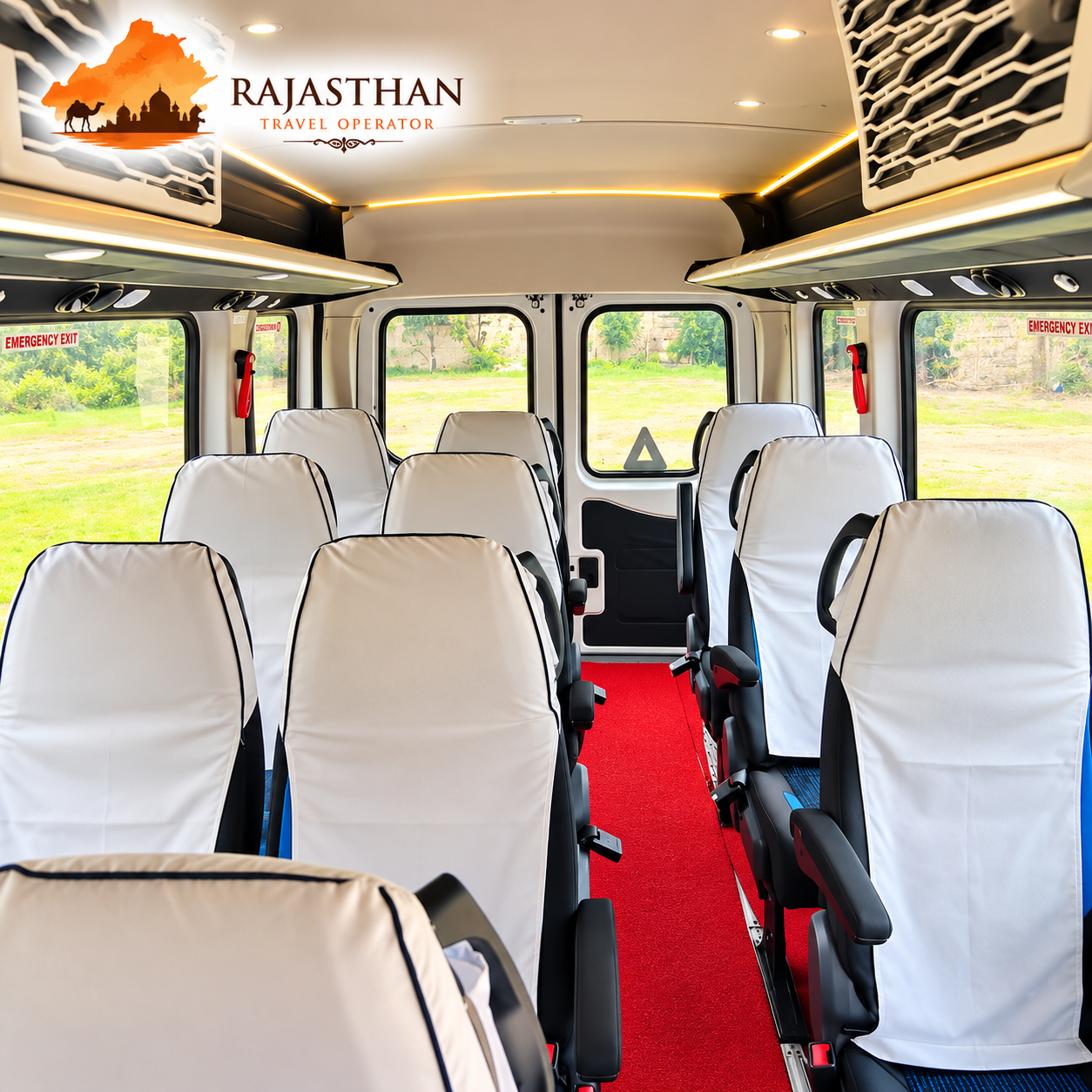
Every Urbania seat count, including this one, has no roof carrier — a structural fact of the monocoque chassis, not a trim decision. This doesn’t show up as a separate line item on the invoice, but it has a real cost implication worth understanding: if your group’s luggage doesn’t comfortably fit inside the cabin, you may end up needing a second vehicle or a different booking altogether, which changes the whole cost equation. Confirm real cabin capacity at full occupancy before assuming the base quote covers your actual trip.
If luggage is heavy for a group this size, it’s worth pricing a standard-chassis alternative like the 16 seater tempo traveller or tempo traveller 17 seater alongside the Urbania quote — the roof carrier on those bodies can end up being the more cost-effective solution once you factor in what a second vehicle or extra shipping would cost otherwise.
Season and AC: The Two Multipliers on Top of Everything Else
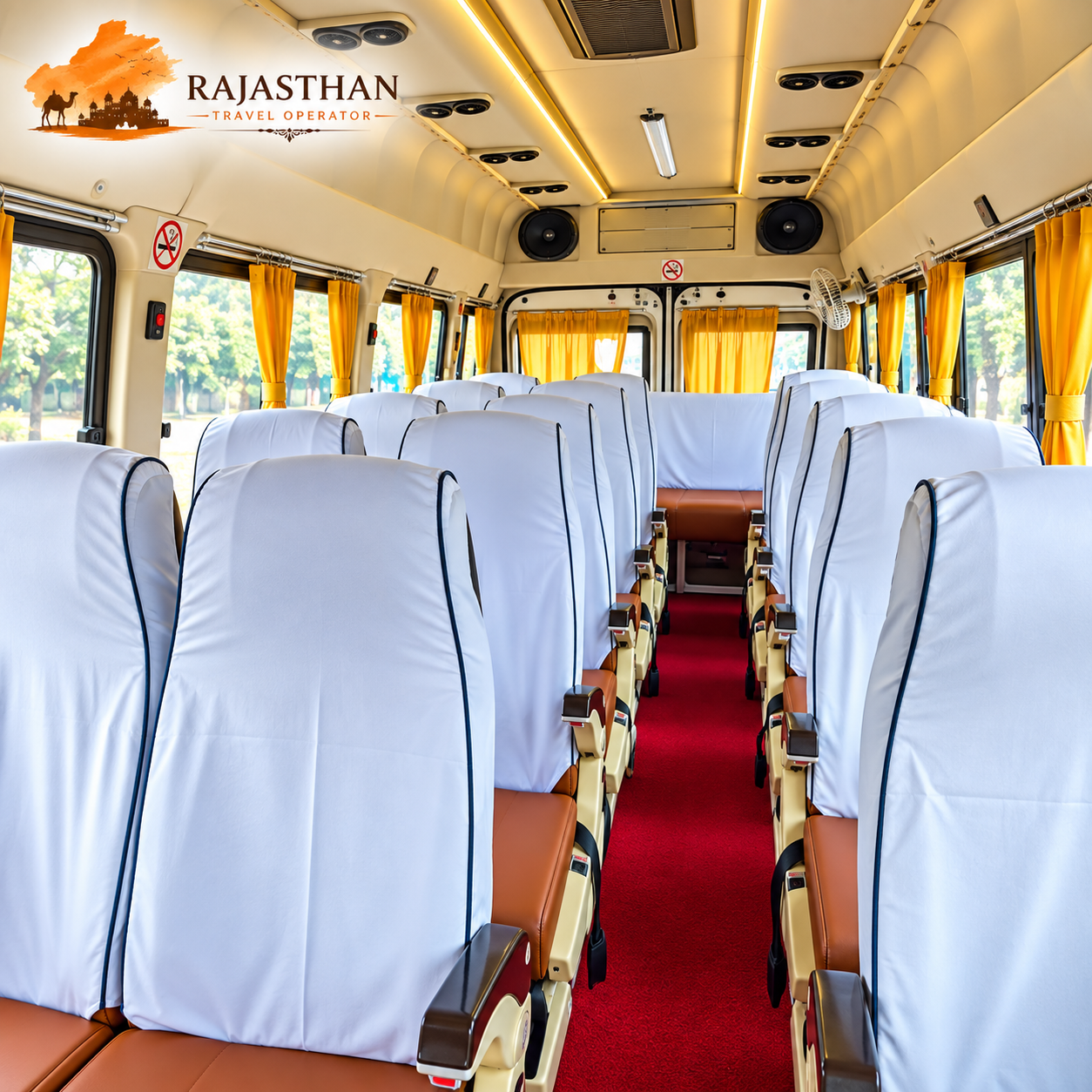
Roof-mounted AC costs more to run than a basic setup, and some operators build a modest seasonal adjustment into peak-summer bookings for exactly that reason — running AC hard across a full cabin of sixteen people for six hours in May is a genuinely different fuel and maintenance load than the same trip in December.
Season affects pricing independently, too. Wedding muhurat dates, Diwali week, the Pushkar fair window, and long weekends push demand for large-group vehicles specifically, since this seat count is a popular choice for weddings and events. If your dates fall near one of these windows, expect a real premium over a random weekday, and book well ahead rather than trying to negotiate a peak-season rate down later.
Comparing Cost Against the Standard-Chassis Alternative
The honest cost comparison isn’t “Urbania versus tempo traveller” as a blanket rule — it’s a real trade weighed against your specific trip. A standard 16 seater tempo traveller or 20 seater tempo traveller costs less at the base rate and keeps the roof carrier, which is a real cost advantage for a bag-heavy multi-city trip. The 16 seater Urbania costs more but delivers a noticeably smoother ride on long highway legs — worth the premium specifically when ride comfort matters more to your group than the roof storage.
For groups considering a smaller Urbania instead, the 12 seater Urbania is worth checking if your headcount is closer to twelve — the smaller seat count usually comes with a lower base rate and an easier luggage equation than stretching sixteen seats to their limit. And for groups wanting wider individual seating instead of maximum ride comfort, the Maharaja seat tempo traveller or the smaller 9 seater Urbania with Maharaja seats configuration are worth pricing separately, since they solve a different comfort problem at a different cost point.
Before You Book — What to Get in Writing
One all-inclusive number, not a base figure. Base rental, driver allowance, night halt, tolls, and permits, combined into a single total for your exact itinerary, sent as one message.
The daily km cap and per-km overage rate. Confirm both, and ask the operator to flag whether your specific route is likely to cross the cap.
Real cabin luggage capacity at full occupancy. Stated for your exact bag count, not assumed from the seat count alone.
Trim level confirmed by name. Standard or luxury Urbania, since the AC and seat quality gap between the two is meaningful at this seat count.
Cancellation and advance terms. Especially relevant for large-group bookings, where plans are more likely to shift as the final headcount gets confirmed.
Frequently Asked Questions
What’s typically included in a base 16 seater Urbania quote? Usually the vehicle, driver, and a daily km allowance around 250–300 km. Tolls, permits, driver food, and night halt charges are usually separate unless explicitly bundled — always ask directly for a full breakdown.
Why is a 16 seater Urbania more expensive than a standard 16 seater tempo traveller? You’re paying for the monocoque chassis and its smoother highway ride, not for extra features. That premium is worth weighing against how much your group values ride comfort versus luggage flexibility on the urbania tempo traveller platform generally.
Does the luxury trim cost significantly more? Yes, a real step up over standard trim — worth it for a long multi-day trip where a large group spends many collective hours in the vehicle, less critical for a shorter or more local booking.
How does the no-roof-carrier limitation affect cost? Indirectly but significantly — if your group’s luggage doesn’t fit the cabin, you may need a second vehicle, which changes the entire cost equation. Confirm cabin capacity honestly before comparing this quote against a standard-chassis alternative.
How early should I book to avoid peak-season price increases? A week to two weeks ahead in normal season. Around wedding muhurats, Diwali, and the Pushkar fair window, book two to three weeks out, since this seat count is heavily used for weddings and large events specifically. Full range comparisons across pricing patterns for every size are on the tempo traveller on rent page.
Final Word
The real cost of a 16 seater Urbania in Jaipur is the base rate plus trim, plus driver allowance and night halt, plus tolls and permits, plus an honest check on whether your luggage actually fits the cabin. None of these are unfair charges on their own — they’re the genuine cost of moving a large group comfortably across real distance. Get every piece in writing before you compare quotes, and the number you’re actually paying stops being a surprise.