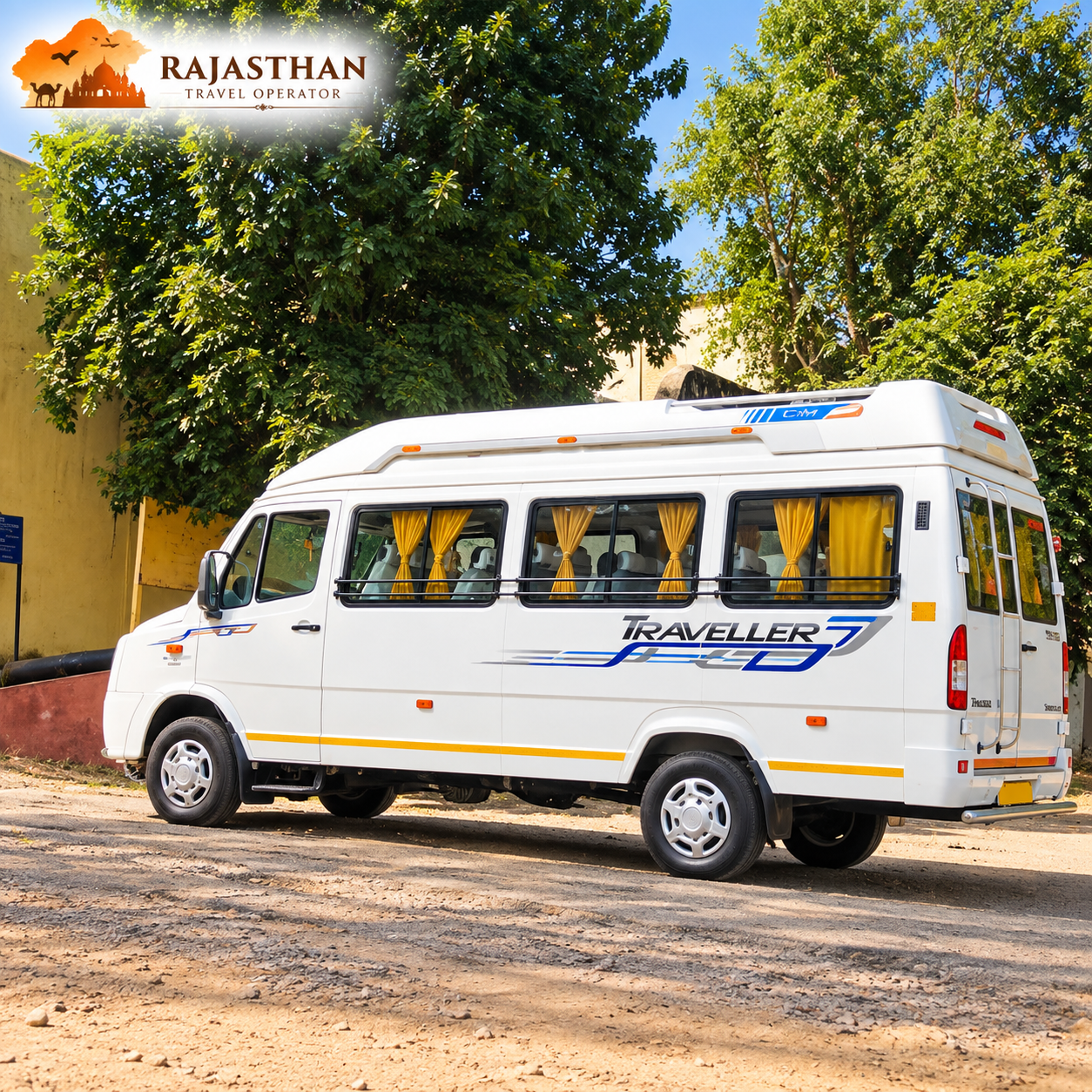
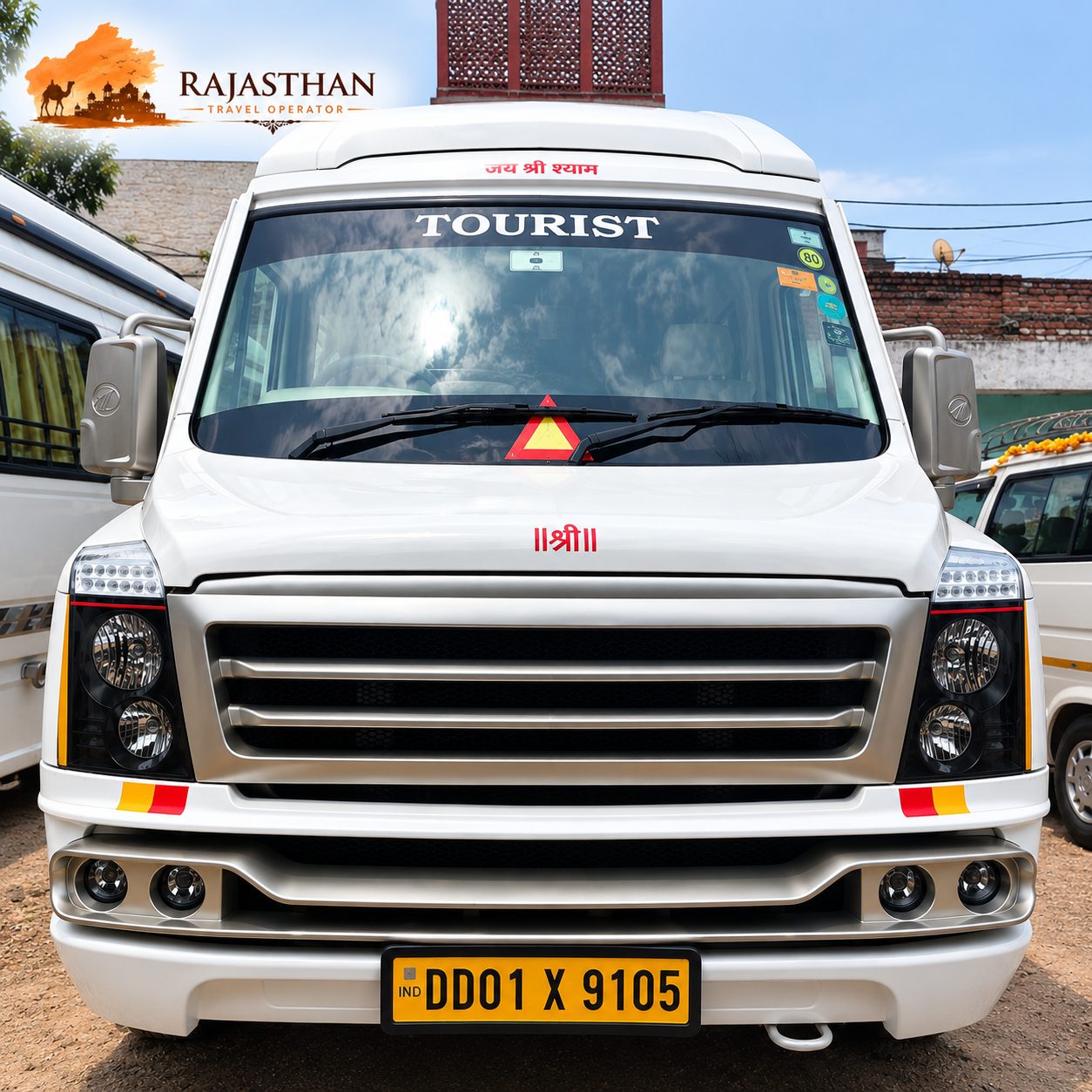
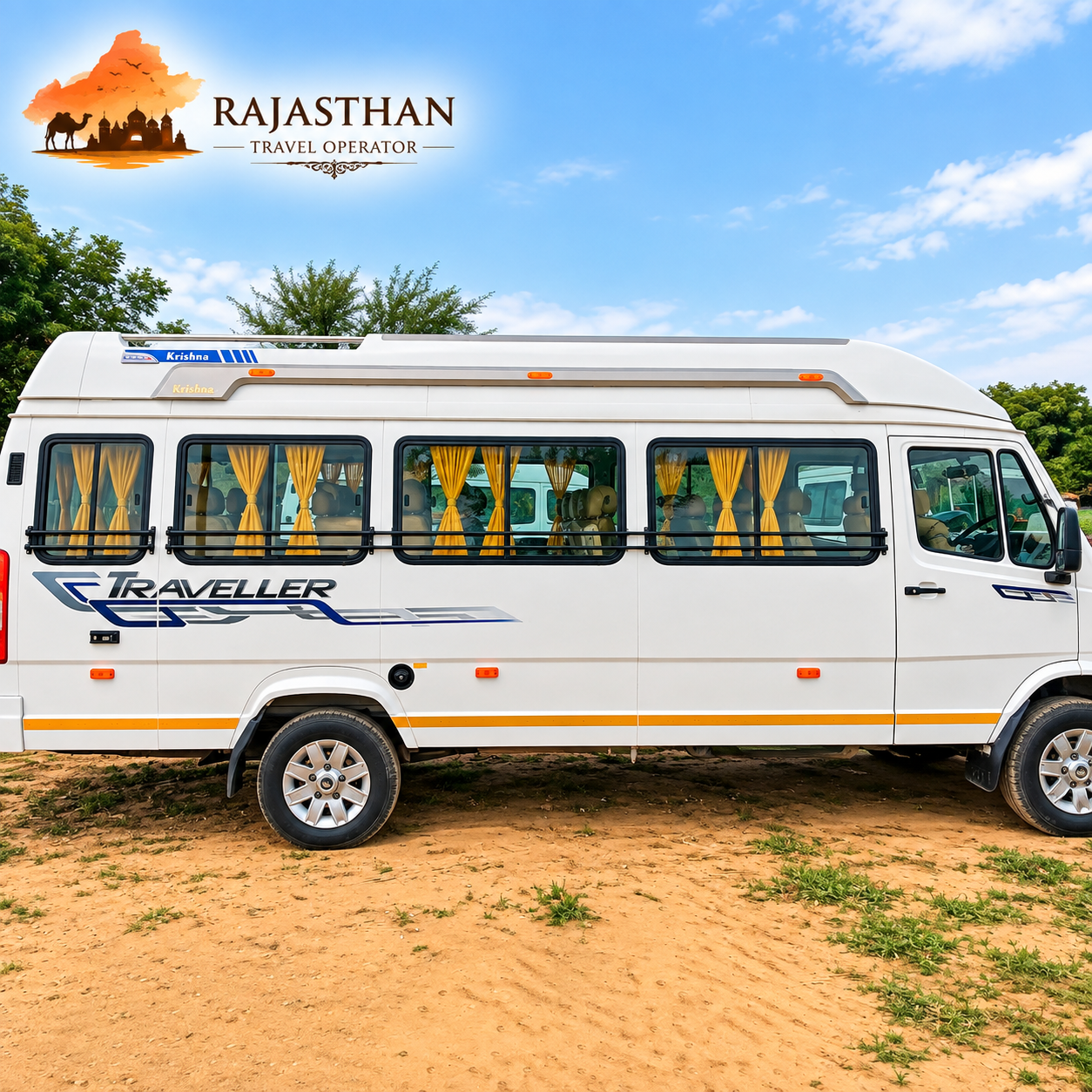
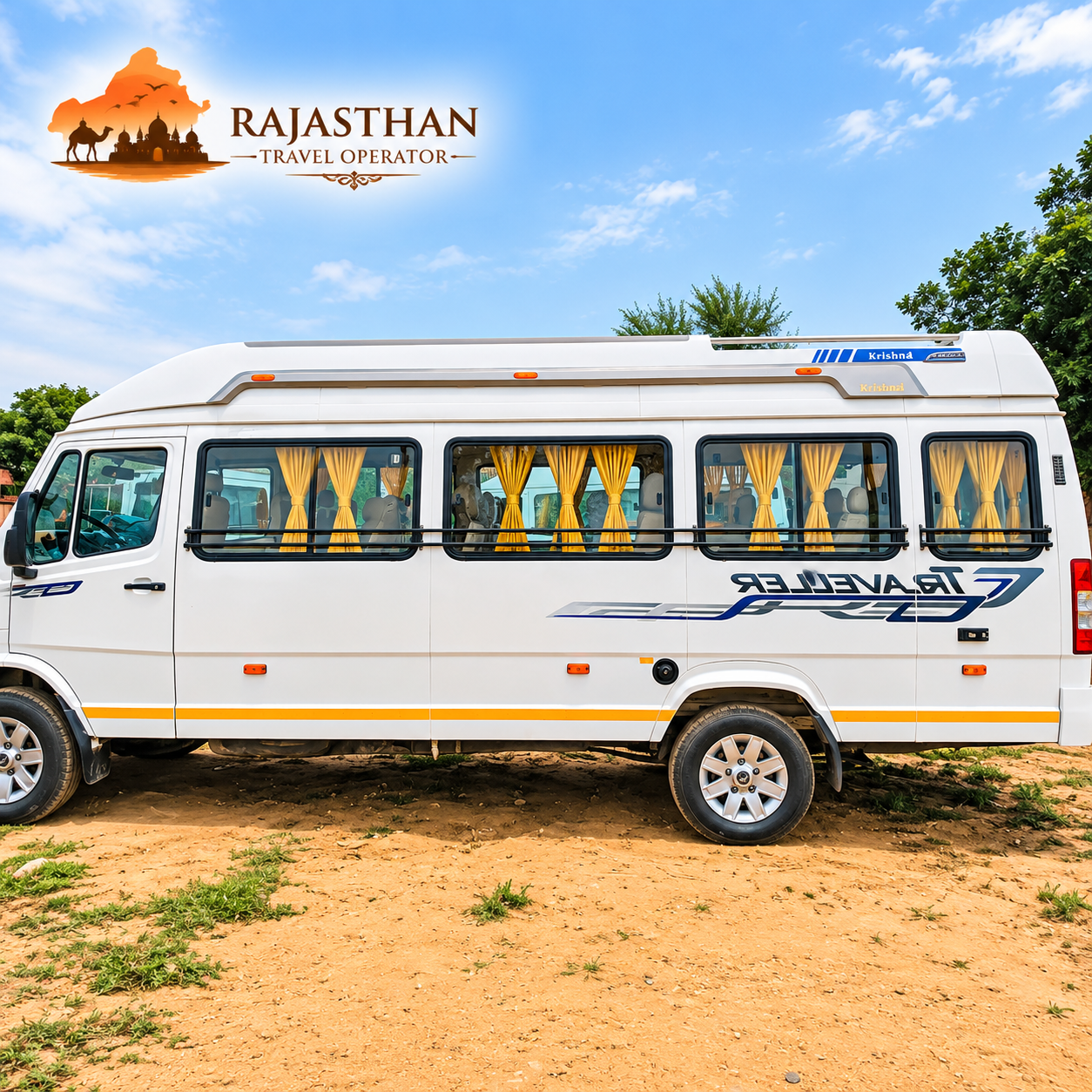
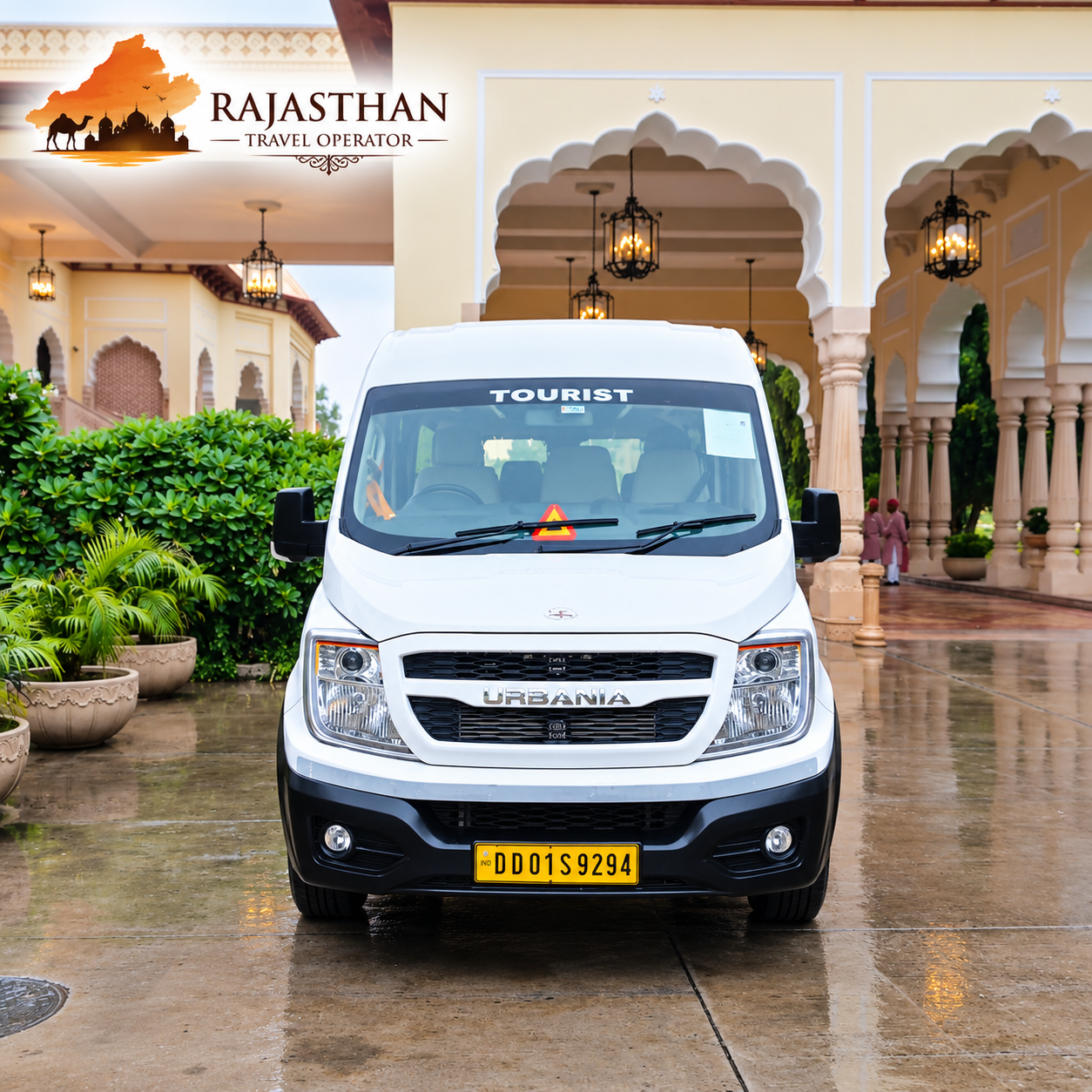
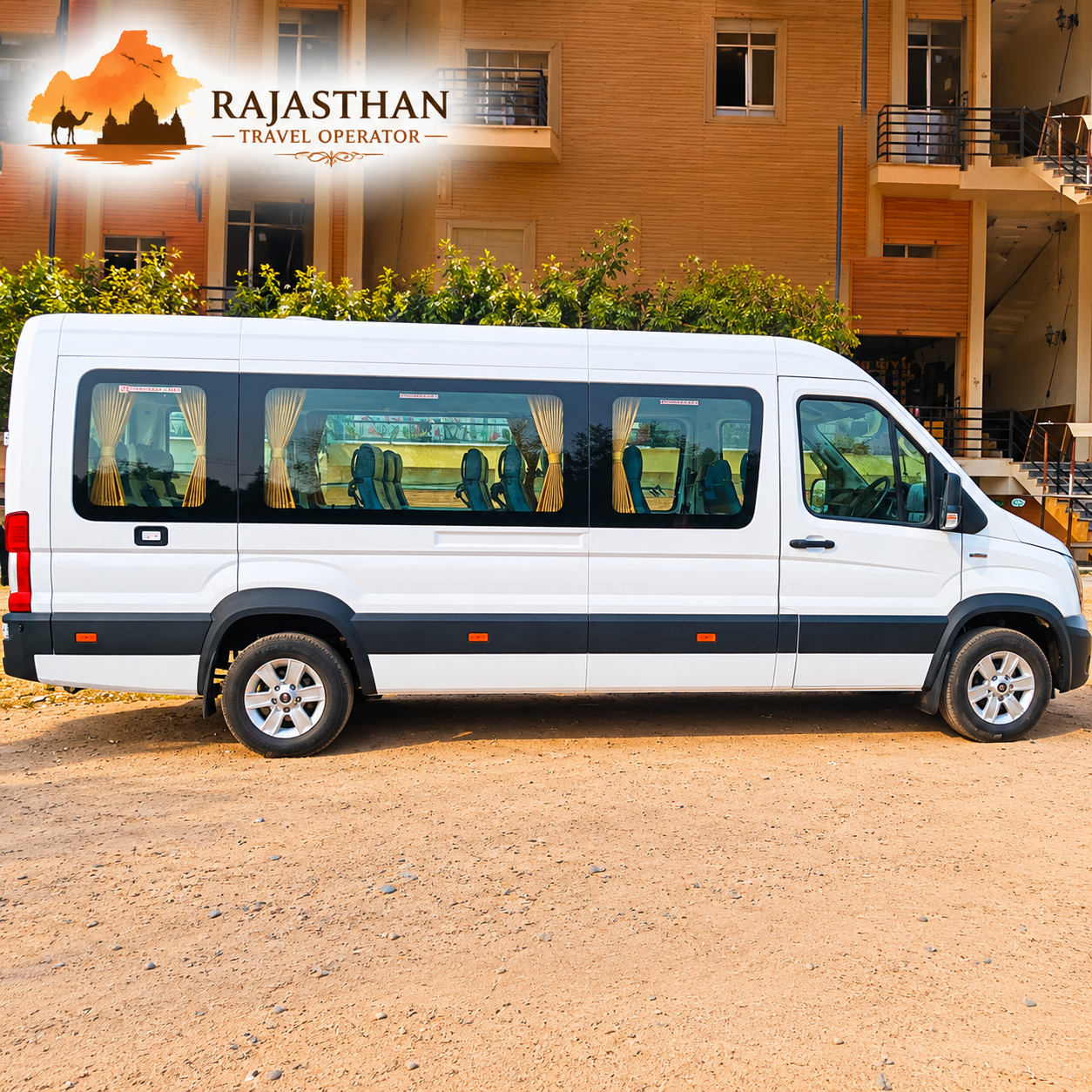
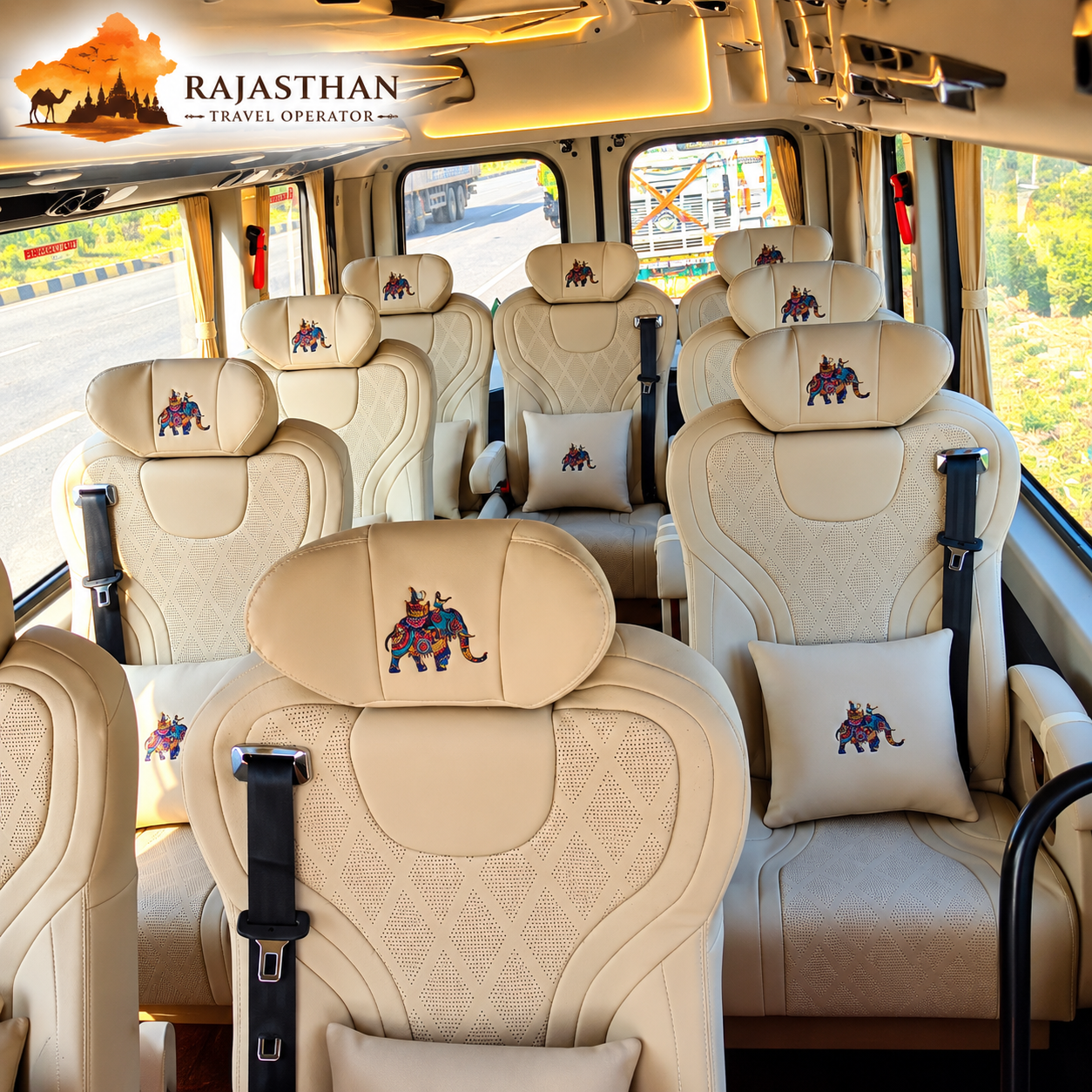
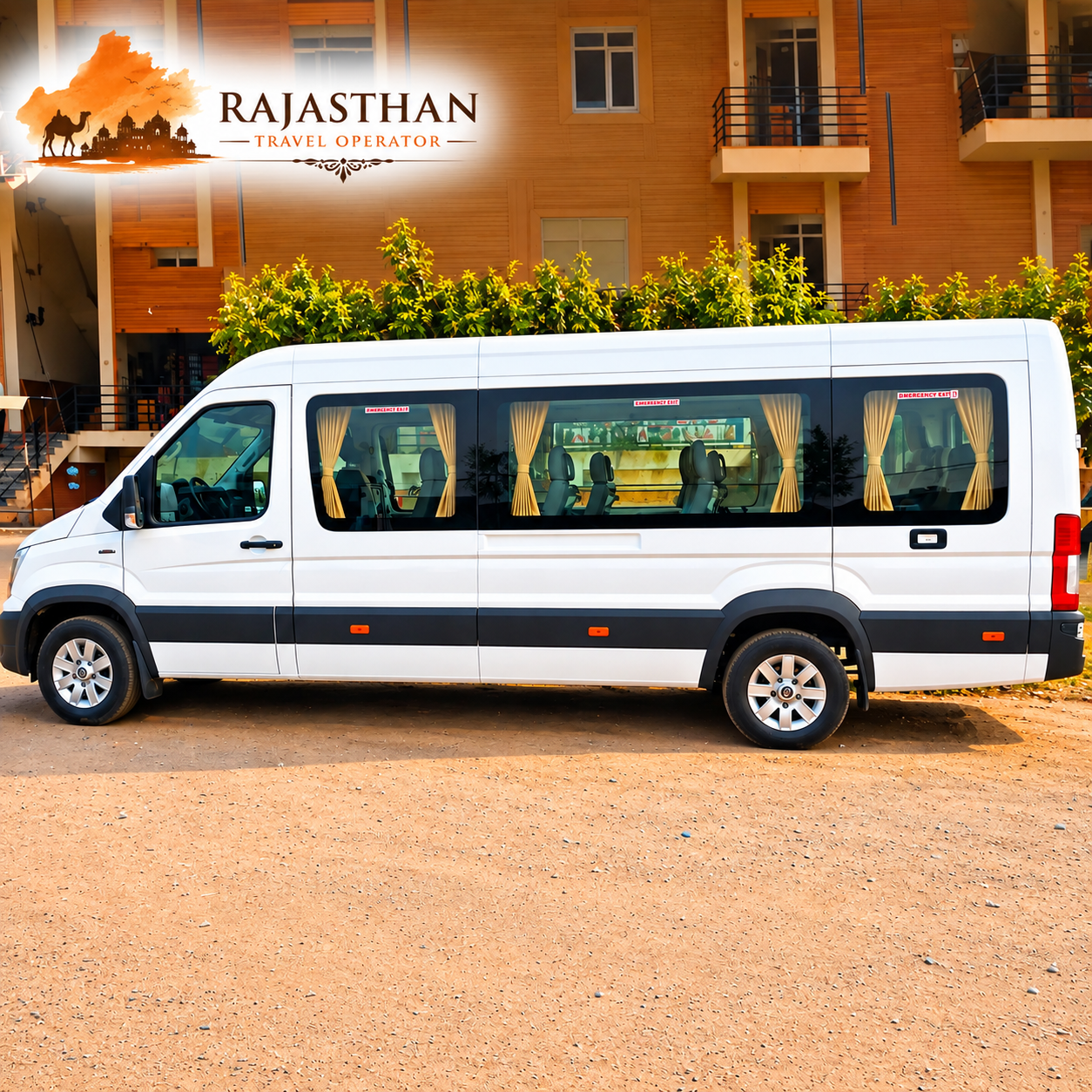
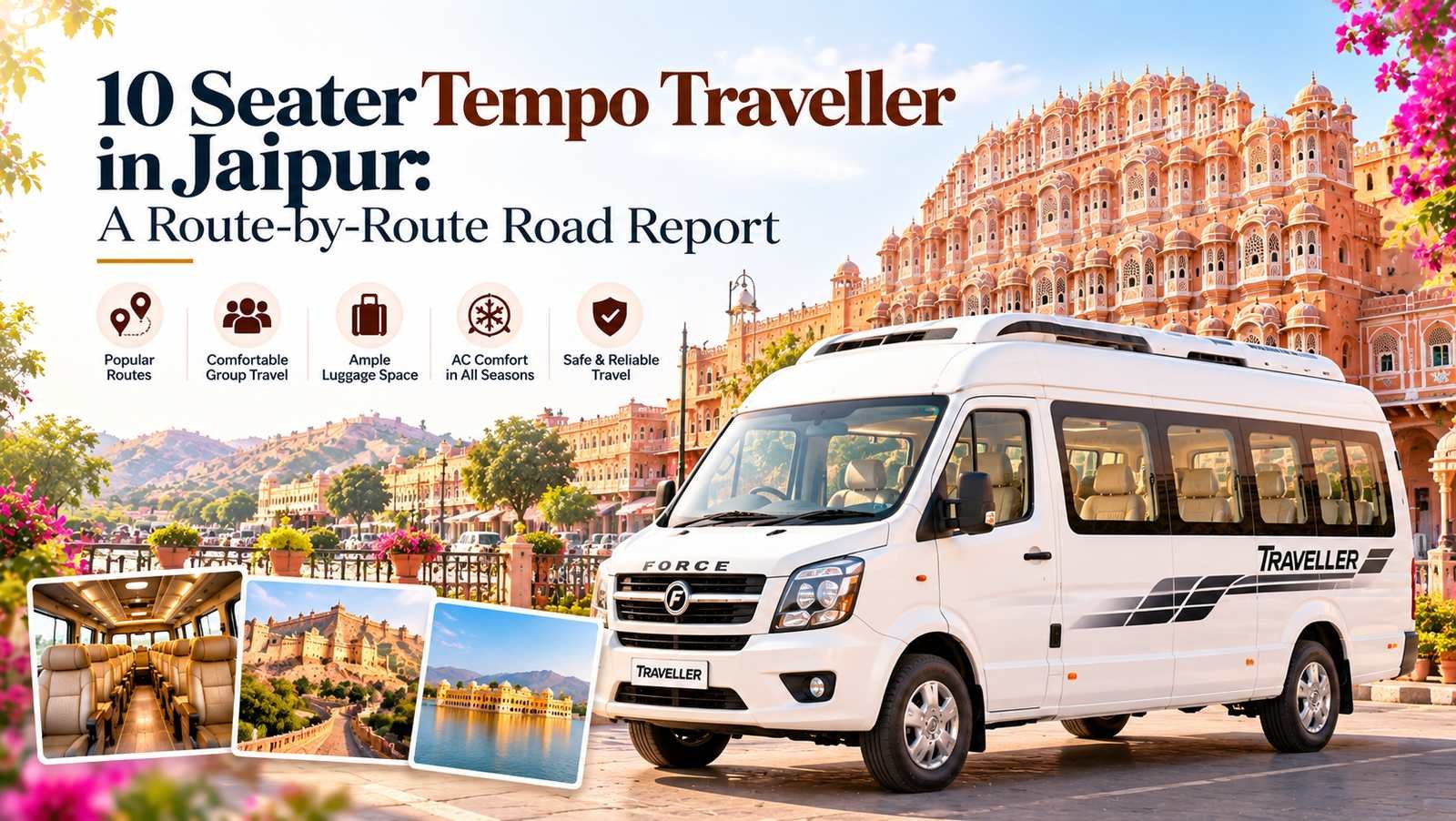
Nobody picks a vehicle and then picks a route. It’s always the other way around. So instead of starting with the vehicle, this one starts with the roads a 10 seater actually gets booked for out of Jaipur, and works backward to what each one demands from the vehicle, the driver, and your group.
How to Read the Ratings Below
Each route gets rated on three things: road quality (how smooth and well-maintained the stretch is), stop density (how often you’re realistically getting in and out), and heat exposure (how much the route is affected by midday sun with limited shade). None of these ratings are about the vehicle itself — they’re about the road, so you can match them against whatever trim and body you’re actually booking.
Jaipur to Udaipur
Road quality: Good. Mostly well-maintained national highway for the bulk of the drive. Stop density: Low to moderate. A couple of natural fuel and food stops, not much else forcing you off the highway. Heat exposure: Moderate to high, especially the open stretches with limited shade cover. Typical duration: Six to seven hours.
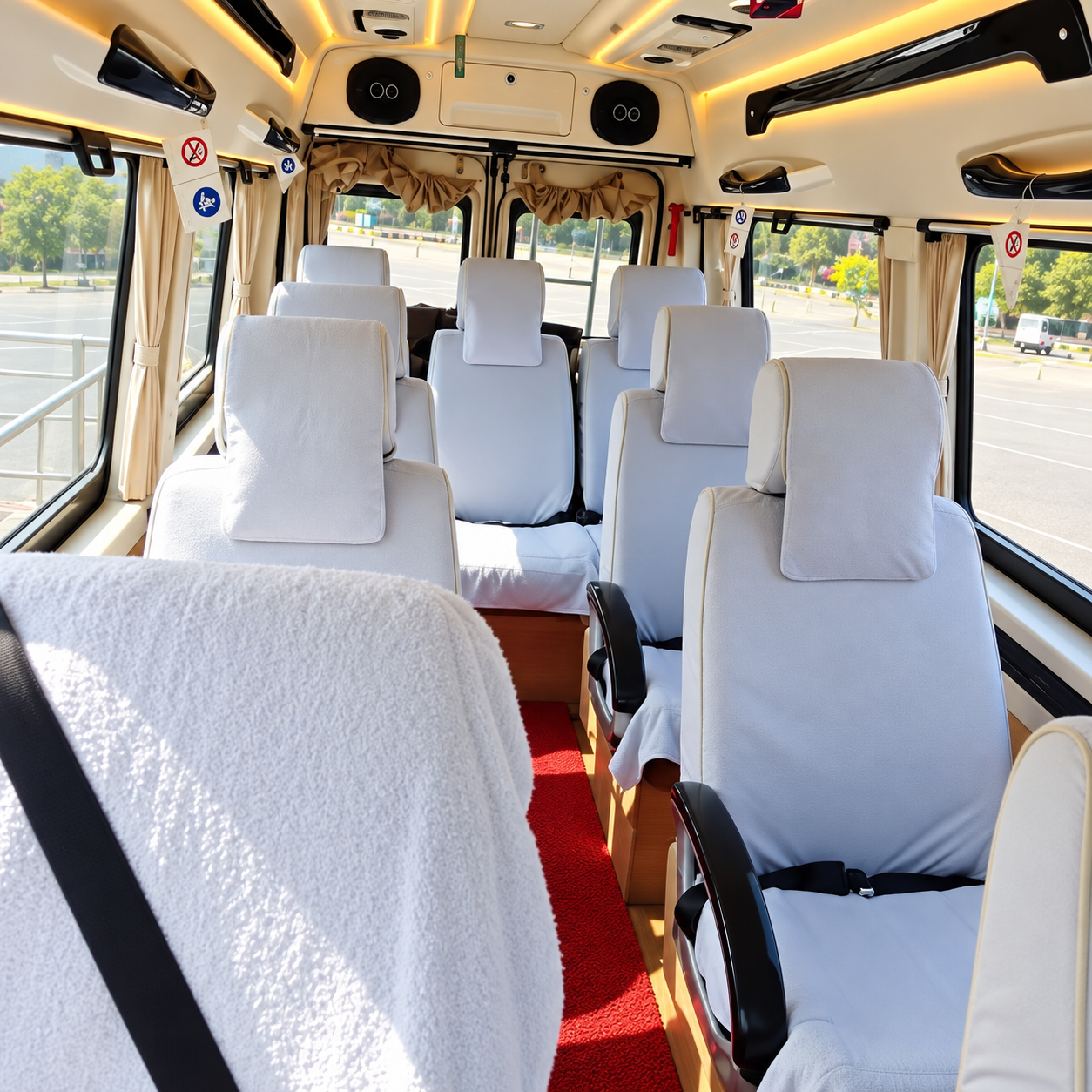
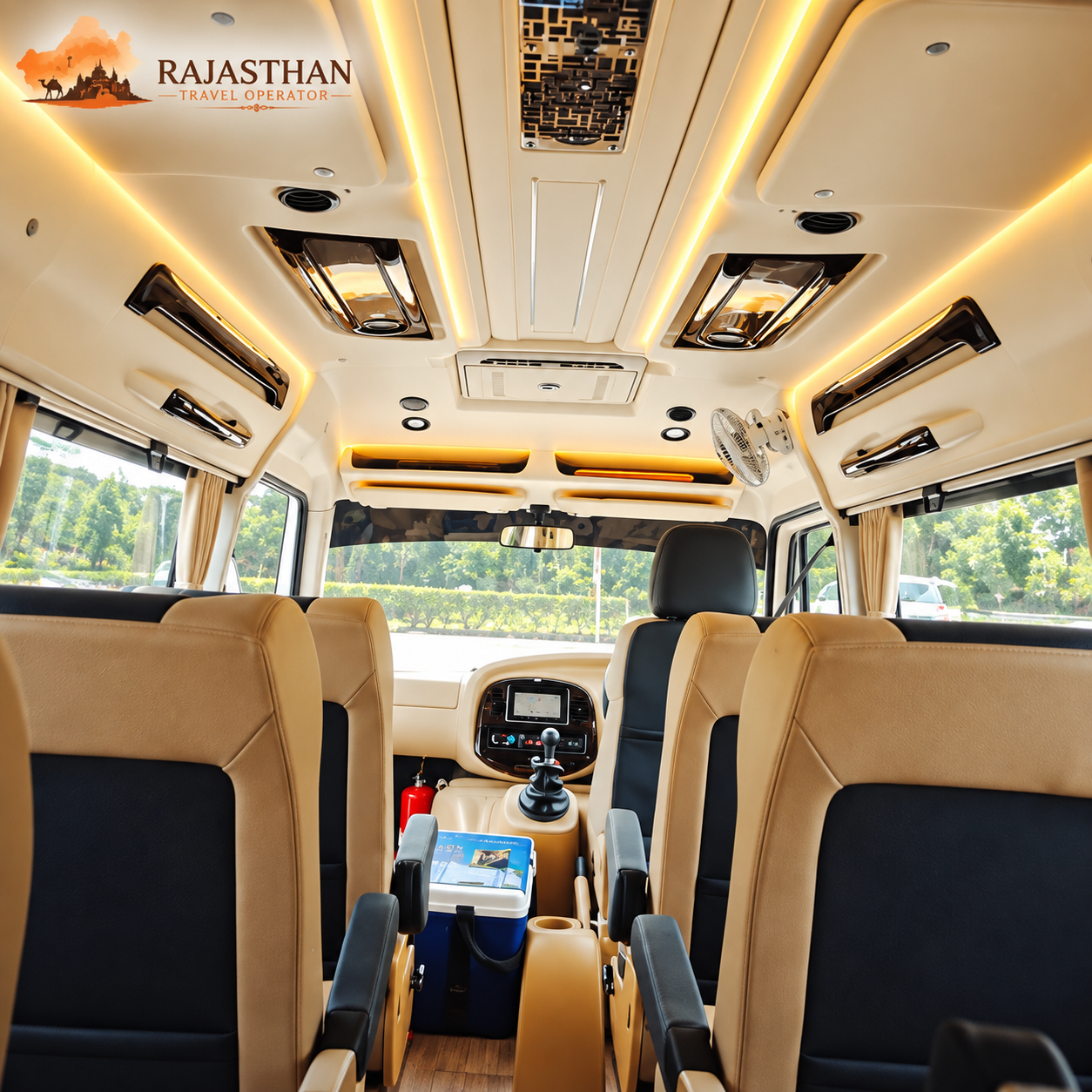
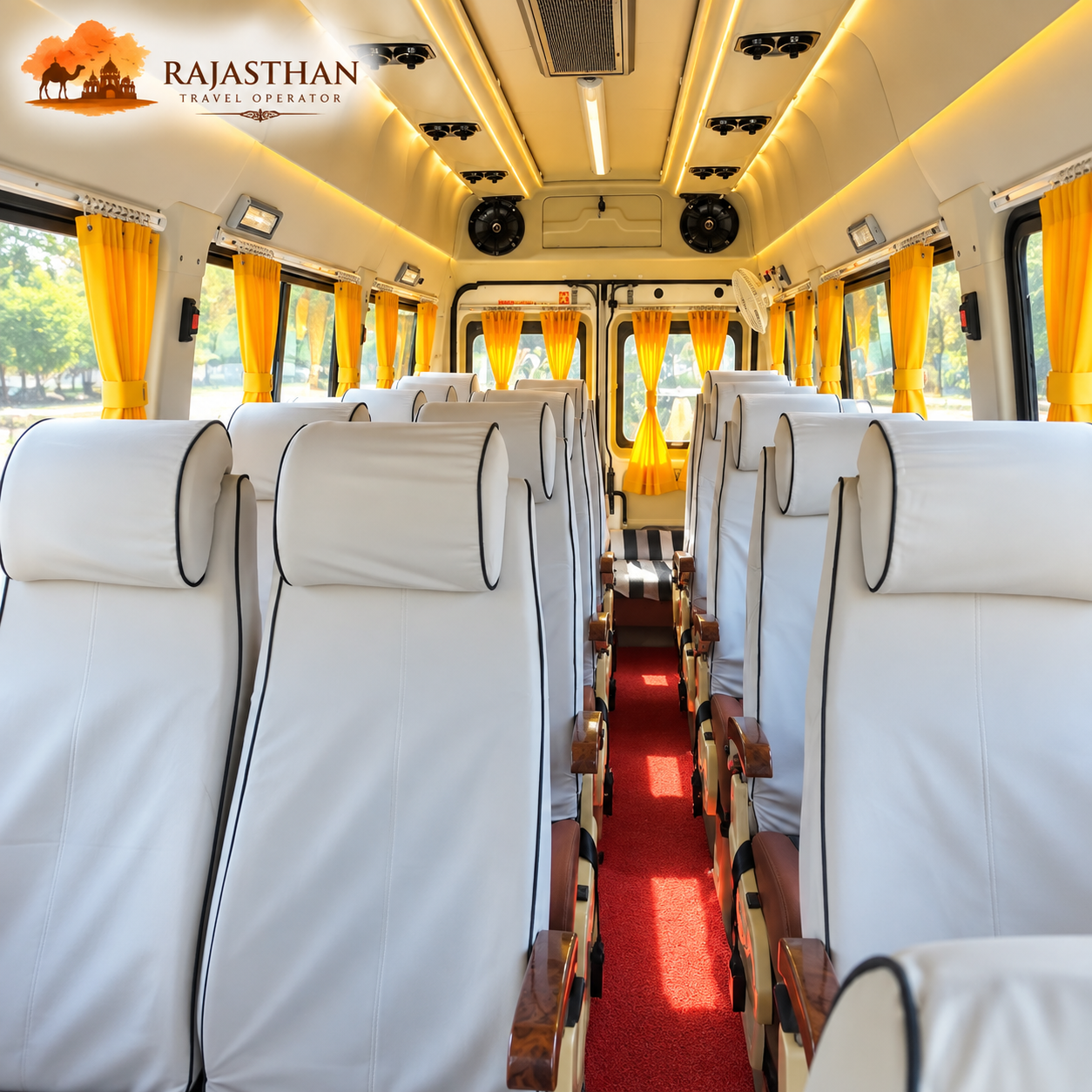
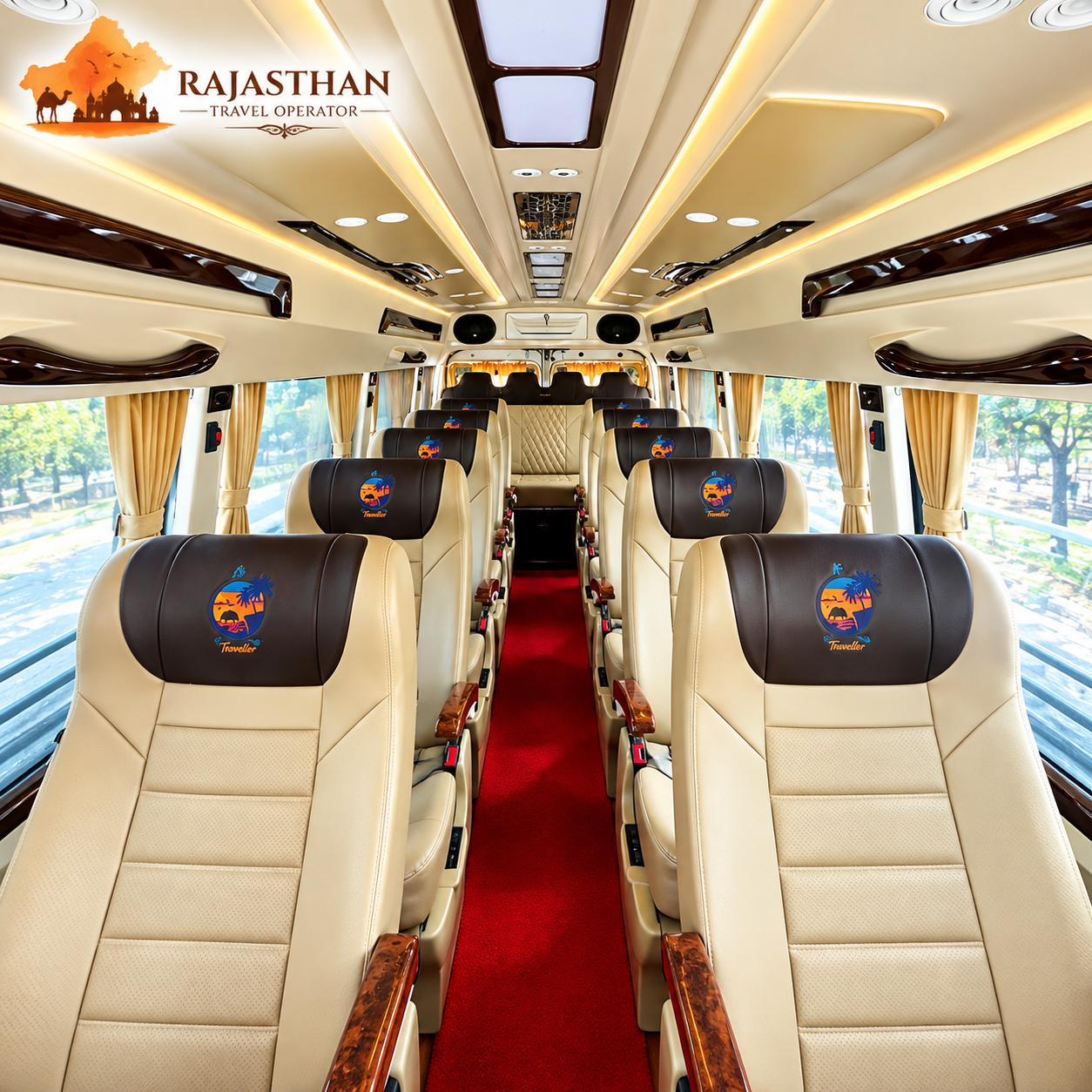
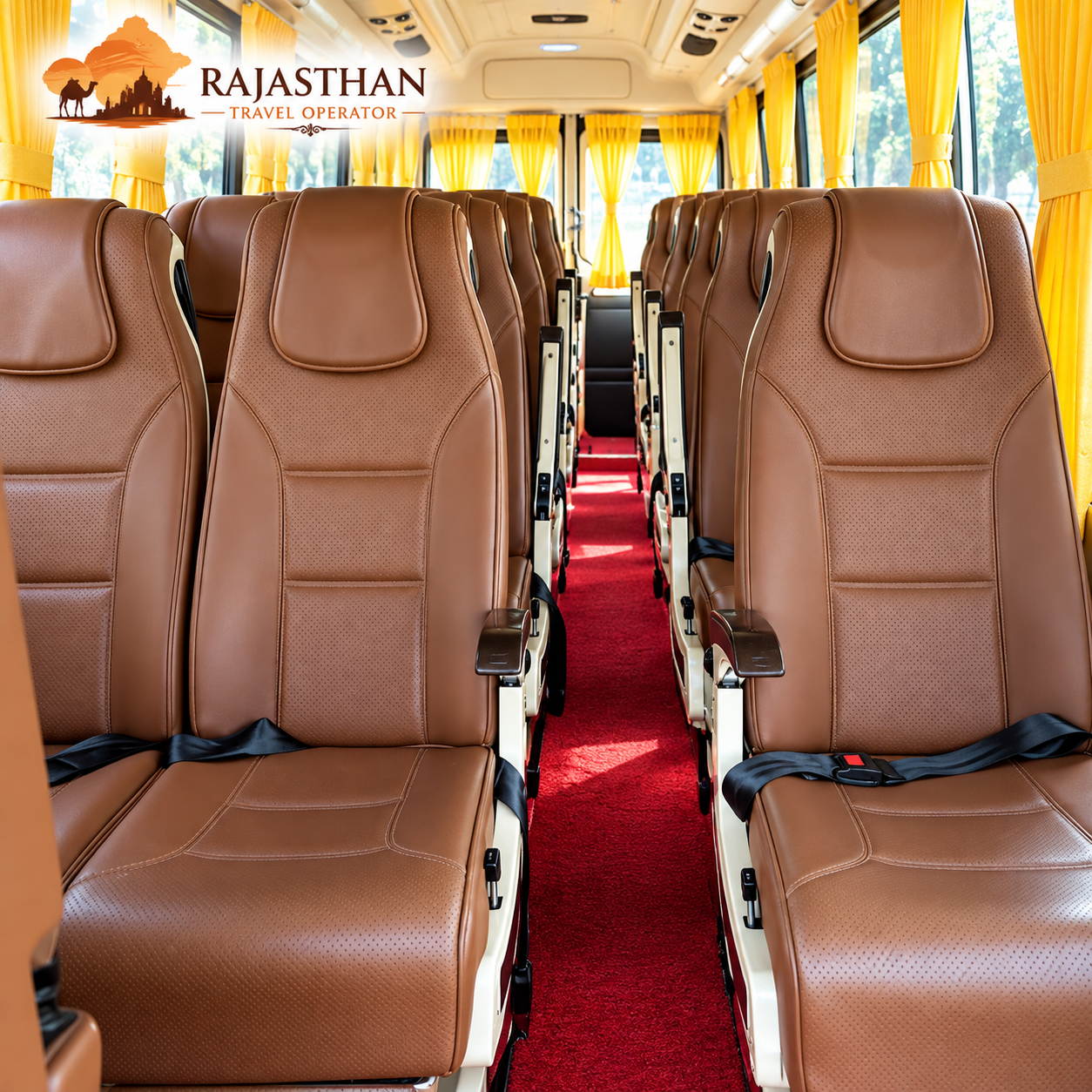
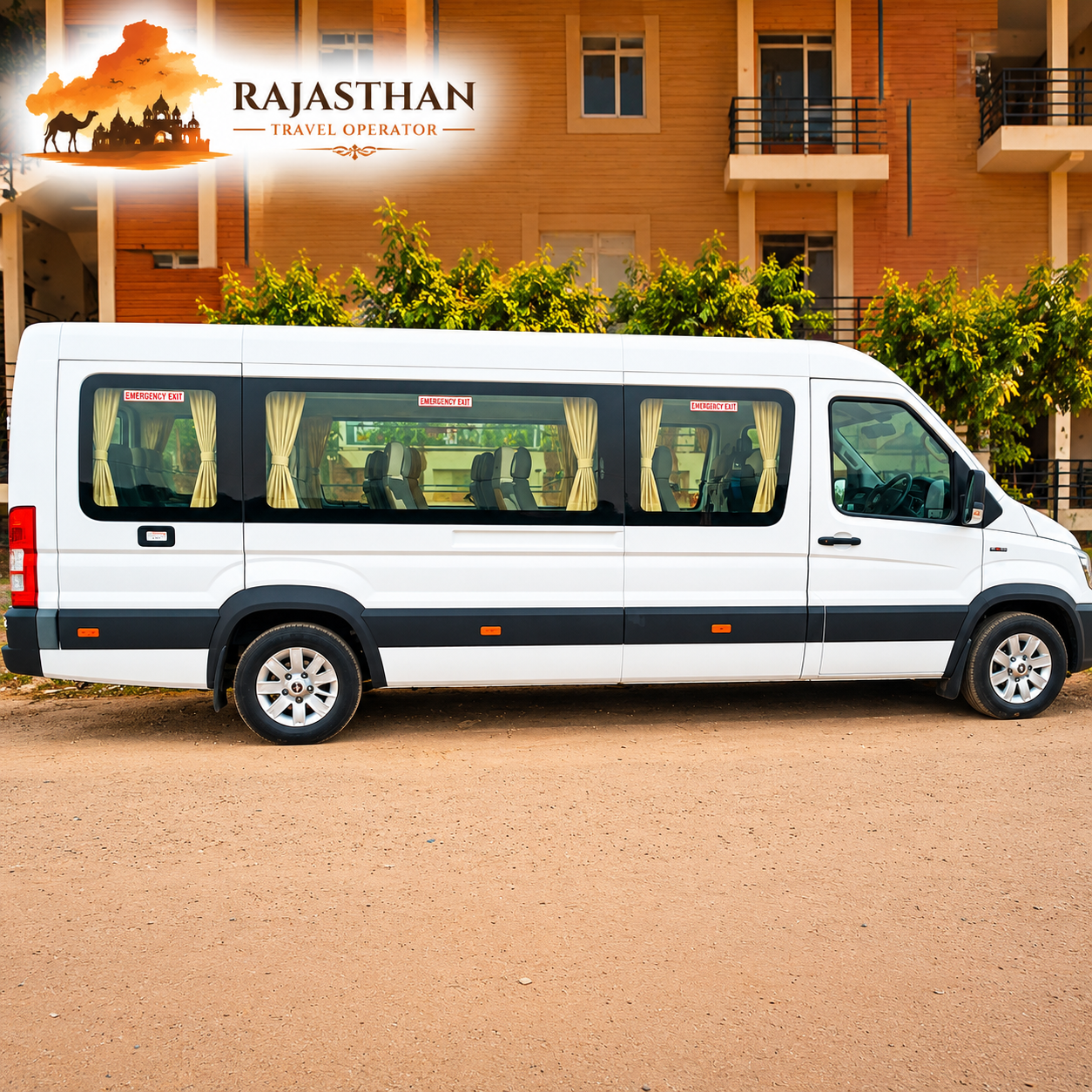
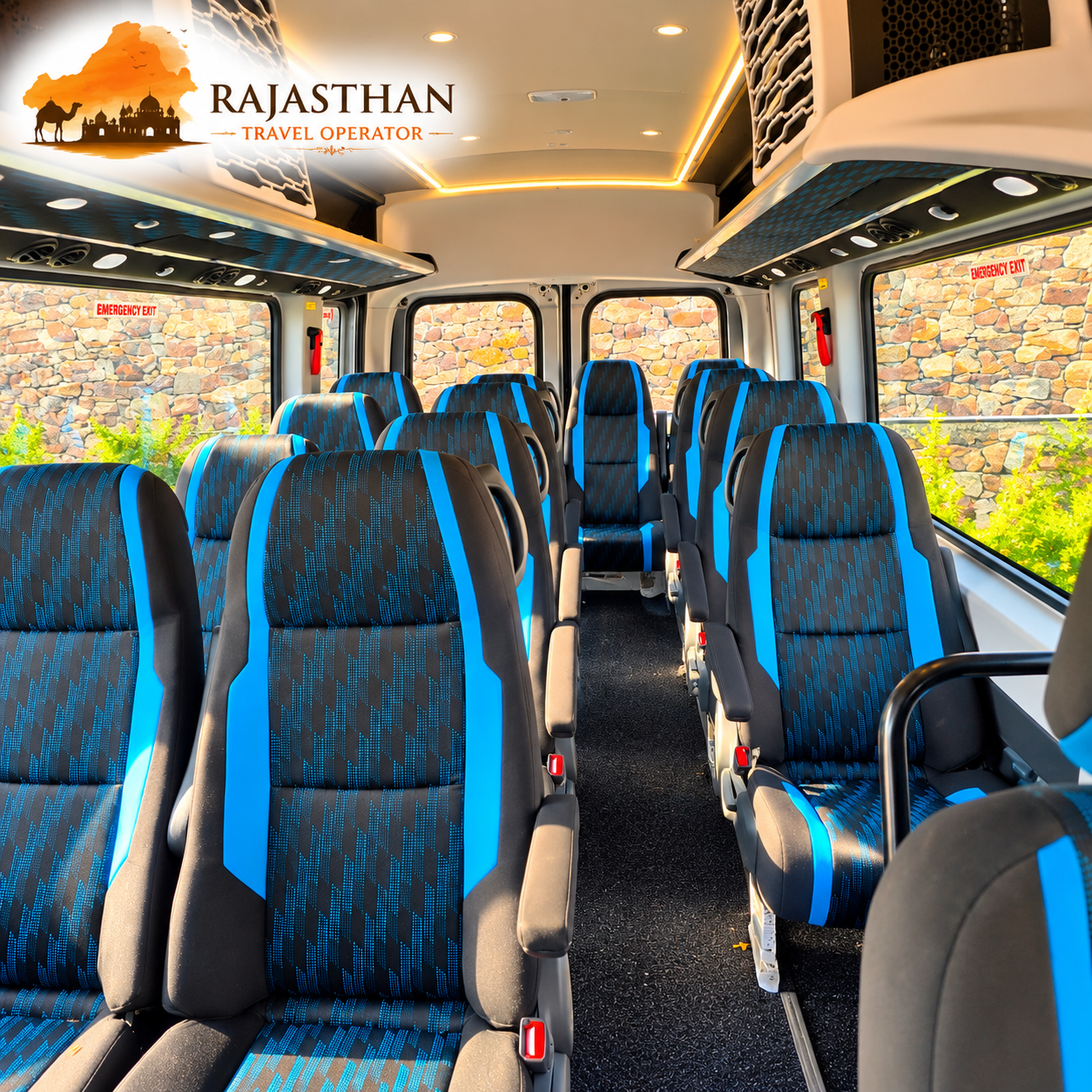
This is close to the default stress test for any vehicle in this category. Long enough that seat comfort and AC distribution genuinely matter, smooth enough that a well-loaded 10 seater tempo traveller handles it without drama. If you’re deciding whether to pay for luxury trim on any booking, judge it against this route specifically, since it’s the one where the difference shows up most clearly.
Jaipur to Jodhpur
Road quality: Good, similar standard to the Udaipur route. Stop density: Low. A long, fairly uninterrupted highway stretch. Heat exposure: High. Less tree cover than the Udaipur road as you move further into drier terrain. Typical duration: Five to six hours.
A slightly shorter version of the same kind of day. Worth noting the heat picks up noticeably compared to the greener Udaipur route, so AC performance matters a touch more here even though the drive itself is a bit shorter.
Jaipur to Jaisalmer
Road quality: Good on the main highway, but the drive is long enough that road character shifts a few times along the way. Stop density: Low. Genuinely remote stretches with fewer towns to break up the journey. Heat exposure: Very high. Desert terrain with minimal shade for most of the route. Typical duration: Eight to nine hours, sometimes split across two days.
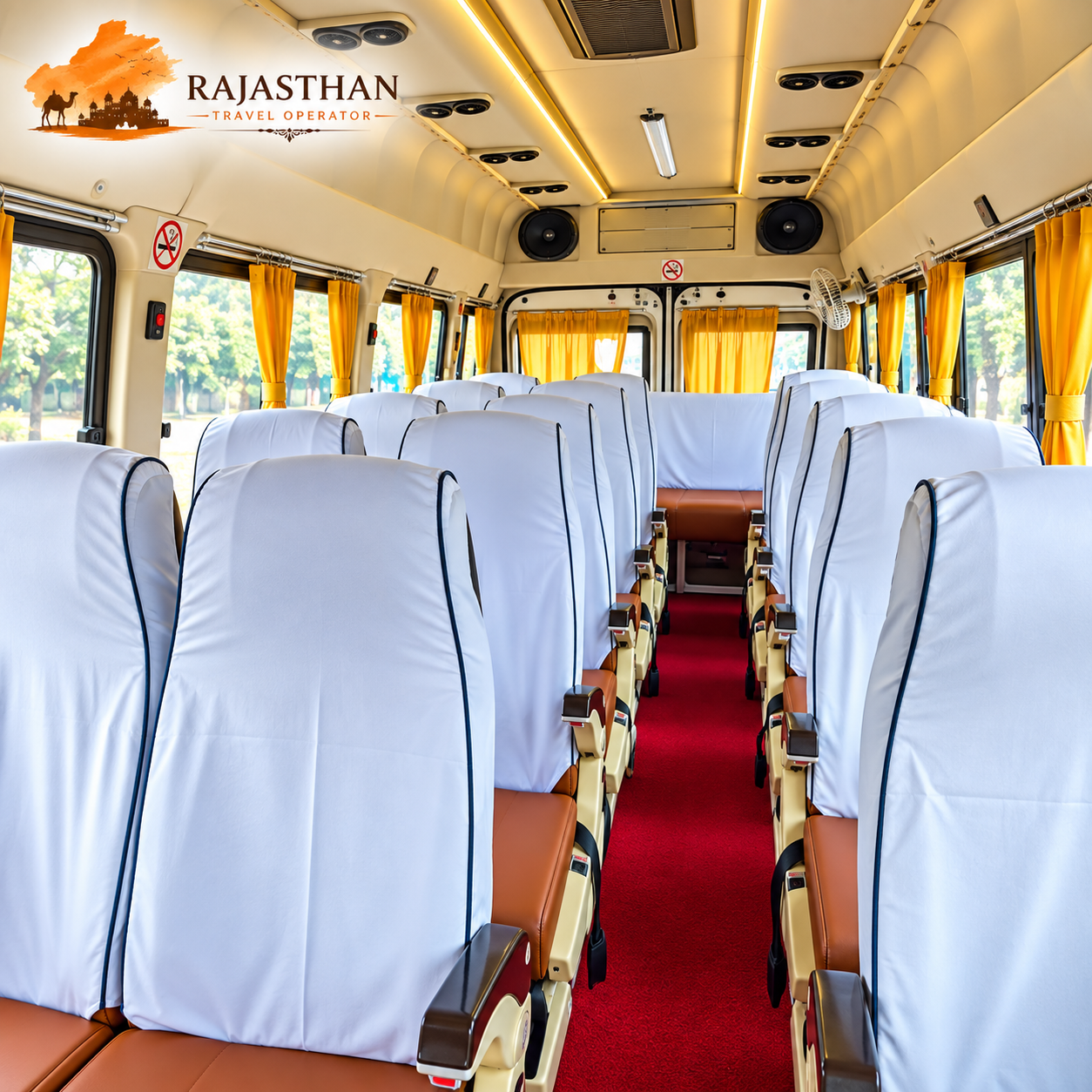
This is the hardest single-day booking in the whole Rajasthan circuit, and it deserves to be treated differently from every other route on this list. Ask specifically for a newer, well-maintained vehicle for this one, confirm the AC is roof-mounted rather than a dashboard blower, and plan a real midday break rather than pushing straight through. If your group is light on luggage and ride comfort matters more than anything else, it’s worth comparing this route’s demands against the 9 seater Urbania with Maharaja seats configuration, since the smoother highway ride genuinely earns itself on a drive this long.
Jaipur to Pushkar
Road quality: Good, a shorter and generally easier drive than the others on this list. Stop density: Low, given the shorter distance. Heat exposure: Moderate. Typical duration: Three to three and a half hours.
An easy day by comparison. This is the kind of route where a basic trim vehicle performs almost as well as a luxury one, simply because the drive is short enough that AC distribution and seat recline don’t have time to become a real factor.
Golden Triangle: Jaipur to Agra to Delhi
Road quality: Good on the main highway stretches, with more traffic congestion near both Agra and Delhi than anywhere else on this list. Stop density: High. Monument visits, hotel stops, and city traffic all add up to a lot of getting in and out of the vehicle across the multi-day circuit. Heat exposure: Moderate on the highway, higher during the actual sightseeing stops. Typical duration: Five to six hours for the Jaipur–Agra leg, three to four for Agra–Delhi.
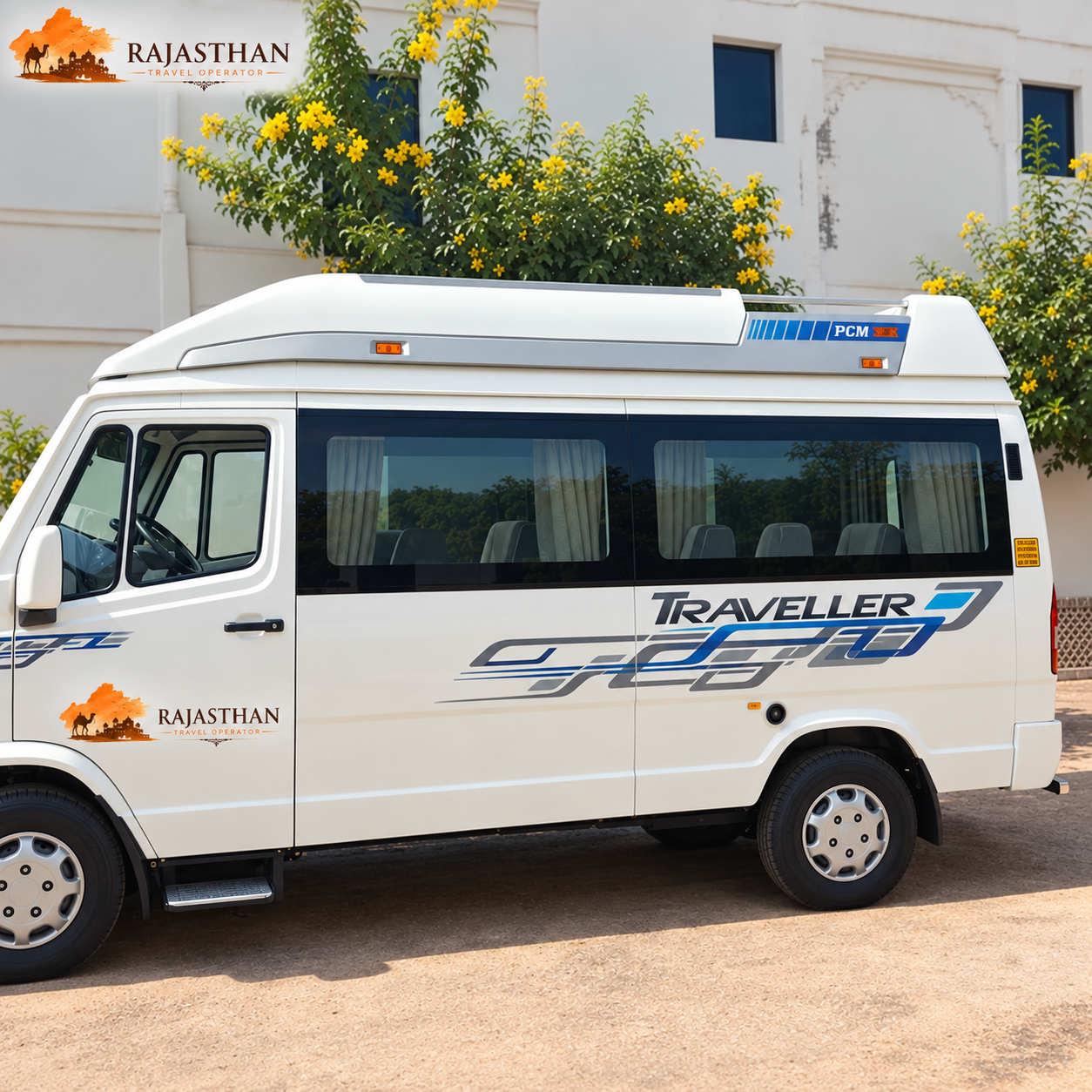
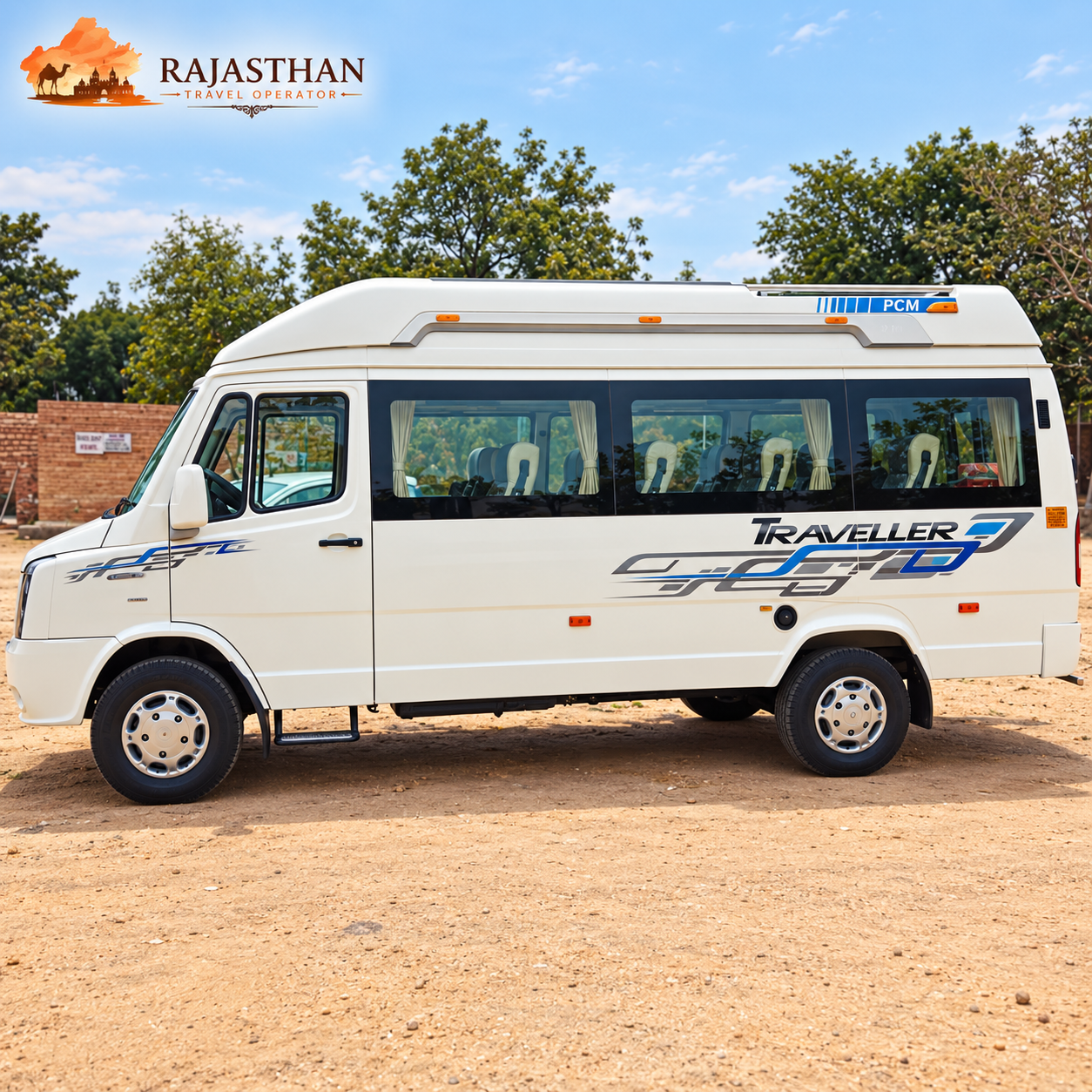
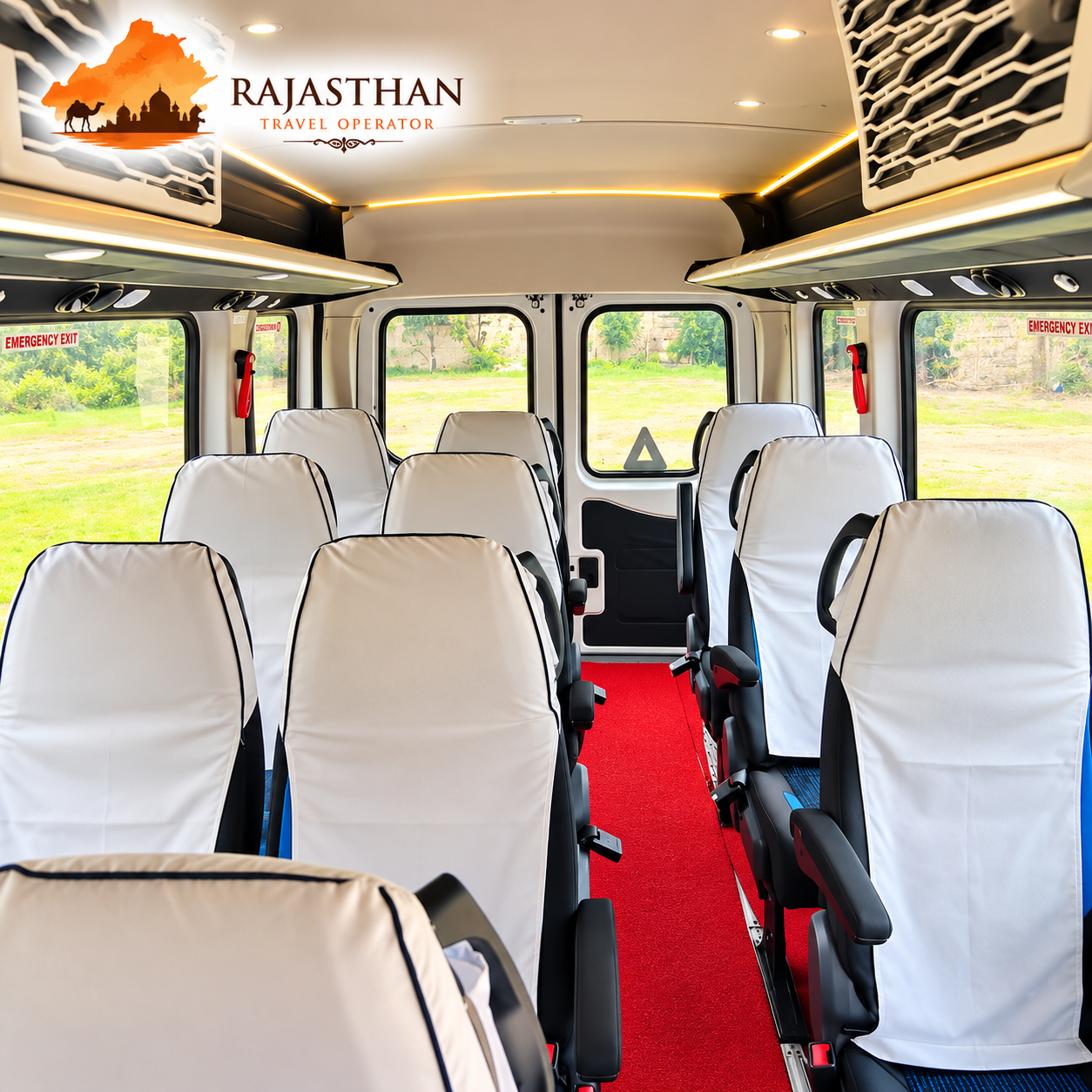
The defining feature of this route isn’t the driving, it’s the stopping. High stop density means boot and cabin access matters more here than on a long, uninterrupted highway day. A 10 seater tempo traveller with its roof carrier keeps the boot behind the last row genuinely free, which makes a real difference when you’re in and out of the vehicle at every stop with day bags and camera equipment.
Mount Abu and the Aravalli Belt
Road quality: Mixed. Ghat sections with real elevation change and tighter turns, unlike anything on the flatter routes above. Stop density: Moderate, with several scenic viewpoints naturally inviting stops. Heat exposure: Lower than the desert routes, since elevation brings cooler temperatures. Typical duration: Four to five hours from Jaipur, depending on the exact starting point.
This is the one route on this list where vehicle condition matters more than trim or seat comfort. Gradient sections put real strain on an engine, and an older, less maintained vehicle will struggle here in a way it wouldn’t on a flat highway. Ask specifically for the vehicle’s registration year and recent servicing before booking this route, more insistently than you would for any of the flatter drives above.
Khatu Shyam Ji and Salasar Circuit
Road quality: Good, straightforward roads for most of the route. Stop density: Low to moderate outside of mela weeks, very high during them. Heat exposure: Moderate. Typical duration: Two to three hours each way, depending on the exact temple.
A relatively gentle route most of the year, with one major exception: mela weeks completely change the picture, with parking restrictions, road closures, and traffic that no vehicle rating can really account for. If your dates fall near a major mela, confirm parking and approach plans with the operator specifically for those dates rather than assuming a normal day’s logistics apply.
Matching Routes to Vehicle Decisions
A few patterns hold across this whole list. Long, flat, low-stop routes like Udaipur, Jodhpur and Jaisalmer put the most weight on AC type and seat comfort, which is where paying for a luxury tempo traveller trim earns itself most clearly. High-stop routes like the Golden Triangle put more weight on boot and cabin access, which favours the standard chassis’s roof carrier over a platform like Urbania tempo traveller that keeps everything inside the cabin. Gradient routes like Mount Abu put more weight on vehicle age and maintenance than on trim at all.
If Your Group Size Changes the Calculation
Everything above assumes roughly a 10-seat group. If your actual headcount is smaller, the 9 seater tempo traveller handles every route on this list identically, just at a lower cost for the unused capacity. If it’s larger, the tempo traveller 12 seater or 12 seater hire in Jaipur cover the same routes with the same road considerations, just more passengers aboard. For a genuinely large group tackling the longer desert routes, the tempo traveller 17 seater or 20 seater tempo traveller face the exact same heat and distance challenges, just with more people to keep comfortable through them.
If your group wants wider individual seating for any of these longer routes, a Maharaja seat tempo traveller configuration is worth checking, and if ride smoothness matters more than roof storage on a lighter-luggage trip, the 16 seater Urbania or its top trim on the luxury Urbania in Jaipur page is worth comparing against any of the standard-chassis options above.
Final Word
Most people research the vehicle first and the road second, and it usually works out fine because most routes out of Jaipur are genuinely well maintained. But the three or four routes on this list that are genuinely demanding — Jaisalmer’s distance, Mount Abu’s gradients, the Golden Triangle’s constant stopping — deserve to shape your booking decisions more than a generic spec sheet ever will. Full comparisons across every seat count and trim, once you know which route you’re actually facing, are on the tempo traveller on rent page.